
When the body’s sweetness drifts, and the soul seeks balance
Sugar flows through the blood like a quiet river, nourishing every cell, fueling every thought, every heartbeat, every breath.
But sometimes the river runs too high.
It rises, almost imperceptibly at first,
and the body whispers:
“I am burdened. I am stretched. I am in need of balance.”
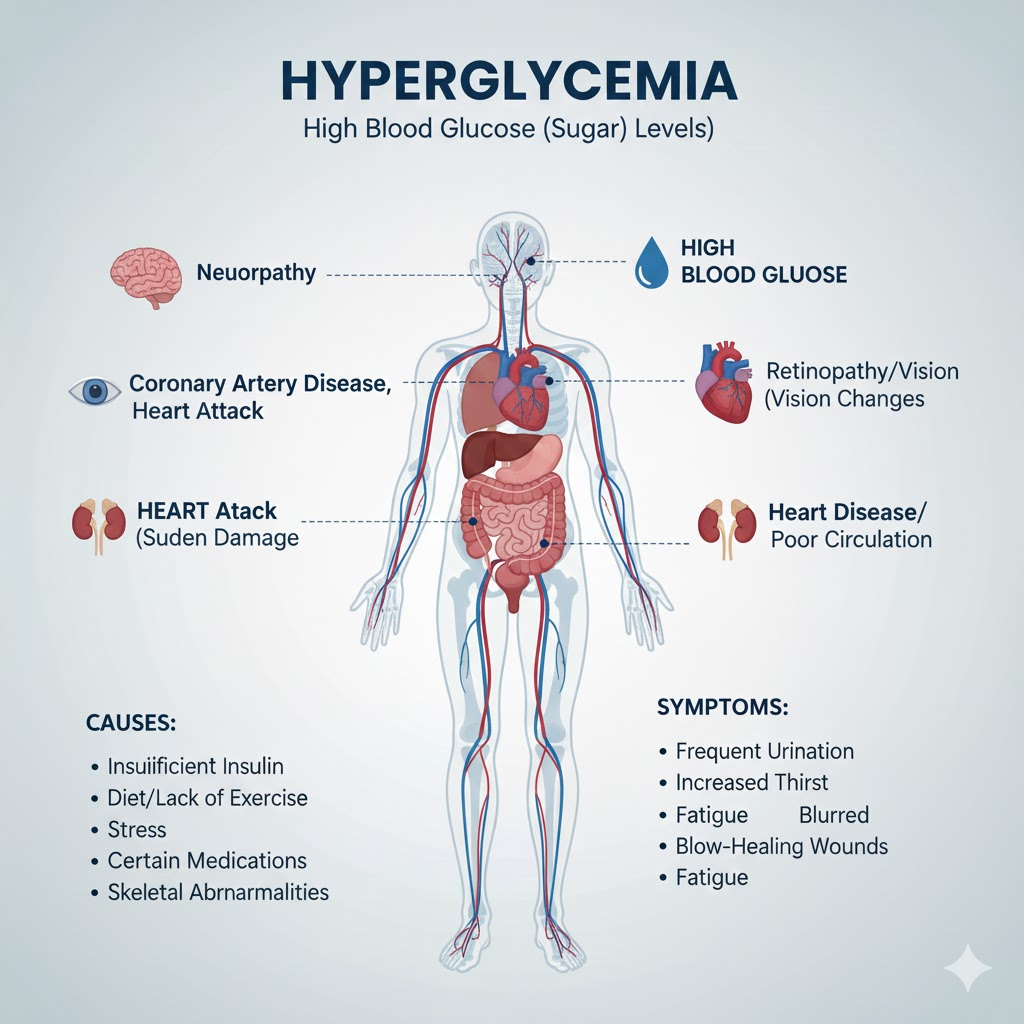
This is hyperglycemia — a state where blood sugar is elevated, often silently, sometimes leaving traces of fatigue, thirst, or heaviness.
It does not always announce itself with pain.
It does not always appear dramatically.
Instead, it often arrives as subtle signals:
- Persistent thirst
- Frequent urination
- Tiredness that rest cannot fully relieve
- A dry mouth or blurry vision
- Occasional irritability or fogginess
These gentle alarms are the body’s way of asking for attention, care, and rhythm.
Understanding the Condition
Hyperglycemia occurs when glucose — the body’s natural sugar — rises above normal levels in the bloodstream.
It can happen for many reasons:
- The body’s insulin is insufficient (as in Type 1 diabetes)
- The body cannot use insulin effectively (as in Type 2 diabetes)
- Stress, illness, or hormonal changes temporarily disrupt blood sugar
If unchecked, hyperglycemia can affect:
- Energy levels
- Organ function
- Mood and mental clarity
- Overall vitality
But it is important to remember:
Hyperglycemia is not a failure.
It is a sign — a gentle, persistent message that the body’s sweet balance has shifted.
How It Feels
The experience of hyperglycemia is often subtle, yet profoundly human.
Physically:
- Fatigue that feels heavier than usual
- Blurry vision or difficulty focusing
- Dry mouth, dry skin, or unusual thirst
- Increased urination, especially at night
- A sense of sluggishness or heaviness
Emotionally:
- Frustration with low energy
- Irritability or mood swings
- Anxiety over what the body is “doing”
- A sense of disconnection from one’s usual rhythm
Spiritually:
- The body may feel “out of sync”
- There is a quiet call to slow down, listen, and care for oneself
- Hyperglycemia reminds us of the delicate balance in life: sweetness, nourishment, and restraint
Why It Happens
At the heart of hyperglycemia is a miscommunication between glucose and insulin:
- Insulin, the hormone that guides sugar into cells, may be low or ineffective
- The liver may release extra sugar into the blood
- Stress hormones like cortisol can raise blood sugar
- Illness, medications, or lifestyle factors may temporarily increase glucose
It is not a moral failure.
It is the body responding to imbalance, seeking stability, and signaling the need for support.
The Homeopathic Understanding
Supporting the body’s internal sweetness and balance
Homeopathy views hyperglycemia as a disturbance of the vital force —
where energy flow, sugar metabolism, and emotional rhythm are slightly misaligned.
A homeopath listens carefully to the person as a whole:
- When does fatigue occur? Morning, afternoon, evening?
- Are there cravings, digestive sensitivities, or thirst patterns?
- How does stress, anxiety, or emotional strain affect energy?
- What is the body’s natural constitution — warm, cool, sensitive, or resilient?
From this holistic picture, remedies are chosen to gently restore metabolic balance, support energy, and ease emotional strain.
Commonly Considered Remedies
1. Phosphoric Acid
For fatigue, mental dullness, excessive thirst, and emotional weariness.
2. Syzygium Jambolanum
For high blood sugar, frequent urination, and weakness related to diabetes.
3. Uranium Nitricum
For persistent hyperglycemia with weakness, nervous system imbalance, and kidney stress.
4. Gymnema Sylvestre
For sugar cravings, imbalance in glucose, and digestive sensitivity.
5. Lycopodium
For digestive irregularities, sugar intolerance, and anxiety that affects energy regulation.
(Always work with a qualified homeopath alongside medical monitoring.)
Gentle Daily Care
Hyperglycemia is a reminder that the body thrives on rhythm, attention, and care.
1. Nourish thoughtfully
Balanced meals, whole foods, fiber-rich vegetables, controlled sugars, and adequate hydration support steady energy.
2. Move gently
Walking, stretching, yoga, or tai chi helps regulate glucose and calms the nervous system.
3. Monitor softly
Tracking blood sugar empowers gentle awareness, not fear.
4. Rest deeply
Sleep restores energy and supports hormonal balance.
5. Manage emotional stress
Meditation, journaling, creative expression, or counseling reduces cortisol and supports metabolic harmony.
6. Support organs naturally
Herbs like cinnamon, fenugreek, and bitter greens can quietly aid digestion and glucose metabolism.
A Closing Reflection
Hyperglycemia is not a sign of weakness.
It is a conversation — a body speaking through subtle signals.
It reminds us:
- To slow down
- To nourish ourselves consciously
- To honor rest, movement, and emotional care
- To attend to life’s sweet balance
Even when sugar rises, the body is resilient.
With awareness, patience, and gentle support,
energy can stabilize, clarity can return,
and the body can resume its natural rhythm.
Hyperglycemia invites us to listen — not with judgment,
but with compassion, care, and love for the self.



Leave a Reply