
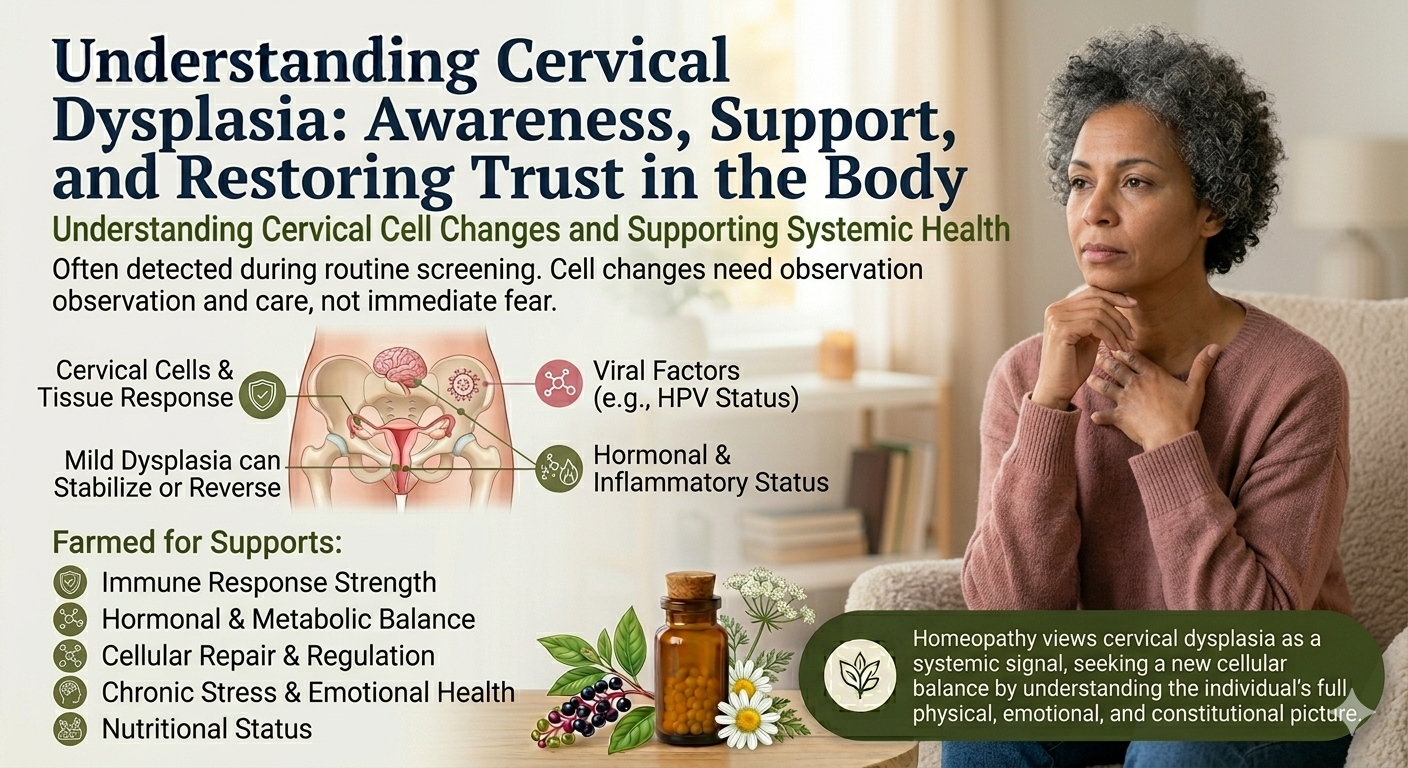
Understanding Cervical Dysplasia: Awareness, Support, and Restoring Trust in the Body
Some health findings do not begin with symptoms.
They appear quietly — often during routine screening — when everything else in the body feels normal.
Cervical dysplasia is one such condition. It refers to changes in the cells of the cervix that are usually detected through a Pap smear or HPV-related screening. In many cases, these changes are mild and can remain stable or even return to normal with time and appropriate monitoring.
The initial diagnosis often carries emotional weight, even when there are no physical symptoms. Fear, confusion, or uncertainty may arise simply from the word “abnormal.”
Yet in most situations, cervical dysplasia is not an immediate danger. It is a signal that the body requires observation, support, and care.
Understanding Cervical Dysplasia
Cervical dysplasia involves changes in the structure of cervical cells. These changes are typically classified as mild, moderate, or severe depending on their extent.
In many cases, especially mild forms, the body is capable of stabilizing or reversing these changes over time.
Key factors associated with cervical cell changes may include:
- Human papillomavirus (HPV) infection
- Immune system response and strength
- Hormonal and metabolic balance
- Chronic inflammation
- Lifestyle and environmental influences
It is important to understand that dysplasia is not cancer, but a cellular change that requires monitoring and appropriate medical follow-up.
How It Feels Emotionally
Even without physical symptoms, the emotional impact can be significant.
Common reactions include:
- Anxiety about future health outcomes
- Fear of progression or uncertainty
- Guilt or self-blame without clear reason
- Emotional shock after an unexpected diagnosis
- Reduced trust in one’s body
- Constant overthinking or health-related worry
These responses are natural. The cervix is closely linked with reproductive identity and health perception, so any change in this area can feel deeply personal.
Why Cervical Changes Occur
Cervical dysplasia is influenced by a combination of biological and environmental factors, such as:
- Viral factors (especially HPV exposure)
- Immune system efficiency
- Long-term stress or emotional strain
- Hormonal fluctuations
- Nutritional status and general health
- Lifestyle factors such as sleep, immunity, and recovery capacity
In most cases, it is not the result of a single cause, but rather a combination of influences affecting cellular response over time.
A Homeopathic Perspective
Homeopathy views cervical dysplasia as part of a broader systemic expression rather than an isolated cervical condition.
The focus is on the individual as a whole — including physical health, emotional state, immune function, and long-term constitutional tendencies.
Homeopathic care is intended to support the body’s natural regulatory and immune response systems and may be used alongside appropriate medical monitoring and treatment when required.
Some remedies that a qualified homeopath may consider include:
Conium Maculatum
May be considered in cases with slow-developing changes, often associated with long-standing emotional suppression.
Thuja
Often associated with chronic tendencies toward growths or altered tissue responses.
Phytolacca
May be considered when there is pelvic heaviness or congestion.
Natrum Muriaticum
Often linked with long-term emotional stress or grief influencing physical balance.
Silicea
May be considered to support systemic regulation and tissue resilience.
Remedy selection is always individualized and based on a complete constitutional evaluation by a qualified practitioner.
Gentle Daily Support
Supportive care plays an important role in maintaining overall well-being:
- Maintain a balanced, nutrient-rich diet to support immunity
- Prioritize regular rest and recovery
- Engage in gentle physical activity to support circulation
- Manage stress through relaxation practices such as breathing exercises or mindfulness
- Maintain consistency in sleep and daily routine
- Follow medical advice and attend regular follow-up screenings
These practices support both physical and emotional stability over time.
Living with Awareness and Stability
Cervical dysplasia is not a definition of health or identity.
It is a biological signal that requires observation, care, and a supportive environment for the body to regulate itself.
With appropriate medical follow-up, lifestyle support, and time, many cases remain stable or improve naturally.
The body is not unreliable.
It is responsive — constantly adapting, repairing, and maintaining balance where possible.
Healing in this context is not about urgency or fear.
It is about steady care, informed awareness, and allowing the body to restore its equilibrium through supported processes.
With patience, trust, and attention, stability can be maintained and confidence in the body can be gradually rebuilt.




Leave a Reply