
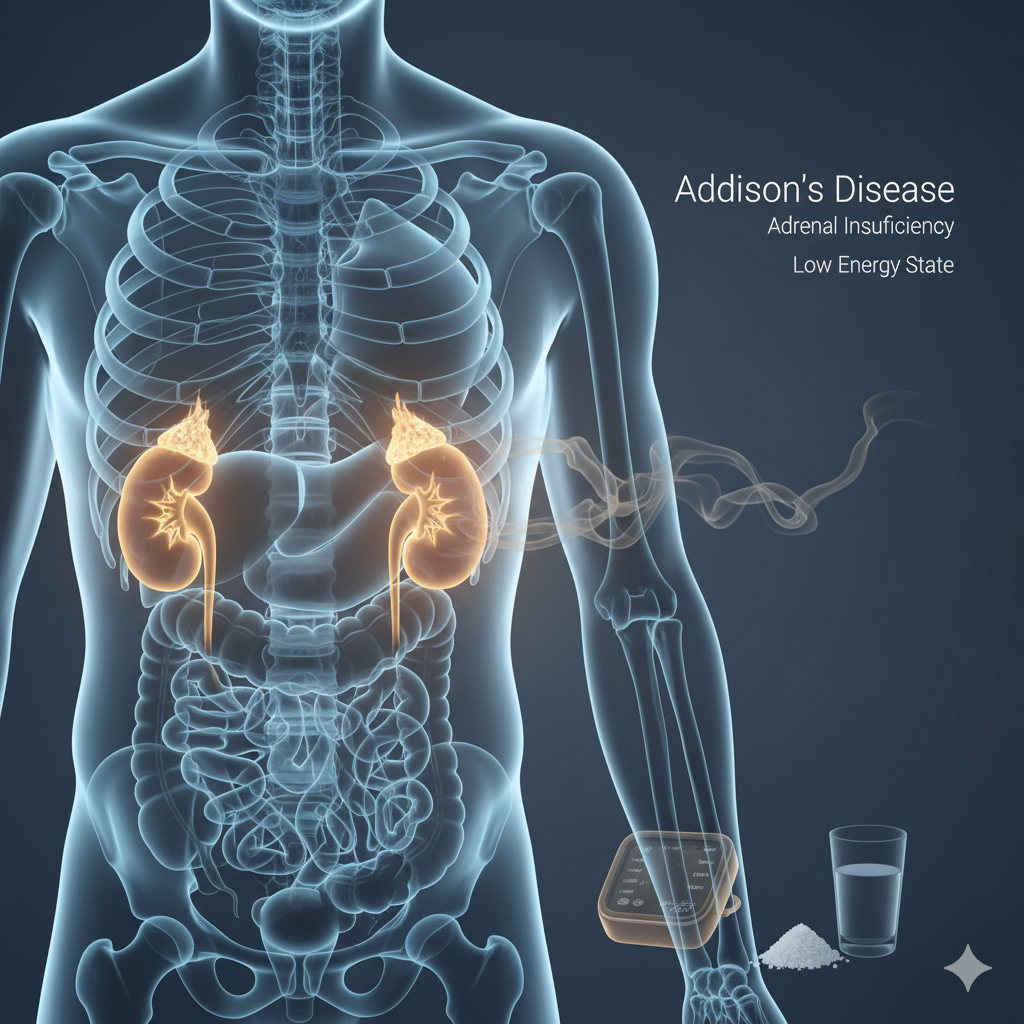
When Your Body Keeps Feeling Low: Understanding Addison’s Disease
We’ve all had days when we feel tired and drained, but with a bit of rest, we bounce back. Now imagine waking up that way every single morning — heavy, weak, and unfocused. For many people living with Addison’s disease, that’s not just a bad day; it’s a daily reality.
If you or someone you know feels constantly exhausted without a clear reason, this information may bring some clarity. Let’s explore it together.
What Exactly Is Addison’s Disease?
Hidden deep inside your body are tiny glands sitting on top of your kidneys, called adrenal glands. Think of them as your inner energy system. They produce vital hormones that:
- Help you respond to stress
- Keep your blood pressure steady
- Balance your blood sugar levels
- Regulate salt and water in the body
In Addison’s disease, these glands slow down and don’t produce enough of these hormones. When that happens, your body struggles to keep up — even with simple daily activities. Though it’s rare, its impact can quietly interfere with everyday life.
How Does Addison’s Disease Feel?
One of the challenges with Addison’s disease is that symptoms develop gradually and can be mistaken for simple fatigue or stress. Common signs include:
- Constant Fatigue: Not the usual tiredness — this is deep exhaustion that doesn’t go away with rest.
- Weight Loss: A gradual loss of appetite and unintentional weight drop.
- Low Blood Pressure: Feeling dizzy or light-headed when standing.
- Salt Cravings: A sudden, strong desire for salty foods.
- Skin Darkening: Patches of skin, especially near scars, joints, or gums, may darken over time.
- Stomach Upset: Occasional nausea, abdominal discomfort, or vomiting.
These signs together help form the picture of Addison’s disease.
What Causes It?
In most cases, the immune system becomes confused and mistakenly attacks the adrenal glands. This gradual damage reduces hormone production. It’s not caused by anything you did — and it isn’t contagious.
Less commonly, infections, certain medications, or physical injury to the adrenal glands may also play a role.
How It’s Usually Identified
Because symptoms are subtle, many people live with Addison’s disease for years before diagnosis, assuming it’s stress or overwork. Natural health practitioners often observe patterns like:
- Energy fluctuations throughout the day
- Low blood pressure behavior
- Changes in skin tone
- Strong salt cravings
- Digestive disturbances
These patterns can indicate adrenal imbalance or weakness.
Homeopathic Approach: Gentle Support Toward Balance
Conventional treatment often replaces the missing hormones through medication, while homeopathy focuses on helping the body restore balance from within. The goal is to:
- Strengthen the body’s natural response
- Support adrenal function gently
- Improve overall energy and vitality
- Balance the mind and emotional stress
How Homeopathic Treatment Works
According to homeopathy, treatment focuses on the whole person — not just the disease. It considers physical, emotional, and mental symptoms to select an individualized remedy. The ultra-diluted remedy is believed to stimulate the body’s natural healing energy, or “vital force,” helping restore balance and promote self-healing.
Commonly considered remedies (chosen individually based on the person’s total symptom picture) include:
- Adrenalinum
- Calcarea Carbonica – for weakness and salt cravings
- Sulphur – for darkened skin patches
- Arsenicum Album – for anxiety, restlessness, and fatigue
- Natrum Muriaticum – for low energy and salt imbalance
Note: Homeopathic remedies should always be selected by a trained practitioner. There’s no one-size-fits-all solution.
Daily Tips That Really Help
Beyond remedies, lifestyle adjustments can make a noticeable difference:
- Eat balanced meals with natural salts and whole foods.
- Stay hydrated throughout the day.
- Rest deeply — your body needs recovery time.
- Manage emotional stress through relaxation or mindfulness.
- Spend time in gentle sunlight for natural energy support.
Small, consistent habits can bring meaningful change.
Life After Awareness
Understanding what your body needs is the first step toward recovery. Many people regain strength, stability, and emotional balance with the right support.
If something in this article feels familiar, listen to your body. Consult a qualified homeopathic practitioner who understands adrenal weakness and supports healing with care.
Your body isn’t broken — it’s simply asking for rest and balance. With patience and the right guidance, you can find your energy again.


Leave a Reply