
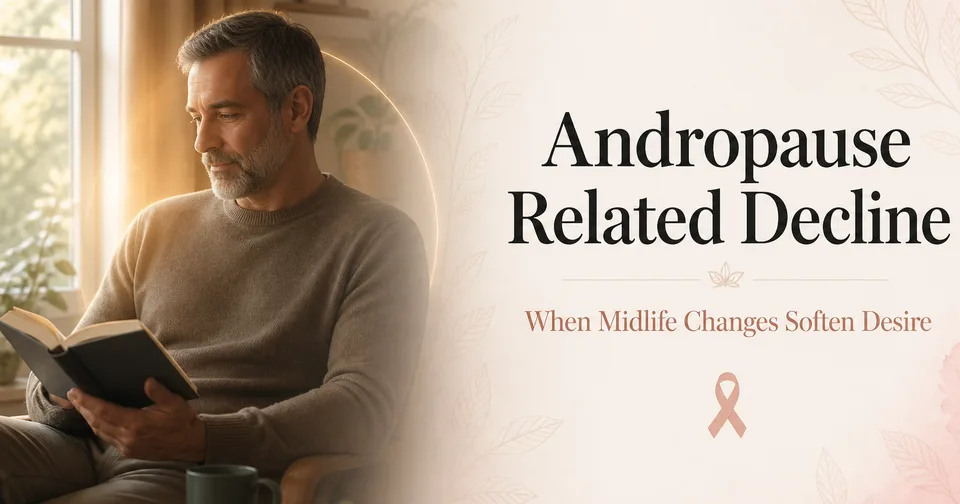
WHEN MIDLIFE CHANGES THE INNER CLIMATE
Andropause related decline is a phrase many men recognize even when medicine debates the term: a gradual midlife shift in energy, desire, mood, and sexual confidence that feels different from ordinary busy-ness. It is less a switch flipping off than a season changing — slower mornings, longer recovery, quieter libido, and a new negotiation with aging.
This theme overlaps age-related sexual decline and testosterone concerns yet emphasizes the lived midlife transition. Homeopathy for andropause related decline, as complementary care in Canada, can support the whole person through this passage while medical evaluation clarifies hormones, heart health, and mood — never replacing those assessments.
Understanding the Condition
Unlike a sharp female menopause, male hormonal change is typically gradual. Testosterone may decline slowly; SHBG shifts; sleep quality, muscle mass, and metabolic health evolve. Sexual changes can include reduced spontaneous desire, softer erections, longer refractory periods, and less intense orgasm. Not every midlife change is “andropause,” and not every man needs hormone therapy — but dismissing symptoms as “just age” can miss depression, apnea, diabetes, or cardiac risk.
Psychosocial layers are powerful: career pressure, caregiving for parents, teens leaving home, body image shifts, and cultural silence about male vulnerability. These stressors shape sexual expression as much as serum values.
When to see a doctor: progressive sexual decline, low mood with anhedonia, chest symptoms with exertion, marked fatigue, or interest in hormone therapy. Homeopathy is complementary supportive care only — not a hormone substitute and not a claim to reverse aging.
Men often describe:
- Desire that needs more deliberate kindling…
- Erections that require more stimulation than in younger years…
- Longer recovery between sexual events…
- Midlife irritability, sleep fragmentation, or waistline change…
- A sense of mourning youth while still wanting connection…
How It Feels — The Human Experience
Andropause related decline can feel like betrayal by a body that still looks “fine” in clothes. Men compare themselves to younger coworkers or to their own twenties and feel quietly outpaced. Sexuality becomes more intentional — which can deepen intimacy or, under shame, become avoided.
Partners may welcome slower, more emotional sex — or misread less initiation as rejection. Couples who talk openly often reinvent midlife eroticism; couples who don’t may drift into roommate patterns. The man may throw himself into work or fitness extremes to outrun the feeling of decline.
There is dignity available here: aging as refinement rather than failure. Supportive care helps men metabolize that story without toxic “anti-aging” pressure or helpless resignation.
The Homeopathic Understanding — Supporting the Vital Force
Homeopathy meets andropause as a constitutional transition in the vital force — heat and drive redistributing, emotional priorities shifting, recovery needing more respect. The homeopath differentiates depressive emptiness from irritable burnout, chilly depletion from congested excess, and matches remedies to the person living the midlife chapter.
Supportive care accompanies medical hormone and cardiac screening. It does not promise youth restored; it aims for coherent vitality appropriate to this life stage.
Themes in case-taking:
- Sexual changes versus mood, sleep, and metabolic shifts
- Attitude toward aging — grief, acceptance, or frantic resistance
- Relationship climate and performance pressure
- Thermal symptoms, prostate urinary hints (for medical referral), and energy curve across the day
- Past vitality and what specifically feels lost
Commonly Considered Remedies
The following remedies are sometimes considered in homeopathic practice when the symptom picture matches. This list is educational and not a prescription:
- Agnus castus — traditionally considered when midlife sexual vitality feels distinctly lowered…
- Selenium — sometimes considered in declining sexual strength with mental fatigue…
- Lycopodium — often considered when anticipatory doubt and digestive issues colour midlife confidence…
- Conium — occasionally considered in gradual fading of sexual power pictures…
- Aurum metallicum — sometimes considered when serious discouragement accompanies decline…
- Baryta carbonica — occasionally considered when premature feeling of aging and lack of confidence feature…
(All remedies must be individualized by a qualified homeopath. Self-prescribing for chronic or serious concerns is not advised. Continue any medically necessary care unless your physician advises otherwise.)
Gentle Daily Care
Midlife sexual care should respect recovery and cardiovascular truth:
- Maintain strength training and walking as tolerated for metabolic and confidence support…
- Prioritize sleep; fragmented midlife sleep worsens desire and mood…
- Screen for apnea, diabetes, and blood pressure with your physician…
- Redefine intimacy to include longer warm-up and less athletic comparison…
- Limit excess alcohol that further softens midlife erections…
- Talk with a partner about changing rhythms before silence hardens…
- Review medications that may add sexual side effects…
Track what helps you feel more yourself — rest, daylight, connection — and share it in care visits.
A Closing Reflection
Andropause related decline is a climate shift, not an ending. Desire and closeness can mature even as spontaneous fire changes shape. Supportive homeopathic care can companion that maturation while medicine safeguards hormones and heart.
Complementary healing here means honouring seasonality in the vital force — inviting steadiness, warmth, and meaning rather than chasing a vanished twenties. Many men find midlife intimacy deeper when they stop punishing themselves for changing.


Leave a Reply