
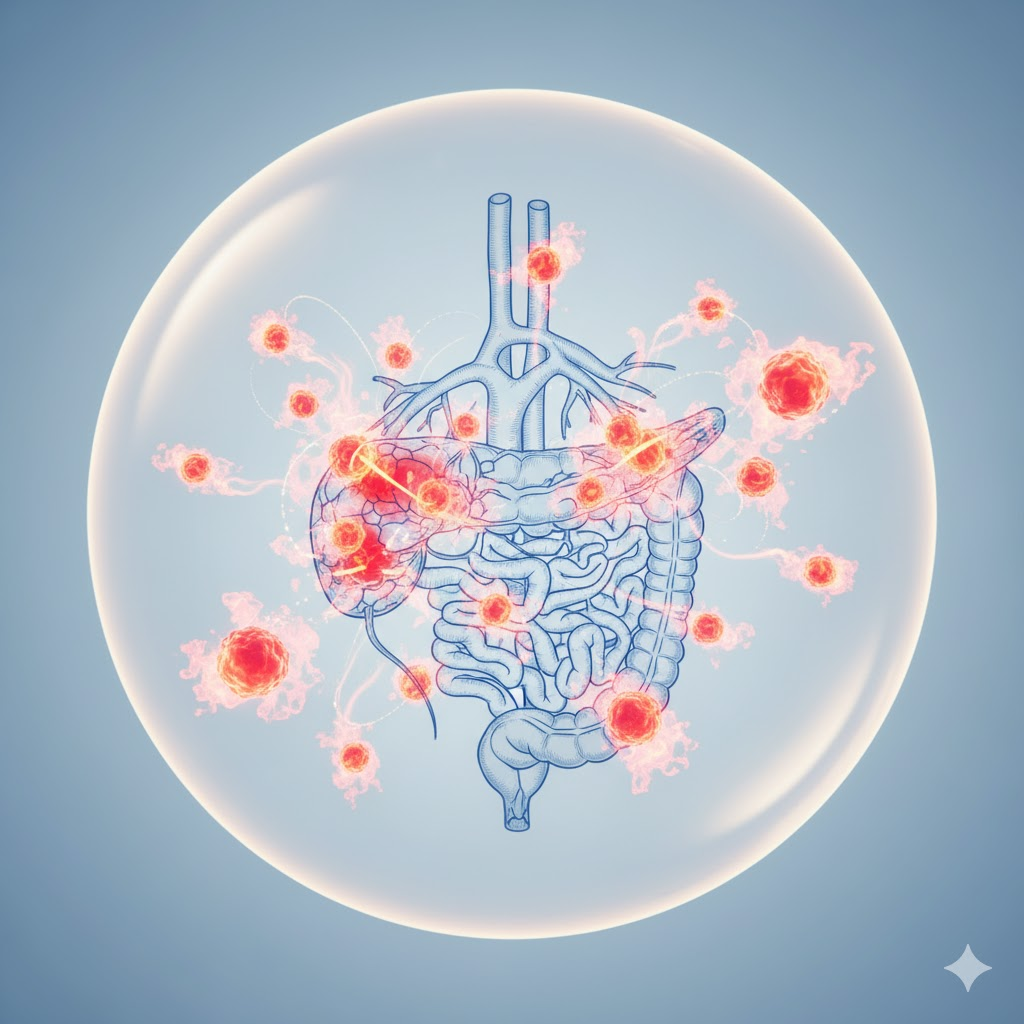
When the Body’s Fire Burns Too Gently: Understanding Autoimmune Pancreatitis
We rarely think about the pancreas — that quiet organ deep behind the stomach that quietly helps us digest food and balance blood sugar.
But when this organ becomes inflamed, even simple meals can turn into discomfort, fatigue, and confusion about what’s happening inside.
For some people, this inflammation comes not from infection or diet, but from the body itself — a condition known as Autoimmune Pancreatitis.
If you’ve been feeling persistent digestive trouble, unexplained tiredness, or weight loss without trying, it might be your body’s way of asking for understanding.
So… What Exactly Is Autoimmune Pancreatitis?
Your pancreas has two main jobs — to release digestive enzymes that help break down food and to produce insulin that controls sugar levels in the blood.
In Autoimmune Pancreatitis (AIP), the immune system becomes confused and begins to attack the pancreas, causing it to swell and harden over time.
This inflammation makes it difficult for the pancreas to work properly. As a result, digestion slows down, nutrients aren’t absorbed as they should be, and blood sugar levels may become unstable.
There are two main forms — Type 1 and Type 2 — but both share a similar story: the immune system, instead of defending, turns inward.
How It Feels
Autoimmune Pancreatitis can appear gradually, often mimicking other conditions. Many people spend months searching for answers before realizing it’s not just a “stomach problem.”
Common experiences include:
- Persistent upper abdominal pain or tenderness
- Loss of appetite and weight without clear reason
- Fatigue that lingers even after rest
- Jaundice (yellowing of the skin or eyes)
- Nausea or digestive discomfort after meals
- Dark urine or pale stools
- Occasional back pain
- Mild swelling or fullness in the abdomen
These symptoms may come and go, but they often return if the inflammation remains unaddressed.
What Causes It?
In autoimmune conditions, the immune system loses its clear sense of direction and begins to attack healthy tissue.
In this case, the pancreas becomes the unintended target.
Sometimes, AIP is linked to other autoimmune disorders such as thyroid disease, sclerosing cholangitis, or inflammatory bowel disease.
It is not caused by diet or lifestyle alone, though those can influence how severe it feels.
Genetic tendencies, infections, and emotional stress may also contribute to triggering the immune imbalance.
Homeopathic Approach: Gentle Healing from the Inside
In homeopathy, Autoimmune Pancreatitis is seen as a disturbance in the body’s self-regulating intelligence — where the inner defense system, once protective, becomes overactive and forgets balance.
Rather than suppressing the immune system, homeopathy seeks to retrain it, encouraging calm and coordination between all organs.
It aims to restore digestion, improve energy, and reduce inflammation by strengthening the body’s own healing rhythm.
A homeopathic consultation explores more than symptoms — it looks into your emotional state, stress patterns, and personal reactions.
Because no two people experience illness the same way, remedies are selected individually.
Commonly considered remedies may include:
- Lycopodium Clavatum – for bloating, gas, and digestive weakness with fatigue.
- Chelidonium Majus – when liver and pancreas both feel congested, with yellowish skin and right-sided pain.
- Iris Versicolor – for burning in the stomach and pancreas region, with nausea and acidity.
- Phosphorus – for weakness, nervous sensitivity, and loss of appetite.
- Calcarea Carbonica – for slow digestion, chilliness, and exhaustion.
Always consult a trained homeopath for personalized remedy selection
Each remedy supports the body gently, helping it find its way back to equilibrium without forcing or suppressing natural processes.
Daily Care That Makes a Difference
- Eat smaller, well-balanced meals that are gentle on digestion.
- Avoid excess fat, alcohol, and processed foods.
- Drink plenty of water and include mild herbal teas.
- Rest when your body asks; fatigue is a message, not a weakness.
- Manage stress through breathing, quiet time, or simple walks.
- Follow up with your healthcare provider for ongoing support.
These small adjustments help the pancreas rest and heal more efficiently.
Life After Awareness
Hearing that your pancreas is under immune attack can be unsettling, but it’s also a turning point — a moment when you can begin to understand what your body truly needs.
Your system isn’t broken; it’s overwhelmed and asking for balance.
With proper care, mindful living, and a homeopathic approach that listens instead of fights, many people regain their energy, appetite, and sense of well-being.
Healing, in this condition, is not just physical — it’s a quiet process of helping the body remember harmony.
And once that begins, the strength returns, the digestion settles, and life feels lighter again.


Leave a Reply