
When the World Slowly Loses its Clarity
There are moments when vision changes so quietly that we barely notice at first. Colors soften. Lights glare more than they used to. Reading becomes tiring. Cataracts often arrive this way—gently, gradually—asking for attention rather than alarm.
Understanding cataracts
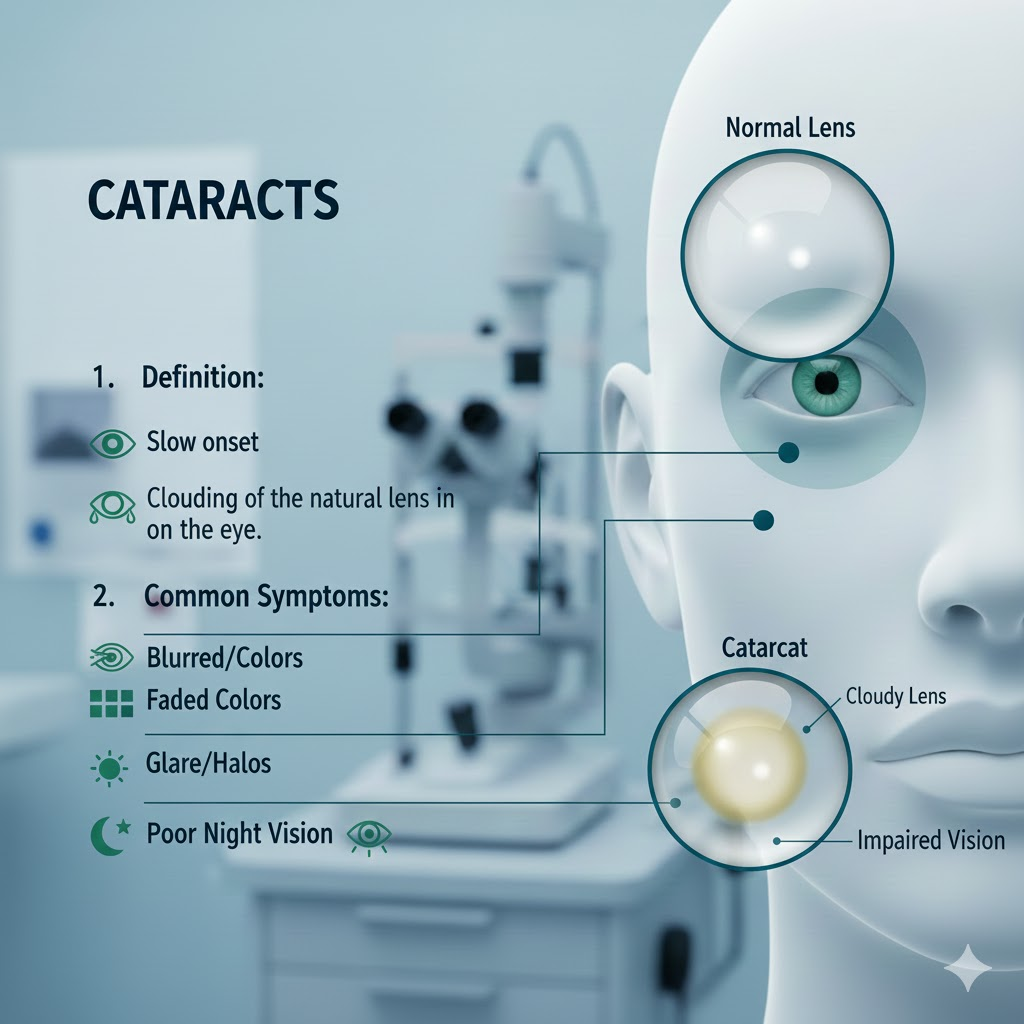
A cataract is a clouding of the eye’s natural lens. This lens, normally clear, helps focus light so we can see sharply. Over time, proteins within the lens may clump together, creating a haze that interferes with vision.
Cataracts are most commonly linked with aging, but they may also develop due to:
- Long-term sun exposure
- Diabetes
- Eye injuries or surgeries
- Certain medications (especially steroids)
- Smoking or heavy alcohol use
- Nutritional deficiencies
They are not contagious, and they do not appear overnight.
How cataracts may feel
People often describe cataracts not as pain, but as a slow dimming of life’s details:
- Blurred or cloudy vision
- Increased sensitivity to light or glare
- Fading or yellowing of colors
- Difficulty seeing at night
- Frequent changes in eyeglass prescription
- Halos around lights
Emotionally, this gradual loss of clarity can feel unsettling—especially for those who value independence or detailed work.
A holistic understanding
From a holistic perspective, cataracts are sometimes seen as more than a physical change alone. Vision is deeply connected to how we perceive the world and our future. When clarity fades, it can mirror inner fatigue, long-held stress, or resistance to change.
This view does not replace medical care—but it can gently complement it.
Supportive homeopathic and natural approaches
(These approaches aim to support eye health and overall balance, not replace medical evaluation or surgery.)
Commonly considered remedies in homeopathy may include:
- Calcarea carbonica – often considered when cataracts develop slowly, especially in people who tire easily
- Silicea – sometimes used when degeneration is gradual and sensitivity is present
- Natrum muriaticum – considered when vision changes accompany emotional reserve or prolonged stress
A qualified homeopath individualizes remedies carefully—there is no single remedy for all.
Daily care for eye nourishment
Small, consistent acts can support eye health:
- Wear UV-protective sunglasses outdoors
- Rest your eyes regularly from screens
- Eat foods rich in antioxidants (leafy greens, carrots, berries)
- Stay well hydrated
- Manage blood sugar levels if diabetic
- Avoid smoking
Gentle eye relaxation practices—like closing the eyes and breathing deeply for a minute—can soothe visual fatigue.
A quiet closing reflection
Cataracts remind us that clarity is precious—both in sight and in life. Whether through nourishment, reflection, gentle remedies, or modern medicine, restoring vision is about more than seeing clearly again. It is about reconnecting with the world in color, light, and confidence.
If you’d like, I can also share:
- Early vs advanced cataract stages
- Cataracts in diabetes
- Homeopathic remedy profiles in more detail
- Post-surgery holistic eye care


Leave a Reply