
When Food Turns Against You: Understanding Celiac Disease
For most of us, food is comfort. The smell of warm bread, the softness of a chapati, or a family meal shared around the table — it all feels simple and safe.
But for someone living with Celiac Disease, even a small piece of bread can bring pain, exhaustion, or a wave of discomfort that lingers for days.
This isn’t an allergy or a passing sensitivity. It’s the body’s own defense system turning against itself — mistaking a simple protein found in wheat, barley, and rye (called gluten) as a harmful invader.
The result is a long-term struggle inside the gut, where inflammation quietly damages the delicate lining meant to absorb life’s nutrients.
Over time, the body weakens, not from lack of food, but from not being able to use what it’s given.
So… What Exactly Is Celiac Disease?
Celiac Disease is an autoimmune disorder where the immune system reacts abnormally to gluten — a protein found in everyday foods like bread, pasta, biscuits, and cereals.
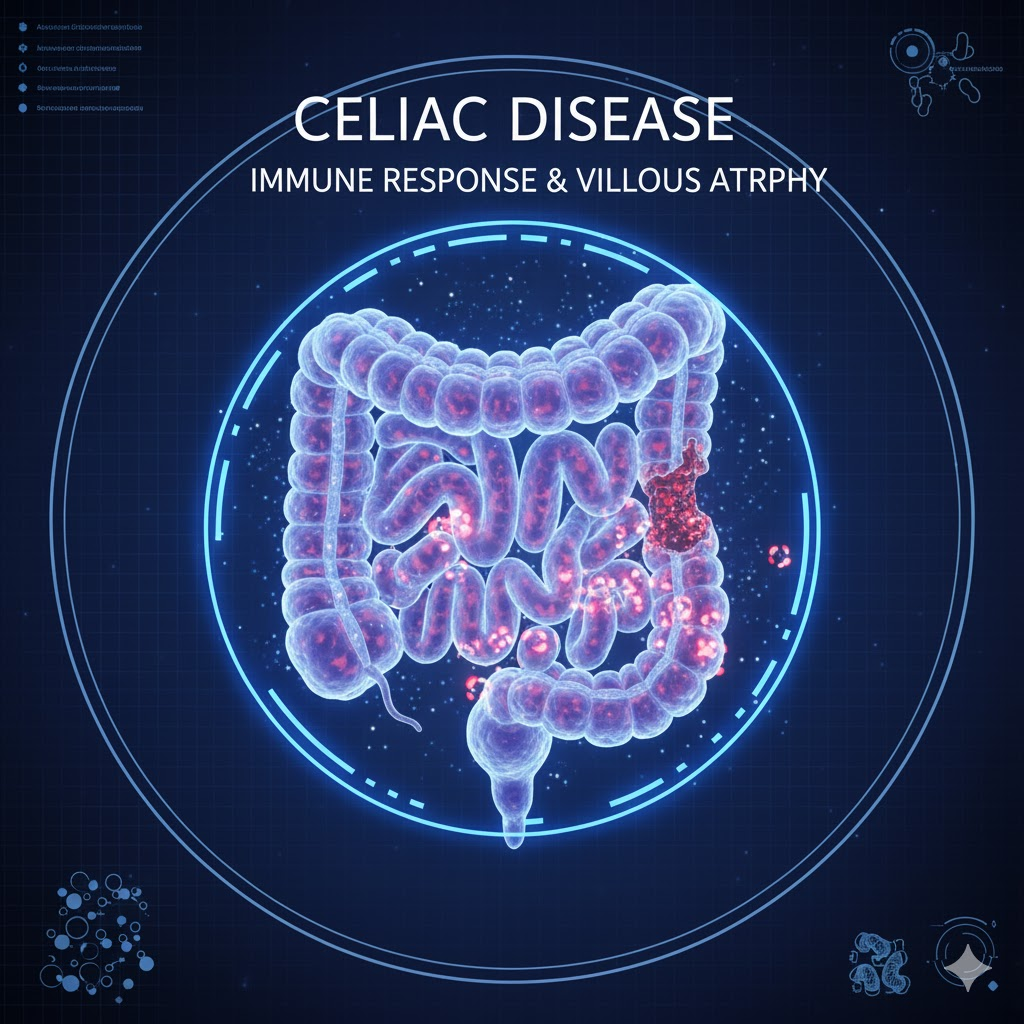
When someone with Celiac Disease eats gluten, their immune cells mistakenly attack the small intestine’s lining.
This damages the villi — tiny finger-like projections that absorb nutrients.
As they flatten and weaken, the body can no longer absorb vitamins, minerals, and fats properly, leading to a range of symptoms that often seem unrelated at first.
How It Feels
Celiac Disease doesn’t always shout — sometimes, it whispers for years before it’s recognized.
Common signs include:
- Bloating, gas, or frequent stomach pain after eating
- Diarrhea or constipation that lingers
- Unexplained weight loss or nutrient deficiencies
- Tiredness, brain fog, or low mood
- Pale skin, brittle nails, or hair thinning
- In children, slow growth or delayed development
Each person’s experience is different — some feel intense digestive pain, while others simply feel worn down, unable to find the energy they once had.
What Causes It?
The root cause lies in a genetic predisposition combined with an immune misunderstanding.
When gluten enters the system, the immune response triggers inflammation in the small intestine.
This process can be influenced by:
- Family history of autoimmune disorders
- Gut infections or severe digestive stress
- Emotional strain that weakens immunity
- Environmental or dietary changes
It’s not caused by bad eating habits or poor lifestyle choices — it’s the body’s confusion between nourishment and harm.
Homeopathic Approach: Healing Beyond Diet
While removing gluten is essential, many people continue to feel weak, anxious, or reactive — even with careful diets.
That’s where homeopathy can offer additional support.
Homeopathy views Celiac Disease as more than a gut issue; it’s an imbalance in the body’s defense and assimilation — the ability to take in nourishment, not only from food but from life itself.
The aim is to restore inner harmony so the body no longer reacts violently to what should sustain it.
Each person’s remedy is chosen individually — based on physical symptoms, emotional responses, and personal history.
Commonly considered remedies include:
- Natrum Muriaticum – for those who feel tired, sensitive, and crave salty food, with dryness and digestive discomfort.
- Arsenicum Album – for burning stomach pains, restlessness, and weakness after eating.
- Lycopodium Clavatum – for bloating, fullness, and sluggish digestion, especially when confidence feels low.
- Silicea – for chronic weakness, poor nutrient absorption, and fatigue after meals.
- Calcarea Carbonica – for slow digestion, food sensitivities, and anxiety around health.
Always consult a trained homeopath for personalized remedy selection
Homeopathy aims to strengthen the digestive resilience, calm immune overactivity, and gently retrain the body’s inner communication.
It works not by force, but by guiding the system back toward natural balance.
Daily Care That Supports Healing
- Follow a fully gluten-free diet — it’s the foundation of recovery.
- Cook fresh, simple meals; avoid processed foods with hidden gluten.
- Rest when fatigue sets in; healing takes energy.
- Spend time in sunlight to rebuild vitamin D naturally.
- Stay hydrated and support the gut with probiotic-rich foods (if tolerated).
- Manage stress — calm digestion begins with a calm mind.
With time, the gut can rebuild, nutrients return, and energy renews.
Life After Awareness
Celiac Disease can change a person’s relationship with food — and with life.
But it’s not a loss; it’s a call to awareness.
Every meal becomes a mindful act, every choice a way of honoring what the body truly needs.
With patience and gentle support, the digestive system learns to trust again.
Pain fades, clarity returns, and strength rebuilds from within.
Homeopathy helps remind the body of its natural intelligence — that it knows how to heal, absorb, and thrive when given the right direction.
Your body isn’t broken; it’s communicating.
And when you listen deeply enough, it begins to whisper something new —
“I’m ready to heal.”


Leave a Reply