
How Your Body Asks for Gentleness and Support
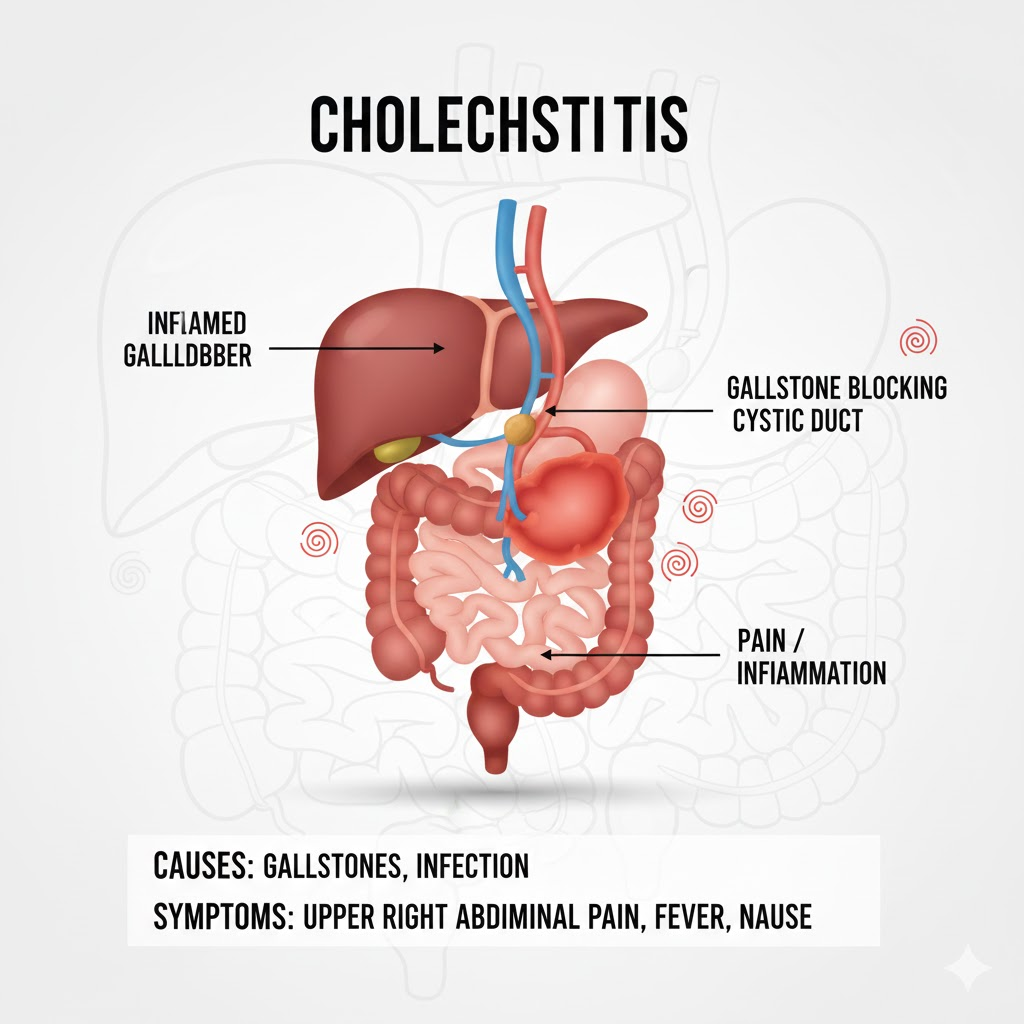
Cholecystitis is inflammation of the gallbladder, the small organ that quietly stores and releases bile to aid digestion. When it becomes inflamed, it is often a sign that the body has been overloaded, stressed, or irritated, and the digestive system is asking for gentleness and support.
From a homeopathic perspective, cholecystitis reflects not only physical imbalance but also internal pressure, tension, and suppressed stress, which the body communicates through discomfort and pain.
Understanding cholecystitis gently
The gallbladder plays a vital role in digesting fats. Inflammation may occur due to:
- Gallstones or sludge obstructing bile flow
- High-fat or heavy meals
- Long-standing digestive weakness
- Infection or inflammation
- Emotional tension or stress affecting digestive rhythm
- Sedentary lifestyle or metabolic imbalance
Even if intermittent, gallbladder discomfort leaves the body guarded and cautious around food, especially rich meals.
How cholecystitis feels
People often describe:
- Pain in the upper right abdomen, sometimes radiating to the back or shoulder
- Nausea, vomiting, or indigestion
- Bloating or heaviness after meals, especially fatty foods
- Occasional fever or chills in acute episodes
- Anxiety or emotional tension linked to physical discomfort
- General fatigue or malaise during flare-ups
The body feels both physically strained and emotionally tense.
The homeopathic way of seeing cholecystitis
Homeopathy views cholecystitis as reflecting:
- Digestive strain and stagnation
- Weak bile flow or gallbladder function
- Internal tension and emotional holding
- Constitutional predisposition to inflammation
- Fatigue and depletion of digestive vitality
The aim is to support natural healing, reduce inflammation gently, and restore digestive harmony.
Homeopathic remedies often considered
(Educational reference only — remedies must be individualized by a qualified homeopath)
- Chelidonium majus
For pain in the right upper abdomen, radiating to the back or shoulder, often better with pressure. - Lycopodium clavatum
For bloating, fullness, and digestive weakness, especially after fatty meals. - Nux vomica
For gallbladder discomfort linked to overindulgence, stress, or irregular habits. - China officinalis
For weakness, bloating, and exhaustion after flare-ups, especially with fluid loss or diarrhea. - Carduus marianus
For liver and gallbladder support, particularly in chronic irritation or sluggish bile flow. - Belladonna
For sudden, intense pain with redness, heat, and throbbing sensations.
Daily care that supports the gallbladder
- Eat small, frequent, low-fat meals
- Avoid fried, greasy, or heavily spiced foods
- Maintain gentle physical activity to aid digestion
- Hydrate well with warm fluids
- Practice stress reduction — tension worsens digestive pain
- Rest after flare-ups; do not force activity
- Gentle abdominal massage may soothe discomfort if not acute
A human closing
Cholecystitis is the body’s way of asking for gentleness and care, especially around digestion and internal pressure. The gallbladder speaks through pain and tension, reminding us to slow down, eat mindfully, and honor our limits.
Homeopathy provides a constitutional, compassionate approach — supporting healing, reducing inflammation naturally, and restoring confidence in the body’s digestive rhythm.


Leave a Reply