
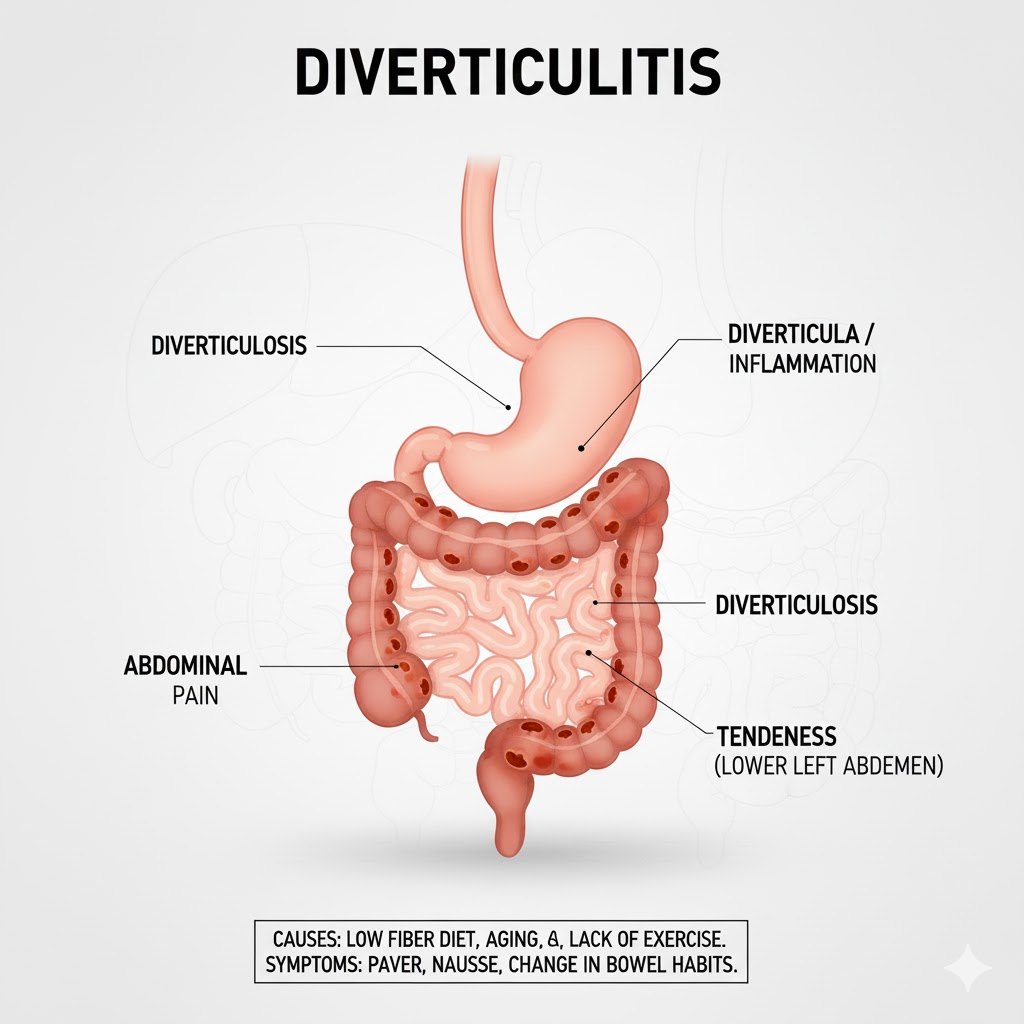
Understanding Diverticulitis as a Call for Digestive Care
Diverticulitis occurs when small pouches (diverticula) in the intestinal wall become inflamed or infected. Beyond the medical description, it is the body’s way of signaling that the digestive system is overwhelmed, irritated, or carrying long-term strain.
From a homeopathic perspective, diverticulitis is not only a physical condition — it reflects a need for gentle care, digestive support, and emotional balance.
Understanding diverticulitis gently
The colon normally moves food and waste efficiently. Diverticulitis may develop due to:
- Chronic constipation or irregular bowel movements
- Low-fiber diet or poor hydration
- Digestive sluggishness or imbalance
- Emotional tension or stress affecting gut function
- Age-related weakening of the intestinal walls
- Occasional infection of existing pouches
Even mild inflammation can leave the body tense, uncomfortable, and cautious around food.
How diverticulitis may feel
People often describe:
- Lower abdominal pain, often on the left side
- Bloating, cramping, or tenderness
- Fever, chills, or fatigue during acute flare-ups
- Nausea or mild digestive upset
- Sensitivity to certain foods or meals
- Emotional tension or irritability connected to discomfort
The condition is both physically and emotionally challenging, requiring careful attention.
The homeopathic way of seeing diverticulitis
Homeopathy views diverticulitis as:
- Localized digestive inflammation and imbalance
- Accumulation or stagnation in the colon due to irregular habits
- Emotional and nervous system sensitivity manifesting physically
- Constitutional tendency toward slow digestion, constipation, or weakened tissue
Treatment focuses on soothing inflammation, restoring bowel rhythm, and supporting overall digestive resilience.
Homeopathic remedies often considered
(Educational reference only — remedies must be individualized by a qualified homeopath)
- Colocynthis
For cramping and pain relieved by bending forward or pressure. - Nux vomica
For flare-ups linked to overindulgence, stress, or irregular bowel habits. - Bryonia alba
For pain worsened by movement, hard abdomen, and tenderness. - Aloe socotrina
For intestinal irritation, mucus, and cramping. - Arsenicum album
For burning, restlessness, weakness, and sensitivity, often worse at night. - Mercurius solubilis
For digestive discomfort with inflammation, mucus, or sensitivity to food.
Daily care that supports the colon
- Eat high-fiber foods (vegetables, fruits, whole grains) gradually
- Stay hydrated with warm water and herbal teas
- Establish regular bowel habits and avoid suppression of natural urges
- Gentle physical activity supports bowel movement and circulation
- Manage stress and emotional tension, which can worsen symptoms
- During flare-ups, eat light, easily digestible meals and rest
- Avoid processed, fried, and spicy foods until recovery
A human closing
Diverticulitis is the body’s way of asking for gentleness, routine, and care. It reminds us that digestion is not just mechanical, but deeply tied to emotional balance, habits, and overall vitality.
Homeopathy provides a compassionate, individualized approach — easing inflammation, strengthening the colon, restoring rhythm, and supporting the whole person physically and emotionally.


Leave a Reply