
A compassionate homeopathic perspective
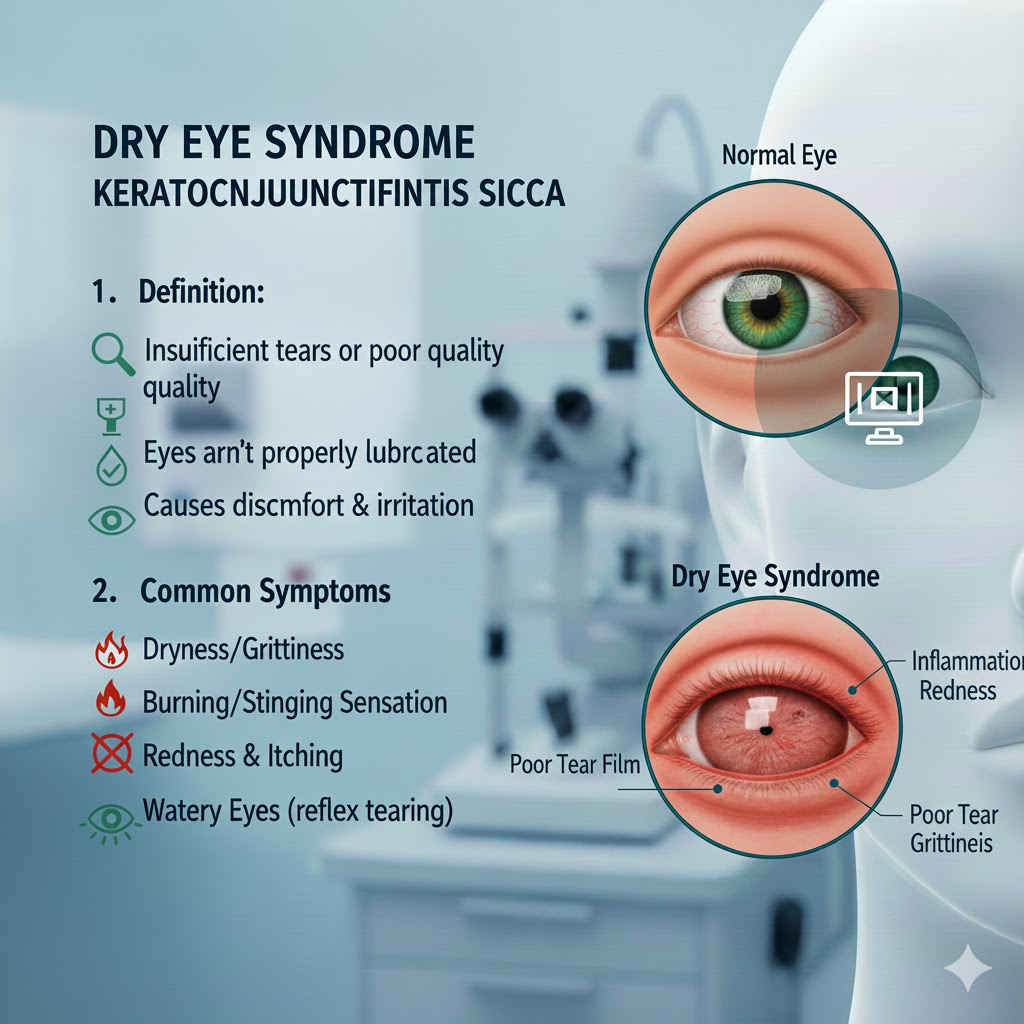
Dry eye is a condition in which the eyes do not produce enough tears or the tears evaporate too quickly, leading to discomfort, irritation, and sometimes blurred vision. It is increasingly common in modern life due to screen use, environmental factors, or underlying health conditions.
Homeopathy approaches dry eye holistically, focusing on the person’s overall vitality, eye tissue health, and constitutional balance, rather than only treating the symptom of dryness.
What happens in dry eye
- Tears are essential for lubricating, nourishing, and protecting the eyes.
- When tear production is insufficient or tears evaporate too quickly, the surface of the eye becomes irritated and inflamed.
- Contributing factors include:
- Prolonged screen time or reading
- Environmental dryness (air conditioning, wind, pollution)
- Aging or hormonal changes
- Autoimmune disorders (like Sjogren’s syndrome)
- Contact lens use or medications
- Prolonged screen time or reading
Common symptoms
- Dryness, burning, or stinging in the eyes
- Redness or irritation
- Grittiness, as if something is in the eye
- Blurred vision, especially after prolonged visual tasks
- Sensitivity to light or wind
- Excessive tearing (reflex tearing) in response to dryness
Symptoms may be intermittent or persistent, and they often worsen with fatigue or environmental exposure.
Homeopathic perspective
Homeopathy treats dry eye constitutionally, addressing:
- Weakness or sensitivity of ocular tissues
- Nervous system imbalance or fatigue
- Systemic dryness or metabolic tendencies
- Overall vitality and immune balance
The goal is to support natural tear production, eye tissue health, and systemic resilience, complementing lifestyle measures.
Commonly considered homeopathic remedies
(Educational reference only; individualized prescription by a qualified homeopath is essential)
- Euphrasia officinalis: For burning, irritation, and watery eyes with dryness in the lids
- Argentum nitricum: For dryness with sensitivity to wind, dust, or light
- Calcarea phosphorica: For weak, tired eyes prone to dryness, especially in children or growing individuals
- Natrum muriaticum: When dryness is associated with chronic fatigue or systemic dryness
- Ruta graveolens: For eye strain-related dryness or discomfort from prolonged reading/screens
Remedy selection is based on the whole person, not just the eye symptom.
Supportive lifestyle and eye care
- Take regular breaks from screens (20-20-20 rule: every 20 minutes, look 20 feet away for 20 seconds)
- Use lubricating, preservative-free eye drops if recommended
- Maintain hydration and balanced nutrition, including omega-3 fatty acids and antioxidants
- Protect eyes from wind, dust, and dry air
- Practice gentle eye exercises and eyelid hygiene to stimulate tear flow
- Manage stress and fatigue, which can worsen dryness
A human-centered reflection
Dry eye is a signal that the eyes and body need nourishment, rest, and balance. Homeopathy offers a compassionate, constitutional approach to restore comfort, support tear production, and strengthen overall resilience.
I can also prepare a full homeopathic guide for dry eye, including constitutional remedies, daily routines, dietary and lifestyle strategies, and eye care practices, written entirely in a human-centered, compassionate style.





Leave a Reply