
When Your Body Asks for Rest, Restoration, and Gentle Support

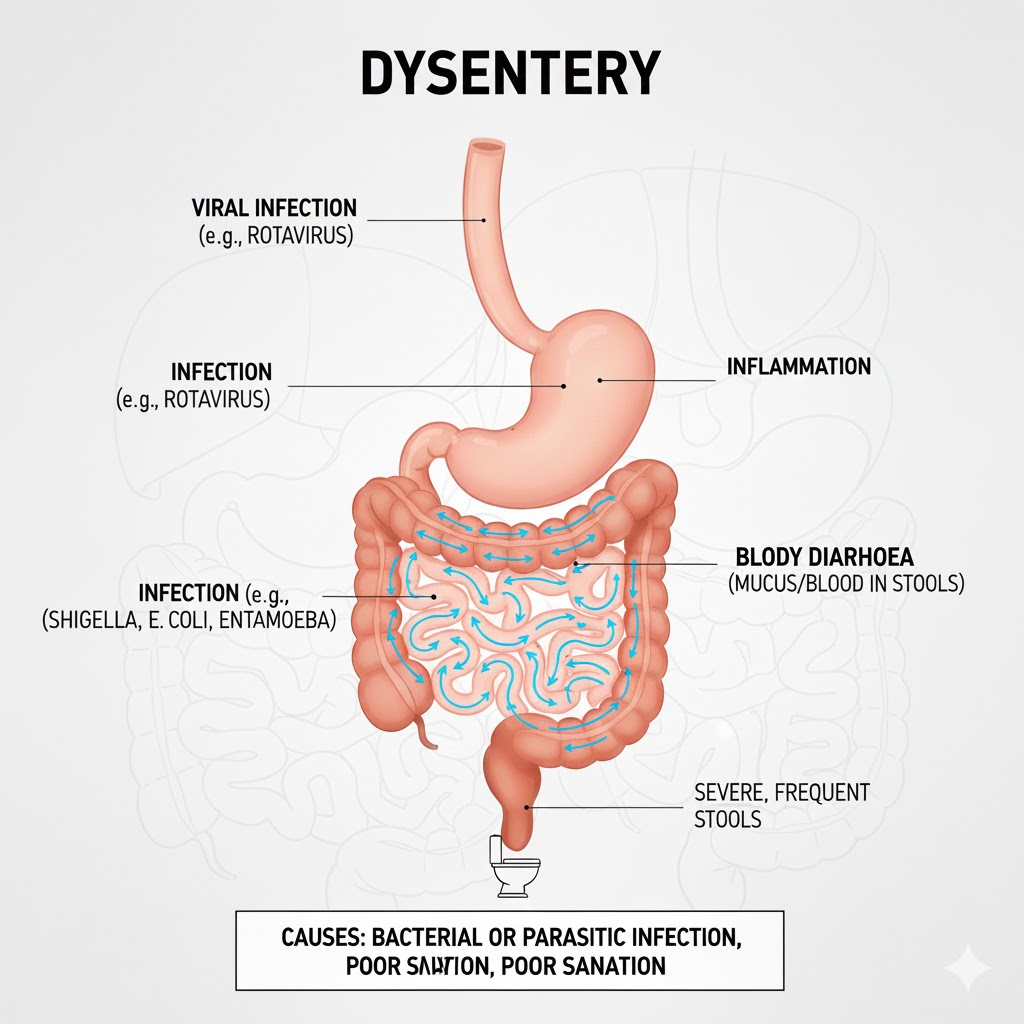
Dysentery is an intestinal infection that causes frequent, often painful stools, sometimes with blood or mucus. Beyond the medical description, it is the body’s urgent way of saying: “I am overwhelmed and need gentle support.”
From a homeopathic perspective, dysentery reflects a system under stress — physically, emotionally, and energetically — and calls for care, rest, and restoration rather than merely symptom suppression.
Understanding dysentery gently
The intestines normally absorb nutrients and maintain rhythm. Dysentery occurs when:
- Infection inflames the intestinal lining
- Digestive and immune strength is weakened
- Emotional stress or fatigue compromises resilience
- Diet or hydration has been insufficient
Even mild cases leave the body feeling depleted, weak, and cautious about nourishment.
How dysentery feels
People often describe:
- Frequent, urgent stools, sometimes containing blood or mucus
- Abdominal cramps, pain, and heaviness
- Nausea or loss of appetite
- Weakness, fatigue, and dizziness
- Sensitivity to certain foods or smells
- Emotional tension, anxiety, or irritability
It is a physically and emotionally draining experience, signaling the need for attentive care.
The homeopathic way of seeing dysentery
Homeopathy views dysentery as:
- Disruption of intestinal balance and digestive rhythm
- Temporary depletion of strength and vitality
- Nervous system and emotional sensitivity
- Constitutional tendencies toward inflammation or digestive weakness
The goal is to soothe, support, and restore natural balance, aiding both physical recovery and emotional resilience.
Homeopathic remedies often considered
(Educational reference only — remedies must be individualized by a qualified homeopath)
- Arsenicum album
For watery diarrhea, burning, restlessness, and fatigue; often worse at night. - Mercurius solubilis
For stools with mucus or blood, offensive odor, and intestinal irritation. - Podophyllum
For profuse, watery diarrhea with urgency and weakness. - China officinalis
For depletion, bloating, and weakness following diarrhea or dysentery. - Ipecacuanha
For constant nausea, vomiting, and abdominal discomfort with loose stools. - Aloe socotrina
For intestinal irritation, cramping, and incomplete evacuation.
Daily care that supports recovery
- Drink clean, safe water to prevent dehydration
- Rest and allow the body to heal
- Eat light, easily digestible foods when appetite returns
- Avoid raw, fried, spicy, and processed foods
- Maintain good hygiene to prevent spread
- Gentle abdominal warmth can soothe cramps
- Emotional calm and gentle attention support recovery
A human closing
Dysentery is the body’s way of crying out for care, nourishment, and calm. While physically demanding, it is temporary, and the body has the capacity to recover fully.
Homeopathy helps the body regain rhythm, restore strength, and rebuild confidence in digestion, treating not just the infection, but the whole person with care and compassion.


Leave a Reply