
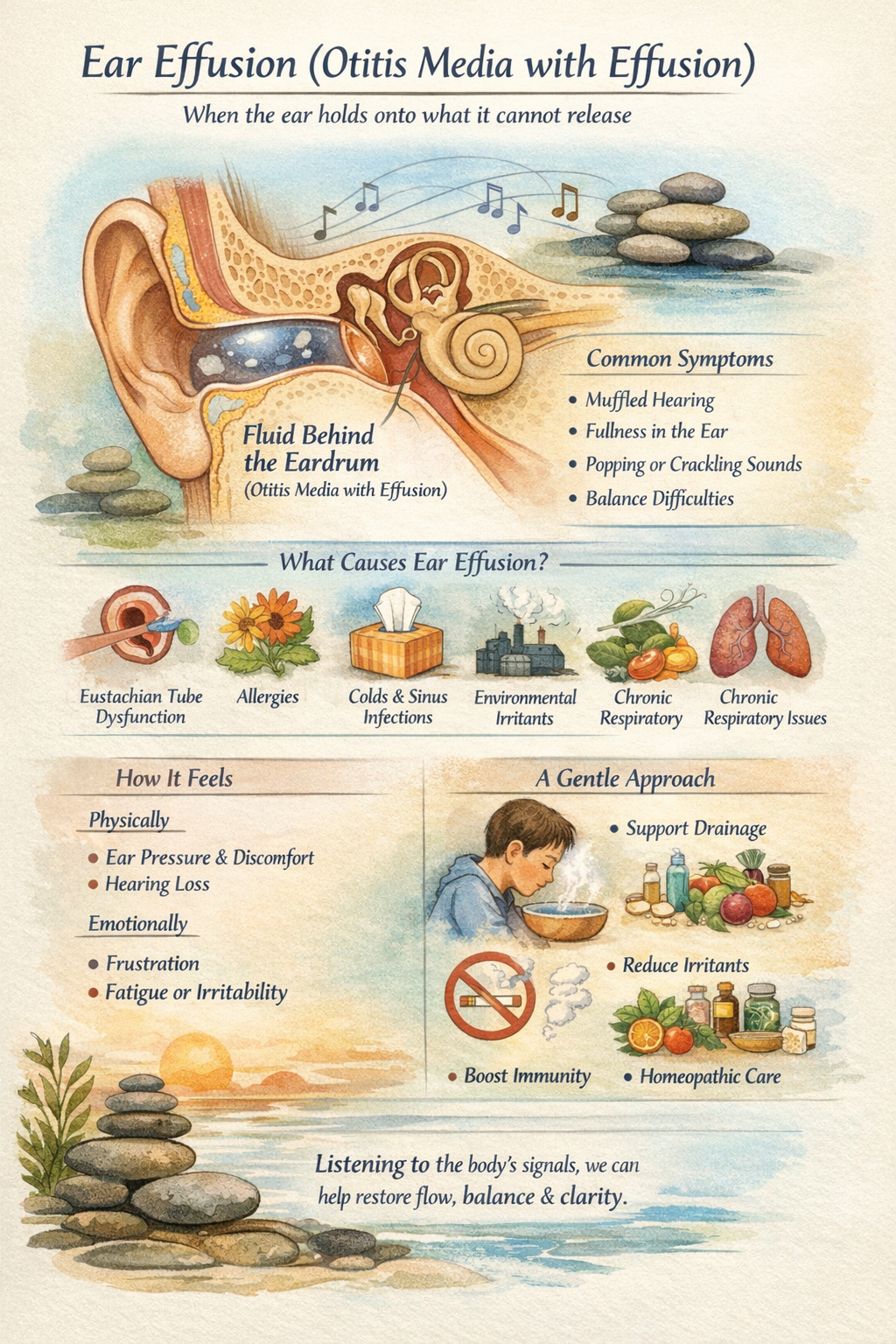
When the ear holds onto what it cannot release
A Gentle Opening
The ears are not only the organs of hearing but gateways of balance and orientation.
Sometimes, fluid accumulates quietly behind the eardrum, creating a sense of fullness, muffled sounds, or subtle discomfort.
Ear effusion often does not arrive with dramatic pain or fever.
Instead, it lingers silently, reminding the body that a gentle imbalance exists.
It whispers: “I am struggling to drain. I need support.”
Understanding the Condition
Ear effusion, or Otitis Media with Effusion (OME), occurs when fluid collects in the middle ear without active infection.
It can result from:
- Eustachian tube dysfunction
- Allergies
- Recent colds or sinus infections
- Environmental irritants
- Chronic inflammation of the upper respiratory tract
Symptoms may include:
- Muffled hearing or sensation of fullness
- Popping or crackling sounds in the ear
- Balance disturbances or mild dizziness
- Occasional mild discomfort
- Speech or language delays in children if prolonged
Unlike acute infections, ear effusion is often subtle but can quietly affect daily life and development.
How It Feels — The Lived Experience
Physically:
- A persistent feeling of pressure in the ear
- Slight discomfort or ear “heaviness”
- Temporary hearing loss or difficulty following conversations
- Sensitivity to changes in air pressure
Emotionally:
- Frustration at muffled hearing or repeated interventions
- Anxiety in children due to reduced clarity of sound
- Low energy or irritability from disrupted sleep or concentration
Ear effusion reminds us that the body’s smallest passages can carry large consequences for comfort, communication, and balance.
Why It Happens — A Deeper Reflection
Fluid accumulates when the Eustachian tube cannot drain efficiently.
This may follow inflammation from infection, allergies, or environmental factors.
The body is not failing; it is signaling that drainage, balance, and gentle support are needed.
Persistent effusion is a quiet call to nurture, not a reflection of weakness.
The Homeopathic Understanding — Supporting Ear Balance
Homeopathy sees ear effusion as a chronic imbalance of the middle ear and immune response, often linked with systemic sensitivity.
A homeopath considers:
- Nature of hearing changes (muffled, popping, crackling)
- Associated discomfort or pain
- Frequency and triggers of fluid accumulation
- Sensitivity to cold, drafts, or weather changes
- Emotional responses and temperament
Commonly considered remedies include:
Pulsatilla
For fluid accumulation in children, especially with mild, bland discharge and changeable moods.
Kali Mur
For thick, sticky fluid, pressure, and recurrent effusion.
Hepar Sulphuris
For sensitivity, tenderness, and repeated fluid formation with slow healing.
Silicea
For chronic ear effusions, weak immunity, and slow resolution.
Calcarea Phosphorica
For developmental delays in children related to prolonged effusions or poor drainage.
(Homeopathic treatment should be guided by a qualified practitioner.)
Gentle Daily Support
- Encourage gentle nasal hygiene and saline rinses
- Maintain hydration to thin mucus
- Keep the ear dry and avoid inserting objects
- Reduce exposure to allergens, smoke, and pollution
- Promote upright posture to support natural drainage
- Support immunity with nourishing foods, rest, and emotional care
With patience, care, and homeopathic guidance, fluid can drain naturally, restoring hearing, balance, and comfort.
A Closing Reflection
Ear effusion is the body’s subtle message that flow and balance are essential.
By listening to the quiet signals, supporting drainage, and nurturing overall health, the ear can regain harmony.
Hearing clears, pressure eases, and the body’s silent work continues — reminding us that even the smallest structures carry profound wisdom and deserve gentle care.






Leave a Reply