
When the Skin Speaks of Inflammation: Understanding Erythema Nodosum
Sometimes the body doesn’t whisper through pain — it speaks in colors, warmth, and tenderness beneath the skin.
For many people, Erythema Nodosum (EN) begins this way — with small, painful nodules that rise quietly under the surface, most often on the legs, as if the body is trying to tell its story through touch and tenderness.
It’s not only a skin condition; it’s the body’s message — a sign that inflammation is moving through the system, seeking balance.
What Is Erythema Nodosum?
Erythema Nodosum is an inflammatory condition of the fat layer beneath the skin, called the subcutaneous tissue.
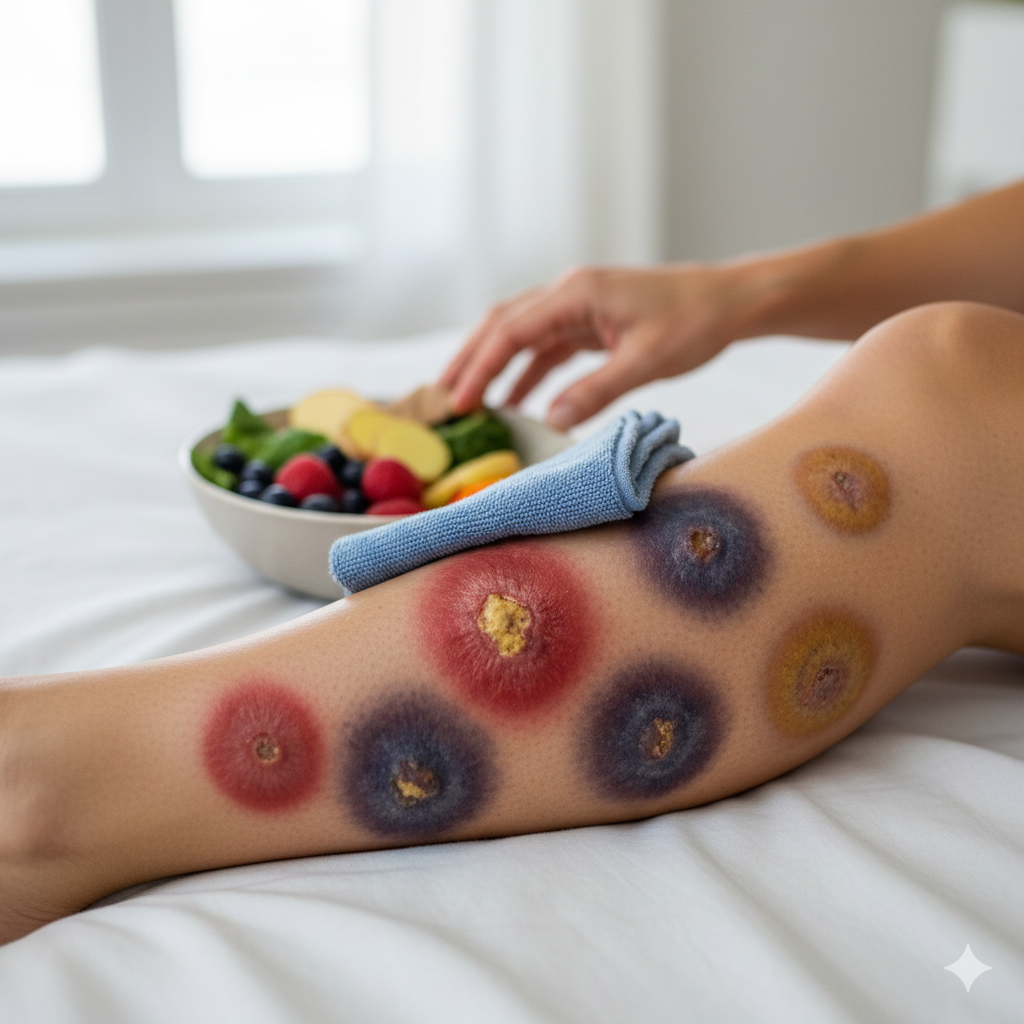
It often appears as red, tender lumps, usually on the shins, but sometimes on the thighs or forearms.
These nodules can be warm and painful to touch, changing color as they heal — from red to purplish, then yellowish — much like a fading bruise.
EN isn’t a disease on its own; it’s often a reaction — the immune system’s way of responding to something else happening in the body.
Sometimes it follows infections, medications, or autoimmune conditions.
Other times, it appears after stress, hormonal shifts, or with no clear reason at all — a quiet flare of inflammation that comes and eventually passes.
How It Feels
Erythema Nodosum doesn’t only touch the skin — it affects how one feels inside their body.
Common experiences include:
- Painful, raised red nodules, often on both legs
- Tenderness and swelling that make walking uncomfortable
- A sense of heat or burning in the affected areas
- Joint pain or stiffness
- Tiredness, mild fever, or general malaise during flare-ups
The pain can make simple movements feel heavy. It may come suddenly, stay for weeks, then fade — leaving behind both physical and emotional fatigue.
It’s a condition that asks for gentleness — from the world, and from oneself.
Why It Happens
The exact cause of EN can vary. What’s known is that it’s an inflammatory immune reaction — the body responding to triggers that it perceives as threats.
Possible underlying causes include:
- Infections (such as strep throat, tuberculosis, or viral illnesses)
- Autoimmune conditions (like sarcoidosis or inflammatory bowel disease)
- Certain medications (such as antibiotics or birth control pills)
- Pregnancy or hormonal changes
- Unknown factors — in some, no cause is ever found
It’s the immune system, in its effort to defend, sending inflammation to places it doesn’t belong.
Homeopathic Approach: Soothing the Inner Fire
Homeopathy views Erythema Nodosum as a sign that the body’s defense system is overreacting — that the inner flame of inflammation has risen too high.
The goal isn’t just to reduce the pain or redness, but to calm the immune system, helping it find balance again.
Remedies are chosen based on the person’s full picture — how the condition started, the pattern of symptoms, and the emotional undercurrents accompanying it.
Commonly considered remedies include:
- Belladonna – for sudden redness, heat, and swelling that come with throbbing pain.
- Rhus Toxicodendron – for painful nodules and stiffness that ease with gentle motion.
- Arsenicum Album – for burning pain with restlessness and anxiety.
- Silicea – for lingering inflammation and slow healing.
- Kali Iodatum – for nodules associated with deep soreness and warmth.
Each remedy works to gently teach the body how to cool its reaction — how to heal not only the skin, but the internal rhythm of balance.
A trained homeopath will listen deeply to the story your body tells — because behind every flare, there is meaning.
Gentle Care for Healing
The skin, being our outermost layer, reflects how we live within ourselves. Healing Erythema Nodosum often means caring for both surface and soul.
- Rest the legs during flare-ups; elevate them to ease swelling.
- Apply cool compresses or soothing herbal packs for relief.
- Eat light, anti-inflammatory foods — fruits, vegetables, and whole grains.
- Avoid overexertion, which can worsen tenderness.
- Stay hydrated, and allow time for rest and recovery.
- Manage emotional stress, as the immune system listens to inner tension.
Healing may take weeks, but each quiet day of rest helps the body cool its fires and rebuild its strength.
Finding Calm Beneath the Skin
Erythema Nodosum can feel raw — not just in the skin, but in the spirit.
It’s visible, tender, and hard to hide, a reminder that the body carries its burdens in ways we can see and touch.
But it’s also a condition that heals. Most flare-ups pass, leaving the skin soft again, the body lighter, the spirit a little wiser.
In many ways, EN teaches us to slow down — to honor inflammation as communication, not punishment.
It reminds us that healing doesn’t always come from fighting, but from listening — from offering calm where there has been too much reaction.
Your skin, your body, your immune system — they are all learning how to find balance again.
And in that quiet, patient process, healing unfolds — one softened breath, one fading nodule, one day of gentleness at a time.


Leave a Reply