
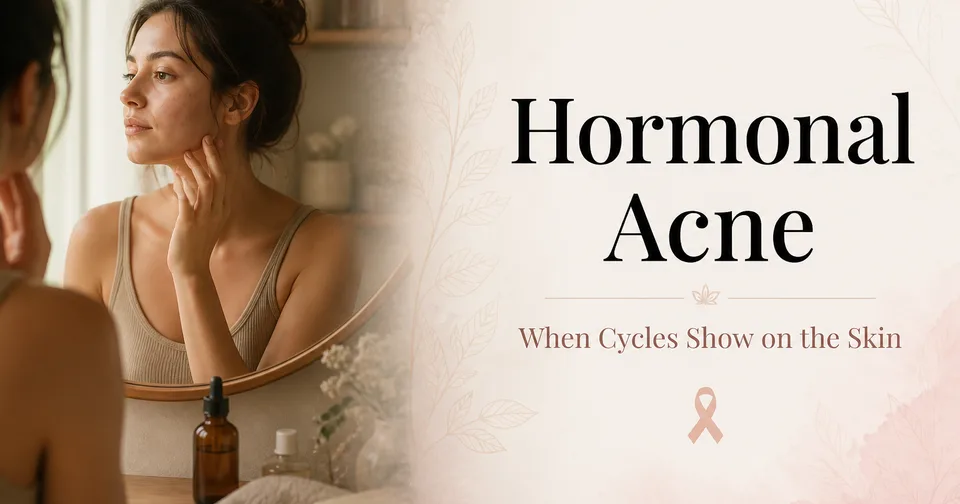
WHEN CYCLES SHAPE THE COMPLEXION
Hormonal acne often announces itself along the jawline, chin, and lower cheeks — deep, tender lesions that seem timed to the menstrual cycle, postpartum months, or midlife shifts. Unlike scattered teenage blackheads, these breakouts can feel personal and cyclical, arriving with bloating, mood changes, or restless sleep as if the skin were keeping a calendar of its own.
Many adults are surprised when acne returns after years of relative calm. Stress hormones, androgen fluctuations, polycystic ovary patterns, or stopping birth control can all tilt sebum production and follicle inflammation. The result is not “dirty skin,” but a body adjusting to a new internal climate — one that asks for steadier rhythms rather than harsher treatments.
People living with hormonal acne often describe a frustrating rhythm: a few quieter days after menses, then a slow build of tenderness under the skin before the next cycle. That predictability can be useful for planning care, yet it can also feel exhausting to anticipate the next flare before it even appears.
Understanding the Condition
Hormonal acne refers to breakouts strongly influenced by androgen activity and endocrine shifts. Lesions are often inflammatory nodules along the lower face and neck, sometimes with fewer classic blackheads than adolescent acne. Adult women commonly notice premenstrual worsening; men and people with polycystic ovary syndrome (PCOS) patterns may see persistent oily skin and deeper cysts.
Medical evaluation matters when acne is sudden, severe, scarring, or accompanied by irregular periods, excess hair growth, or other endocrine clues. Homeopathy, as practiced in complementary care settings in Canada, is not a replacement for diagnosis, hormonal investigation, emergency care, or prescribed dermatologic treatment. It may be considered as individualized supportive care that listens to the whole person alongside conventional guidance when needed.
In hormonal acne, people often notice patterns such as:
- Deep, painful chin and jawline lesions timed to the cycle
- Oily T-zone with dryness or sensitivity on the cheeks
- Premenstrual irritability, breast tenderness, or sleep disruption alongside flares
- Marks and texture change that linger after each monthly wave
- Frustration when topical “teen acne” routines feel too harsh for adult skin
Understanding hormonal acne means reading both the follicle and the endocrine story without reducing the person to a hormone chart.
How It Feels — The Human Experience
Hormonal acne can shake adult identity. Someone who felt “past acne years” may suddenly plan outfits around concealer and avoid close-up meetings near their expected flare window.
Common human experiences include:
- Discouragement when clear skin lasts only one week of the month
- Anxiety about long-term scarring along the jaw and neck
- Self-consciousness during dating, presentations, or postpartum photos
- Confusion about whether diet, stress, or hormones are “to blame”
- Relief when a practitioner validates the cyclical pattern instead of blaming hygiene
Partners and family help most by avoiding casual comments about “just washing more” and by supporting medical appointments when endocrine questions arise. Many people find dignity in tracking their own cycle-skin map and bringing that data into collaborative care.
The Homeopathic Understanding — Supporting the Vital Force
Homeopathy approaches hormonal acne as an expression of the vital force negotiating endocrine rhythm, sebum, inflammation, and emotional life. A homeopath studies timing relative to menses, lesion depth, modalities, thermal preference, and constitutional themes rather than prescribing for “hormones” alone.
In supportive care for hormonal acne, a homeopath may explore:
- Premenstrual versus mid-cycle versus postpartum timing of flares
- Whether lesions are cystic, nodular, or mixed with comedones
- Mood shifts, craving patterns, and sleep quality around flares
- History of PCOS concerns, pregnancy, or contraceptive changes
- Digestion, fluid retention, and overall vitality through the month
Remedies are individualized. The aim is gentle support of the body’s ordering intelligence — never a claim to cure hormonal imbalance or to replace medically necessary gynecologic or dermatologic care.
Commonly Considered Remedies
The following remedies are sometimes considered in homeopathic practice when the symptom picture matches. This list is educational and not a prescription:
- Sepia — when jawline acne accompanies hormonal shifts, fatigue, and emotional flatness
- Pulsatilla — when soft, changeable symptoms improve with open air and gentle company
- Natrum Muriaticum — when acne follows grief or emotional reserve, with oily yet dry patches
- Calcarea Carbonica — when chilly, sweaty, and sluggish constitutions meet stubborn nodular acne
- Lycopodium — when right-sided flares pair with digestive bloating and performance anxiety
- Folliculinum (as guided) — when history strongly centers on contraceptive or estrogen shifts
(All remedies must be individualized by a qualified homeopath. Self-prescribing for chronic or serious concerns is not advised. Continue any medically necessary care unless your physician advises otherwise.)
Gentle Daily Care
Skin-relevant daily habits that often support hormonal acne:
- Use a gentle cleanser and a light, non-comedogenic moisturizer suited to adult barrier needs
- Prefer consistent, mild actives over rotating harsh peels that rebound inflammation
- Protect with non-comedogenic sunscreen; remove makeup thoroughly each night
- Track cycle days, sleep, stress, and diet notes to share with your care team
- Choose breathable fabrics at the jaw and neck; avoid tight collars that irritate cysts
- Support steady sleep and blood-sugar-friendly meals, which many people find soften premenstrual flares
Consistency usually outperforms intensity. The goal is fewer deep lesions and calmer recovery between cycles — not perfection overnight.
A Closing Reflection
Hormonal acne is a dialogue between endocrine rhythm and the living skin. Beneath monthly storms of tenderness and oil, the vital force continues seeking balance. Supportive homeopathic care listens for that intelligence while medical partners address diagnosis, hormones, and scarring risk when needed.
Healing, in this complementary sense, is invited — through recognition of cycles, barrier kindness, emotional safety, and skilled listening. The skin is not failing adulthood. It is communicating a changing inner climate, and with attentive care many people find that climate more navigable over time.


Leave a Reply