
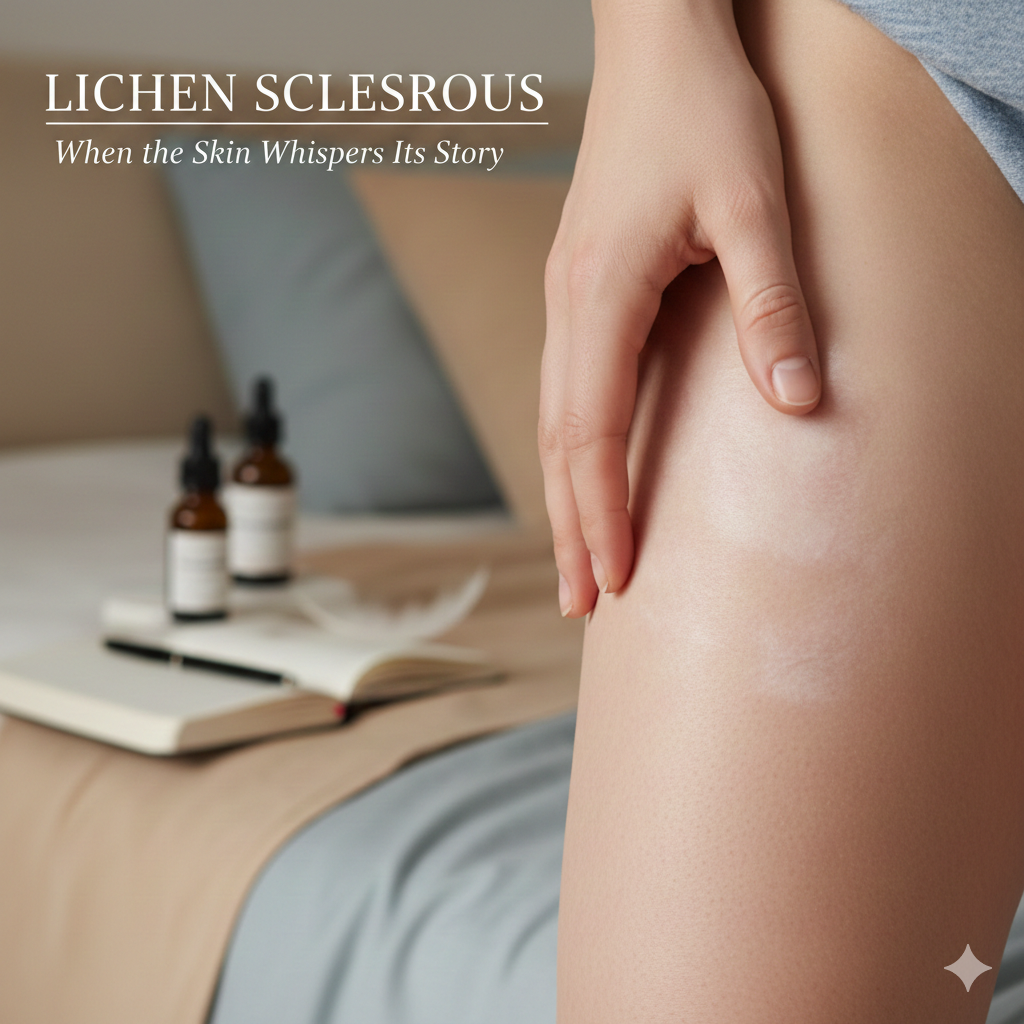
Lichen Sclerosus: When the Skin Whispers Its Story
Sometimes the body speaks in quiet ways. It is not a shout, but a gentle nudge, a feeling that something is out of balance. You might notice a patch of pale skin, thinner than usual, tender to touch. It may appear on intimate areas, or elsewhere, and over time, it seems to insist on being seen.
This is Lichen Sclerosus. It is not contagious. It is not a punishment. It is the body’s soft way of saying that it needs care, that it is carrying tension — sometimes physical, sometimes emotional — that longs to be released.
Understanding the Condition
The skin in Lichen Sclerosus becomes delicate, fragile, and occasionally itchy. In sensitive areas, it may feel tight or uncomfortable. It is often associated with periods of stress, emotional fatigue, or hormonal changes.
From a homeopathic perspective, the skin is not the problem itself. It is the mirror of what is happening inside. The immune system has been overactive or misdirected. The body is expressing something it cannot release through words or thoughts, so it uses the skin. It is a quiet message asking to be listened to, to be honored.
How It Feels
People with Lichen Sclerosus often describe small, persistent changes:
- Pale, fragile, sometimes shiny patches on the skin
- Tightness, soreness, or occasional burning
- Discomfort with movement or friction
- Nighttime itchiness that disturbs sleep
- A sense of vulnerability or self-consciousness
It is not just physical. There is often an emotional weight — a sense of being unsettled, tense, or worn down. The body is speaking softly, trying to bring attention to what has been ignored.
Homeopathic Understanding
Homeopathy sees these changes not as a problem to be suppressed, but as the body asking for support. The skin is the messenger; the vital force is seeking calm.
A remedy is chosen not for the name of the condition, but for the person — for how the skin feels, how the emotions are lived, how the energy shifts throughout the day.
The goal is to restore harmony, to help the body remember its natural rhythm, to soothe tension, and to allow the skin to feel safe and resilient again.
Gentle Remedies Often Considered
Each person’s picture is unique. A homeopath listens deeply before choosing a remedy. Some remedies commonly considered include:
- Sepia — for dryness, tightness, and emotional sensitivity; often when the body feels tired and withdrawn.
- Graphites — for fragile, cracked, or thickened skin; often with a reserved temperament and quiet inner tension.
- Sulphur — for intense irritation or itchiness, especially at night; often when there is restlessness in body and mind.
- Arsenicum Album — for burning or stinging discomfort, anxiety, and emotional unease accompanying physical symptoms.
- Thuja — for chronic changes in skin texture and tone, often linked to a history of sensitivity or prolonged stress.
These remedies do not fight the condition; they help the body find balance and self-regulation.
(Always work with a trained homeopath for personalized guidance.)
Daily Care That Supports Healing
Healing is a partnership with the body. Gentle daily habits can nurture recovery:
- Wear soft, non-restrictive clothing
- Use mild oils or creams to nourish fragile skin
- Avoid harsh soaps and chemicals
- Eat simple, wholesome foods
- Rest deeply and allow the body time to regenerate
- Acknowledge emotions; allow them safe expression through talk, writing, or reflection
Healing is gradual. Each act of kindness toward your body helps it release tension and remember its own wisdom.
A Closing Reflection
Lichen Sclerosus is not just a skin condition. It is a message — quiet, persistent, asking to be honored.
Homeopathy offers a gentle path: not suppression, but listening. Not urgency, but restoration.
As the body finds calm, the skin softens, the discomfort eases, and a deeper sense of peace returns. Healing touches not only the surface but the heart, the mind, and the spirit.
Your body is not failing. It is simply asking to be understood, cared for, and gently guided back to balance.


Leave a Reply