
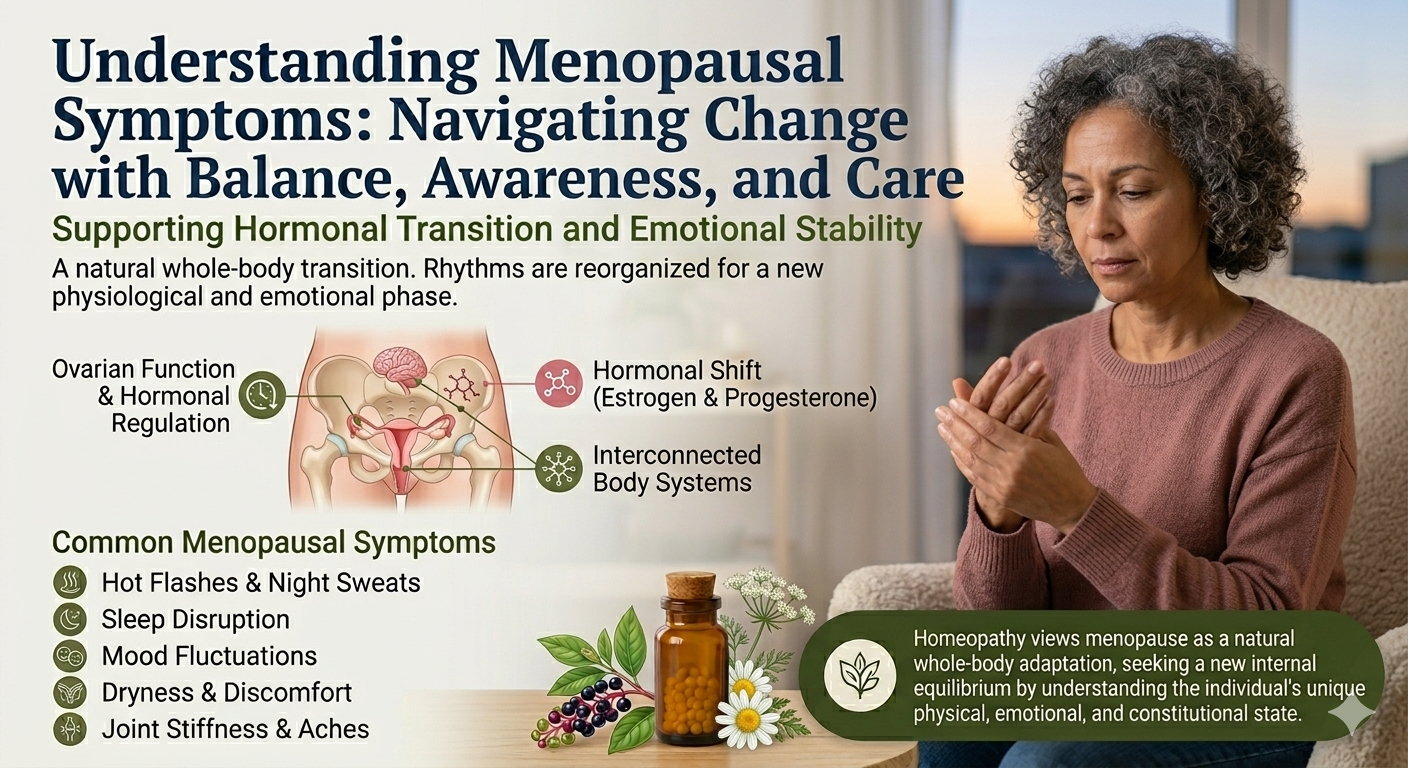
Navigating Change with Balance, Awareness, and Care
Some life transitions do not arrive abruptly.
They unfold gradually, often over months or years, reshaping the body’s rhythms in subtle but meaningful ways.
Menopause is one such transition — a natural biological shift that marks the end of reproductive cycles and the beginning of a new physiological phase.
For many women, this stage brings noticeable changes in temperature regulation, sleep, mood, and overall energy. While these experiences can sometimes feel unsettling, they are part of a normal and expected transition in the body’s life cycle.
Understanding Menopause
Menopause occurs when ovarian function gradually declines, leading to reduced production of key hormones, particularly estrogen and progesterone.
These hormonal changes influence multiple systems in the body, including:
- Temperature regulation
- Sleep patterns
- Emotional stability
- Metabolism and weight balance
- Bone and joint health
- Vaginal and skin tissue health
Because hormones affect many interconnected systems, symptoms may appear in different forms and vary in intensity from person to person.
Common Menopausal Symptoms
Menopausal symptoms may include:
- Hot flashes or sudden heat sensations
- Night sweats
- Irregular or disrupted sleep
- Mood fluctuations or irritability
- Anxiety or emotional sensitivity
- Vaginal dryness or discomfort
- Joint stiffness or body aches
- Fatigue or reduced energy levels
These symptoms may come and go, often changing over time as the body adapts.
Emotional and Psychological Experience
Beyond physical changes, menopause can also affect emotional well-being.
Many women report:
- Increased emotional sensitivity
- Feelings of uncertainty or transition
- Irritability or low mood
- Anxiety or restlessness
- A sense of identity shift or reflection
At the same time, some women also experience a sense of relief or emotional clarity as reproductive responsibilities decrease.
All of these responses are valid and form part of a natural adjustment process.
Why Menopausal Symptoms Occur
Menopausal symptoms arise primarily due to hormonal changes, but their intensity and presentation can be influenced by several additional factors, including:
- Long-term stress or emotional strain
- Nutritional and metabolic health
- Sleep patterns and lifestyle habits
- Genetic or constitutional tendencies
- Overall physical resilience and vitality
In essence, menopause is not only a hormonal transition but a whole-body adaptation process.
A Homeopathic Perspective
Homeopathy views menopause as a natural transition phase in which the body seeks to establish a new equilibrium.
The focus is not on suppressing symptoms, but on understanding the individual’s overall state — including physical sensations, emotional responses, energy patterns, and constitutional tendencies.
Homeopathic care is intended to support the body’s adaptive capacity and may be used alongside appropriate medical guidance when needed.
Some remedies that a qualified homeopath may consider include:
Lachesis
May be considered when there are hot flashes, night sweats, and marked emotional intensity or restlessness.
Sepia
Often associated with fatigue, emotional withdrawal, mood swings, and hormonal changes affecting overall vitality.
Calcarea Carbonica
May be considered when there is sluggish metabolism, weight changes, cold sensitivity, and general fatigue.
Sulphur
Often linked with heat sensations, flushing, and restlessness.
Ignatia
May be considered when emotional sensitivity, grief, or anxiety is prominent during the transition.
Remedy selection is always individualized and based on the complete constitutional picture by a qualified practitioner.
Gentle Daily Support
Supportive lifestyle habits can help ease the transition:
- Prioritize consistent rest and sleep hygiene
- Maintain a balanced, nutrient-rich diet
- Engage in gentle physical activity such as walking or stretching
- Practice relaxation techniques such as breathing exercises or meditation
- Stay hydrated throughout the day
- Avoid overexertion and allow the body time to adjust
These practices support stability and comfort during hormonal transition.
Living with Balance and Acceptance
Menopause is not a decline — it is a transition into a new phase of physiological and emotional balance.
With awareness, care, and appropriate support, many women find that symptoms gradually stabilize and a new sense of equilibrium emerges.
Healing in this context is not about resisting change.
It is about working with the body as it adapts, honoring its signals, and supporting its natural rhythm.
The body is not becoming less capable.
It is reorganizing itself for a new phase of life.
And with patience, understanding, and care, that transition can be experienced with greater ease, stability, and self-trust.


Leave a Reply