
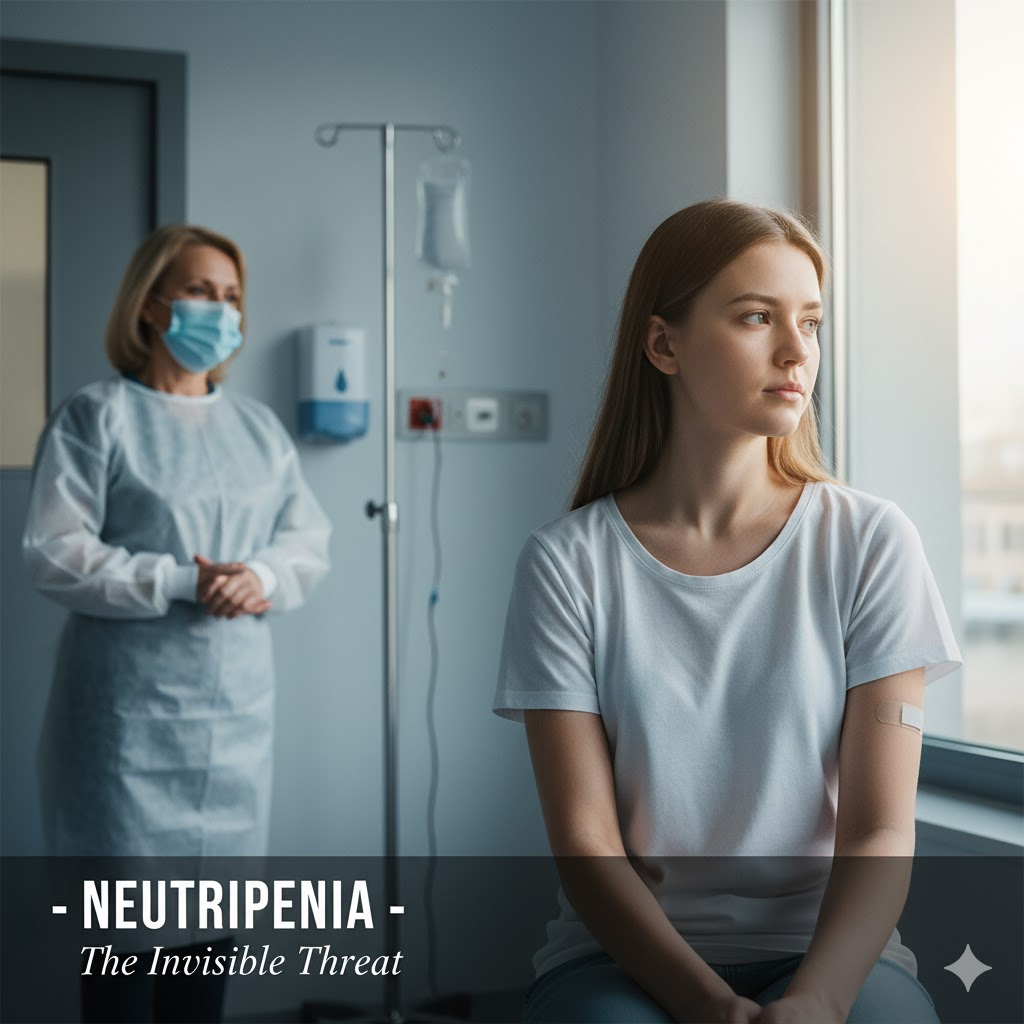
When Strength Grows Quiet: Living with Neutropenia
Some days, the body feels a little quieter than usual. You move slower, you tire faster, and small infections seem to find you more easily. You wonder why simple colds linger longer, or why your energy fades even after rest.
For those living with Neutropenia, this quiet struggle becomes part of daily life — unseen by others, but deeply felt within.
It’s not a loud illness, not something that announces itself. It comes softly, hidden beneath fatigue, fevers, or infections that return just when you think you’re well again. But inside, the body is fighting — not against an outside threat, but to protect what little strength it still holds.
Understanding Neutropenia
Deep in the bone marrow, tiny cells are constantly at work — building, restoring, defending. Among them are neutrophils, the white blood cells that guard against infections and heal small wounds before we even notice.
In Neutropenia, these protectors become fewer in number. It’s as though the body’s front line has thinned, leaving you more exposed to things others fight off easily — a mild cough, a cut, a bit of flu.
Sometimes the cause is known — certain medications, infections, or immune conditions. Sometimes, it appears without warning, a mystery even to doctors. But regardless of its cause, it leaves a mark on how you live and how you feel — cautious, watchful, and sometimes weary.
How It Feels
Neutropenia doesn’t always show itself clearly. It can feel like constant tiredness, like you’re walking through fog that won’t lift. Small things — a sore throat, a mouth ulcer, a sudden fever — become signals of deeper imbalance.
There’s a quiet anxiety that comes with it too. You start to plan your days carefully — avoiding crowds, watching what you eat, keeping distance when others are unwell. You learn to live gently, but sometimes that gentleness feels like isolation.
Still, within that gentleness, there is strength. It takes courage to care for yourself so consciously, to honor your limits, to listen when your body whispers instead of waiting for it to scream.
Why It Happens
Neutropenia happens when the body cannot produce enough neutrophils, or when they are destroyed faster than they’re made.
It can be temporary — following illness or medication — or chronic, when the imbalance continues over time.
But one truth remains: it is not your fault. Your body isn’t weak; it’s asking for help, for balance, for rest. It’s still fighting for you — just slower, more quietly than before.
The Homeopathic Understanding: Strengthening from Within
Homeopathy sees Neutropenia not as a failure, but as a signal — the body calling for deeper support. Instead of forcing immunity, homeopathy seeks to rebuild it gently, to remind the body of its own strength.
A homeopathic consultation looks beyond the numbers in a report. It listens to the whole person — how fatigue feels, how fears settle in the mind, how infections linger, how emotions ebb and flow.
Some remedies often considered include:
- Silicea — for those who tire easily, heal slowly, and feel cold or drained after minor illness.
- Calcarea Carbonica — for deep exhaustion, vulnerability to infections, and slow recovery.
- Arsenicum Album — for restlessness, anxiety about health, and fatigue that worsens at night.
- China Officinalis — for weakness after blood loss, illness, or long recovery.
Each remedy works gently — not forcing the immune system, but guiding it toward balance, toward remembering how to protect itself again.
(Always seek guidance from a qualified homeopath for individualized care.)
Daily Care and Soft Living
- Rest without guilt. Healing happens in stillness.
- Eat simply, warmly, and often. Gentle nourishment strengthens immunity.
- Protect your body from exhaustion and infection. Wash hands often, avoid extremes, and listen to early signs of tiredness.
- Stay emotionally nourished. Fear and fatigue can weaken the body’s energy — comfort yourself through quiet joy, nature, and connection.
- Trust your care team. Medicine and homeopathy can walk hand in hand — one supports, the other strengthens.
Healing with Neutropenia isn’t a sprint; it’s a soft rebuilding. Each day of care is another layer of protection restored.


Leave a Reply