
When Behavior Changes Overnight: Understanding PANDAS
It can begin so suddenly it takes your breath away.
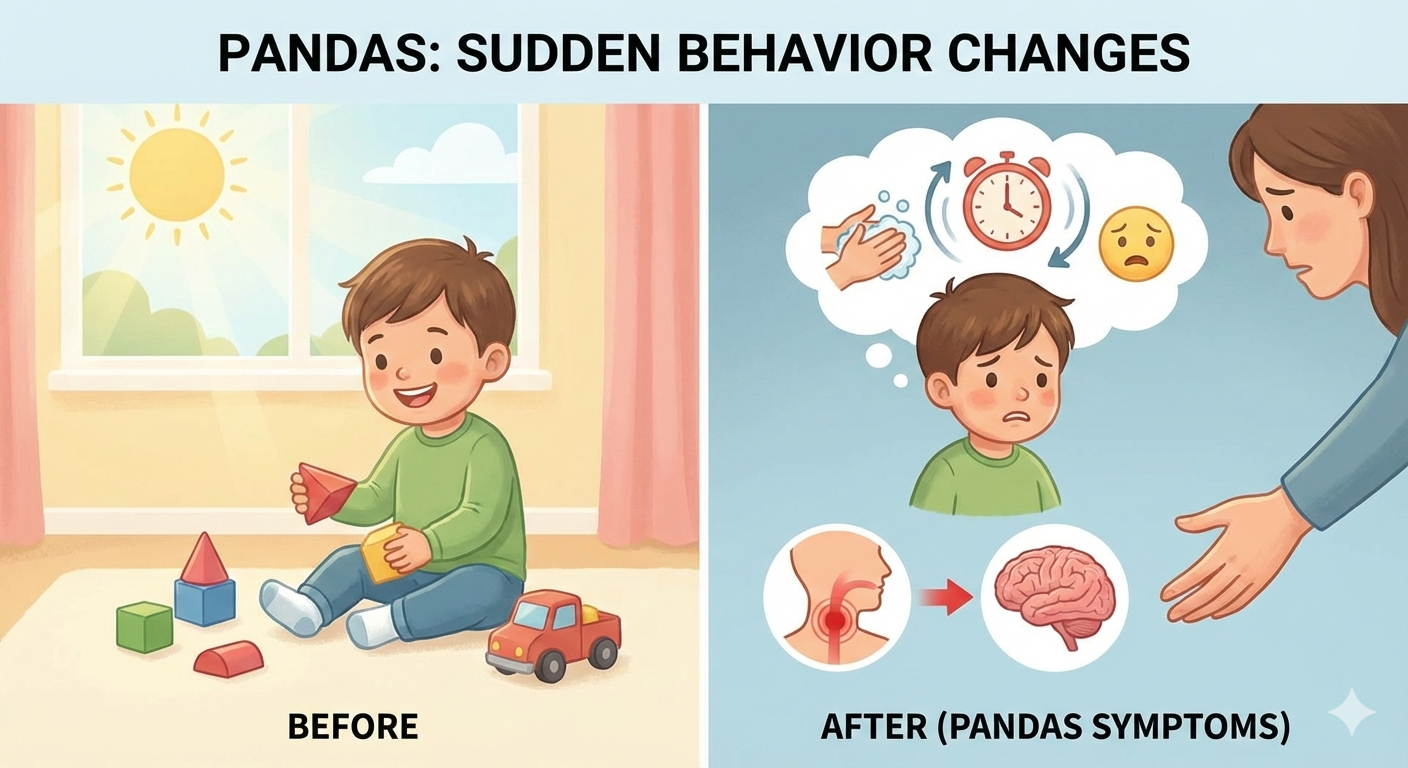
One day your child is laughing, playing, and full of familiar light — and the next, something feels different.
You notice a shift: anxiety that wasn’t there before, sudden fears, repetitive actions, or emotional outbursts that seem to appear without reason.
As a parent, your heart aches with confusion and worry.
You search for answers — is it stress, a phase, something they ate?
And then you learn a name that feels strange yet explains so much: PANDAS.
It’s a word that carries both relief and fear — relief that it’s real, and fear because it’s so hard to understand.
What Is PANDAS?
PANDAS stands for Pediatric Autoimmune Neuropsychiatric Disorders Associated with Streptococcal Infections.
It happens when a common infection — like strep throat — confuses the immune system.
Instead of simply fighting the bacteria, the immune system mistakenly begins to attack certain parts of the brain that control mood, movement, and behavior.
The result can be a sudden onset of obsessive-compulsive symptoms, tics, anxiety, or extreme emotional changes — sometimes overnight.
It’s as if the child’s own immune defense has lost its way, touching parts of the nervous system that should never be harmed.
How It Feels — For the Child and the Family
For a child, PANDAS feels like their mind and body are no longer speaking the same language.
They might feel afraid, restless, or trapped in repetitive thoughts they can’t control.
Their emotions swing quickly — joy one moment, panic the next — and they often can’t explain why.
For parents, it can be heartbreaking. You see your child’s light dim for reasons no one can see.
You try to comfort them, but the symptoms seem stronger than logic or reassurance.
It’s not just an illness of the body — it touches the whole family’s heart.
But it’s important to remember: your child is still there — beneath the symptoms, beyond the fears — waiting to feel safe again.
Why It Happens
The exact mechanism behind PANDAS is complex but rooted in the immune system’s confusion.
When the body fights Streptococcus bacteria, certain antibodies — meant to protect — may mistakenly target the brain’s own tissue, particularly in areas that control behavior and emotion.
It’s not caused by bad parenting, weakness, or emotional instability.
It’s an autoimmune response — a biological miscommunication.
The body isn’t cruel; it’s simply mistaken. It’s still trying to protect — just in the wrong direction.
The Homeopathic Perspective: Calming the Inner Storm
Homeopathy sees PANDAS not as a random attack, but as a cry from the body — a system overwhelmed by fear, confusion, and inner imbalance.
Healing begins not with suppression, but with understanding.
In a homeopathic approach, the child is seen as a whole being — body, emotions, and spirit.
The goal is to soothe the immune system’s confusion, support the nervous system, and restore the sense of inner safety that has been lost.
Some commonly considered remedies include:
- Stramonium – for intense fear, nightmares, and sudden aggression that arises from inner panic.
- Cimicifuga (Actaea Racemosa) – for emotional sensitivity, anxiety, and erratic moods.
- Belladonna – for sudden onset of symptoms, agitation, and nervous excitement with heat and redness.
- Pulsatilla – for clinginess, tears, and gentle, affectionate children who become easily upset when unwell.
- Baryta Carbonica – for children who regress emotionally or struggle with fear and insecurity after illness.
Each remedy is chosen individually — not for the diagnosis alone, but for the child’s story: their fears, reactions, and sensitivities.
(Always seek guidance from a qualified homeopath for personalized care.)
Gentle Support and Daily Care
- Stay close and calm. Your child feels safest in your steadiness. Even when they can’t control their behavior, your presence is their anchor.
- Rest and nourish. Warm meals, sleep, and hydration gently support the nervous and immune systems.
- Reduce stress and overstimulation. Quiet routines, soothing sounds, and gentle play help bring peace to the mind.
- Collaborate with professionals. Combine homeopathy with medical guidance for a complete, supportive plan.
- Hold compassion above all. Healing takes time — and your patience becomes part of the medicine.
Healing doesn’t always happen quickly, but with steady care and understanding, light begins to return — softly, like morning after a long night.
Life Beyond the Fear
A diagnosis like PANDAS can change everything. It can test your hope, your strength, and your faith in what’s possible.
But many children recover beautifully once their immune system calms and their nervous system feels safe again.
This journey teaches families profound lessons — about patience, connection, and the body’s mysterious ways of communicating distress.
Your child’s spirit is resilient. Beneath the worry, beneath the symptoms, they are still whole — still capable of joy, laughter, and light.
Healing asks for time, gentleness, and love — but it does happen.
Because even when the mind feels lost, the heart always remembers its way home.


Leave a Reply