
When the Muscles Speak in Stiffness: Understanding Polymyalgia Rheumatica
Some illnesses announce themselves with dramatic pain or visible signs. Others whisper slowly, through stiffness, fatigue, and subtle aches that become impossible to ignore.
Polymyalgia Rheumatica (PMR) is of this quieter yet profoundly felt kind — a condition that gently, but persistently, reshapes how the body moves and rests.
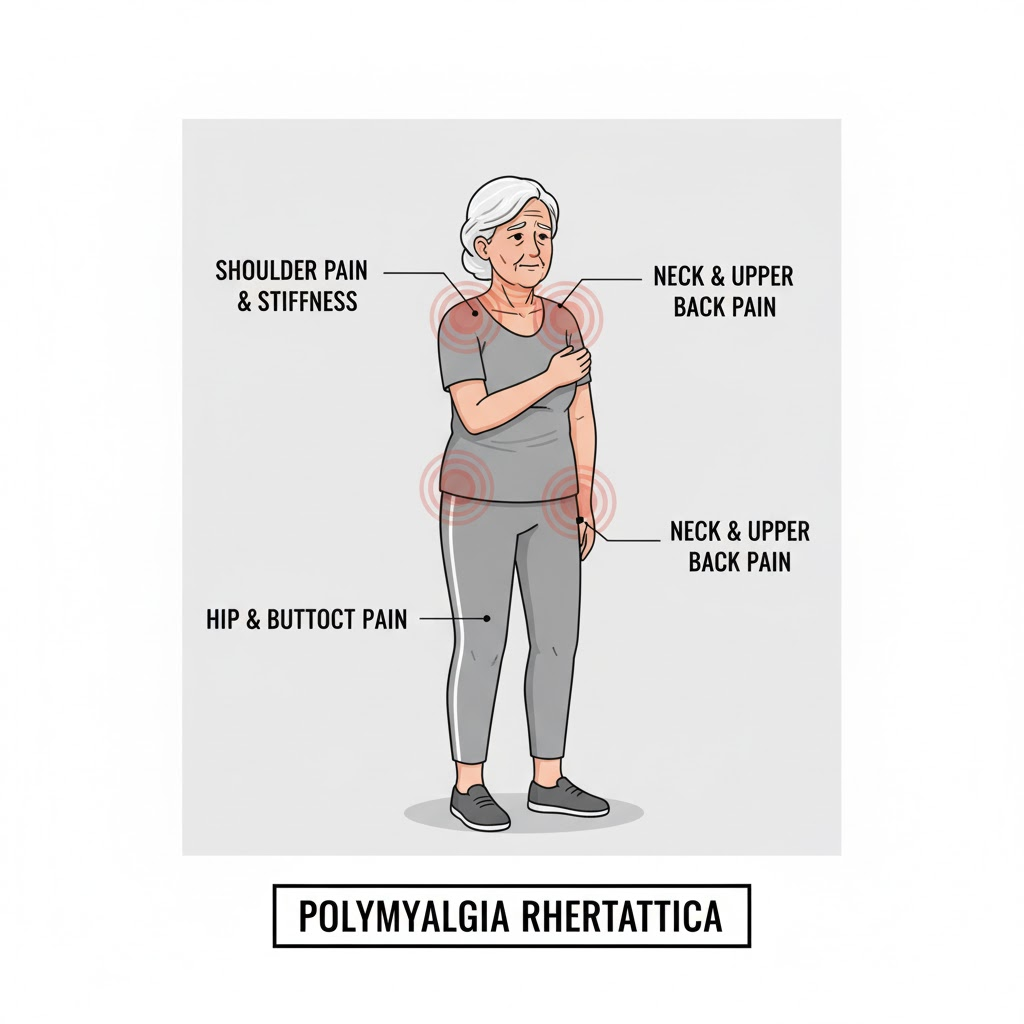
It often begins with stiffness in the shoulders, hips, or neck, especially in the morning.
You may notice fatigue that sleep cannot erase, aching muscles that resist ordinary activity, or a sense of heaviness in the limbs.
At first, it may feel like normal aging or overexertion. But gradually, the stiffness, pain, and fatigue reveal themselves as more than routine discomfort.
Living with PMR can feel frustrating and disheartening, but it also invites patience, self-compassion, and attentiveness to the body’s subtle messages.
What Is Polymyalgia Rheumatica?
PMR is an inflammatory condition affecting muscles and connective tissues, particularly around the shoulders, hips, and neck.
It is closely associated with inflammation of blood vessels in some cases (temporal arteritis), which is why careful monitoring is important.
It is not contagious. It is not caused by weakness or lifestyle.
It is the body signaling that inflammation is present, asking for care, rest, and gentle support.
How It Feels
Living with PMR can feel like your muscles have forgotten their ease:
- Stiffness, especially in the morning or after resting
- Aching shoulders, hips, or neck
- Fatigue that limits daily activities
- Emotional strain: frustration, worry about flare-ups, or anxiety over long-term function
Yet within this discomfort, many discover resilience, a heightened awareness of movement, and a deeper connection to the body’s needs.
Why It Happens
PMR is an autoimmune or inflammatory condition:
- The immune system causes inflammation in muscles and surrounding tissues.
- The exact trigger is often unknown, though it is more common in people over 50.
- Early recognition is important, especially to prevent complications like temporal arteritis.
This is not failure; it is a call to listen, slow down, and support the body gently.
The Homeopathic Understanding: Restoring Comfort and Vital Rhythm
In homeopathy, PMR is seen as a disturbance of the body’s vital balance, particularly in muscles and connective tissues.
The goal is to reduce discomfort, support mobility, and restore natural rhythms of energy and repair.
Some remedies often considered include:
- Rhus Toxicodendron – for stiffness that improves with movement but worsens at rest
- Bryonia Alba – for pain aggravated by movement or touch
- Arnica Montana – for soreness, aching, and muscle fatigue
- Calcarea Carbonica – for deep fatigue and weakness in older individuals
Each remedy works subtly, gently guiding the body toward its natural rhythm of repair. (Always consult a qualified homeopath for individualized guidance.)
Gentle Daily Care
- Move mindfully – gentle stretching, walking, or yoga can ease stiffness
- Rest adequately – allow recovery without overexertion
- Nourish muscles and joints – anti-inflammatory foods, protein, and hydration support recovery
- Protect emotional energy – mindfulness, relaxation, and support from loved ones help manage frustration and anxiety
- Work closely with your care team – medical monitoring ensures inflammation is controlled; homeopathy and holistic care complement recovery
Healing is slow and deliberate. It is about listening, moving gently, and nurturing the muscles that carry you through life.
Life Beyond the Diagnosis
Living with PMR invites awareness:
- Noticing subtle improvements in movement, strength, and comfort
- Appreciating the body’s resilience, even when inflamed
- Cultivating patience, self-compassion, and trust in the healing process
The muscles may speak in stiffness, but with careful attention and gentle care, they remember ease, strength, and vitality.
You are not merely enduring Polymyalgia Rheumatica — you are learning to live with patience, presence, and deep compassion for yourself and your body.


Leave a Reply