
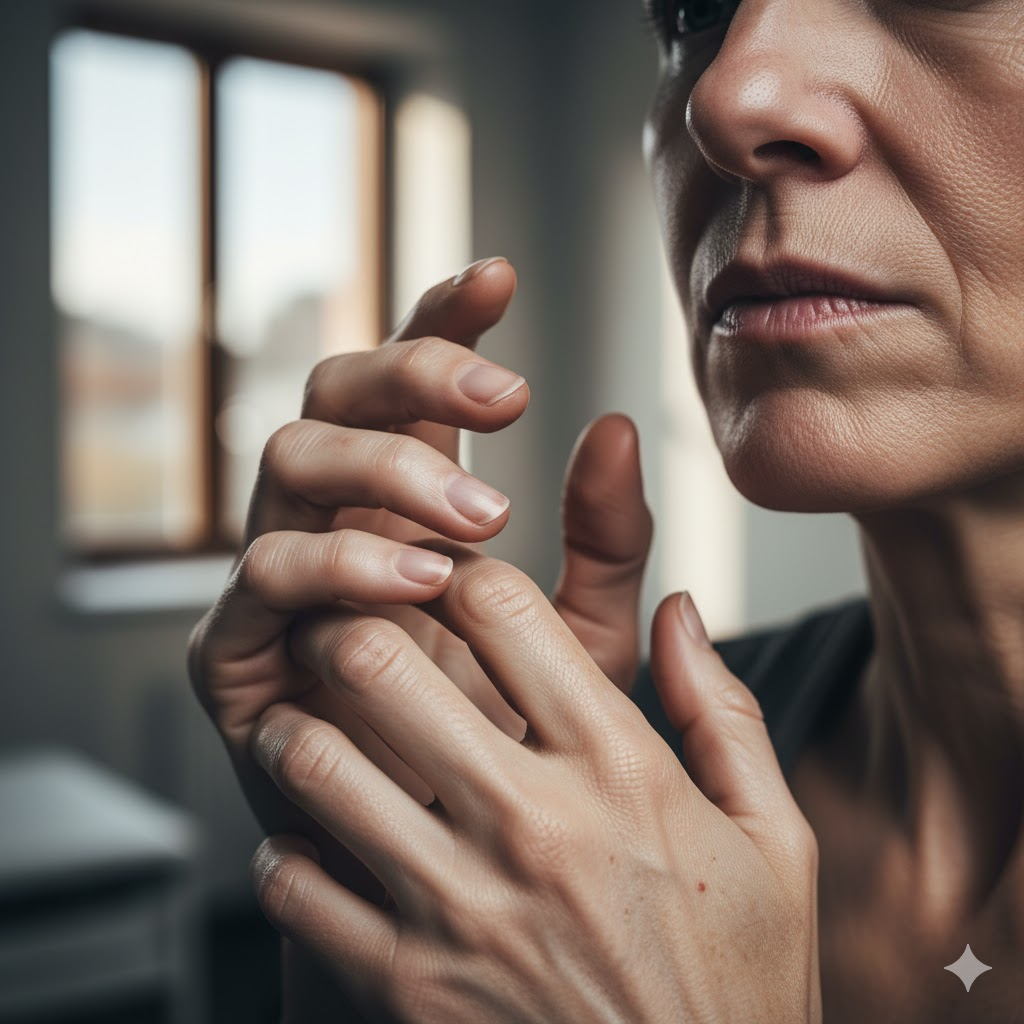
When the Skin and Beyond Tighten: Understanding Scleroderma
Scleroderma is a rare autoimmune disorder in which the body’s connective tissues — skin, blood vessels, and sometimes internal organs — gradually harden and tighten. The immune system, in its attempt to protect, overreacts, creating rigidity instead of flexibility.
It often begins subtly: patches of tight skin, cold hands, or Raynaud-like color changes in the fingers. Over time, the tightening can affect organs, joints, and blood flow, making everyday movement and activities a careful negotiation with the body.
Living with scleroderma requires patience, attentiveness, and compassion — both for the body and for oneself.
How It Feels
The experience of scleroderma is both physical and emotional:
- Tightening of the skin or restricted movement
- Fatigue and muscle weakness
- Cold or discolored fingers and toes
- Digestive changes or heart and lung involvement in systemic forms
Emotionally, the slow progression can feel frustrating or discouraging. Yet, many people develop acute awareness of their body’s limits and capabilities, learning to pace themselves, protect energy, and celebrate small victories.
Why It Happens
Scleroderma occurs when the immune system attacks connective tissue, triggering overproduction of collagen.
The body is not failing; it is overprotective, creating structure where flexibility is needed.
Genetic, environmental, and immune factors may contribute to this misdirected response.
Homeopathic Understanding
Homeopathy views scleroderma as an imbalance in connective tissue harmony and immune communication. The goal is to support tissue flexibility, circulation, and the body’s self-regulating capacity.
Some remedies often considered include:
- Causticum – for stiff, tight, or rigid tissues and restricted movement.
- Silicea – for slow healing, skin hardening, and connective tissue weakness.
- Calcarea Fluorica – for firm, inelastic skin and tissue support.
- Sulphur – for skin issues with systemic sensitivity.
- Graphites – for thickened skin, dryness, and sluggish tissue repair.
Remedies are chosen according to the individual’s physical, emotional, and energetic pattern.
(Always consult a qualified homeopath for individualized guidance.)
Gentle Daily Care
- Maintain mobility. Gentle stretching, yoga, or swimming supports flexibility.
- Protect skin and circulation. Moisturize and avoid extreme cold.
- Nourish and hydrate. Anti-inflammatory foods, vitamins, and minerals aid tissue health.
- Manage stress. Meditation, journaling, or quiet reflection helps regulate the immune system.
- Collaborate with healthcare providers. Organ monitoring and specialist care are essential; homeopathic and holistic approaches complement standard care.
Living Beyond the Diagnosis
Both scleritis and scleroderma teach attentiveness, patience, and compassion.
The body is not an adversary; it is communicating, guiding, and asking for careful care.
Every moment of mindful movement, rest, and nourishment is a step toward balance.
Healing is not about perfection or speed — it is about presence, listening, and partnership with the body’s innate wisdom.
Even in chronic illness, there is room for resilience, grace, and profoundly human strength.


Leave a Reply