
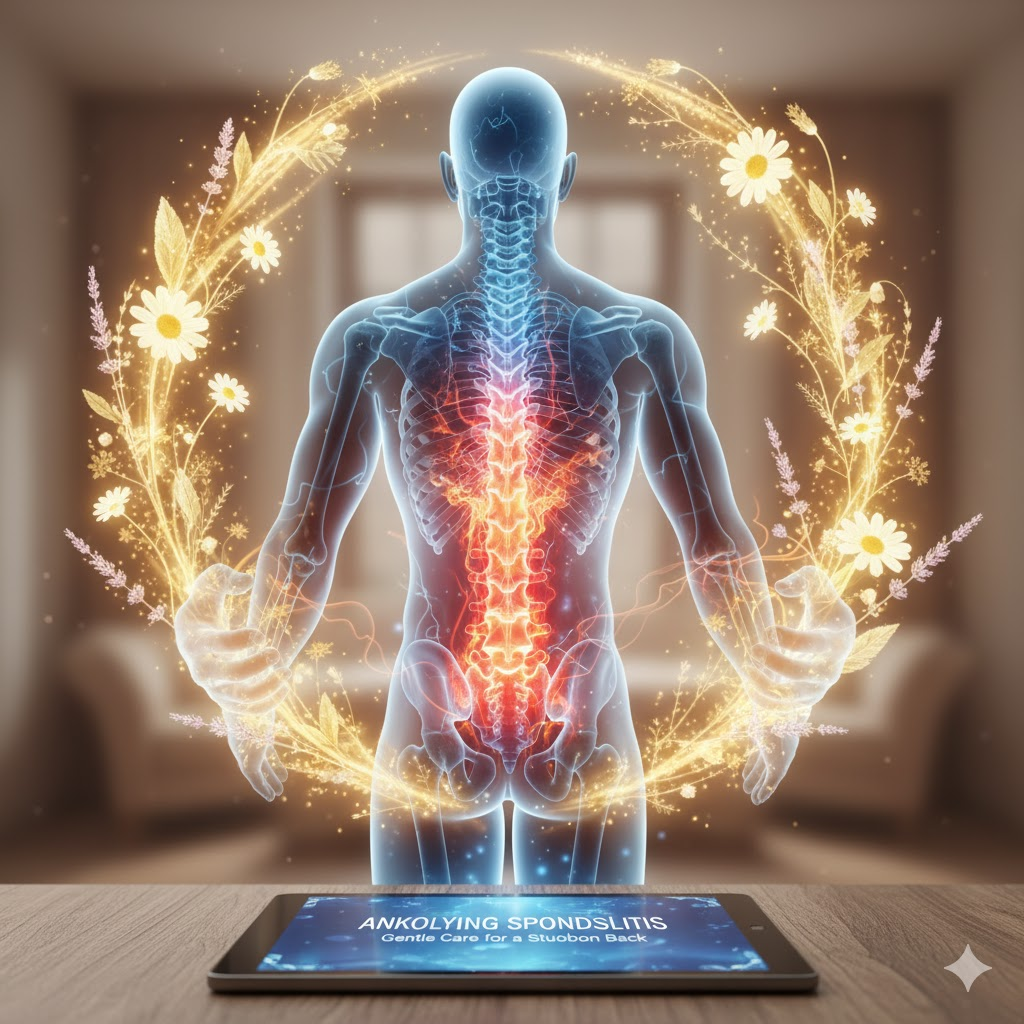
When Movement Turns to Stiffness
We all know the feeling of waking up stiff after a long day or a poor night’s sleep — but what if that stiffness never really fades?
For some people, that morning ache doesn’t loosen up. It lingers, deep in the back or hips, as if the body has forgotten how to bend and move freely.
This is the quiet story behind Ankylosing Spondylitis (AS) — a chronic inflammatory condition that slowly affects the spine, hips, and sometimes other joints.
It’s not simply “back pain.” It’s the body’s immune system working too hard, creating inflammation where there should be flow and flexibility.
If your back feels locked each morning but eases a little as you move, this story may sound familiar.
So… What Exactly Is Ankylosing Spondylitis?
Ankylosing Spondylitis is an autoimmune inflammatory arthritis that mainly affects the spine and sacroiliac joints — the point where the spine meets the pelvis.
Over time, ongoing inflammation can cause the bones in the spine to fuse, leading to stiffness and reduced mobility.
The name itself tells the story:
“Ankylosing” means fusing or stiffening, and “Spondylitis” means inflammation of the spine.
It often begins quietly, with deep pain in the lower back or hips, and may progress upward along the spine or outward to other joints like the shoulders or knees.
How It Feels
People living with Ankylosing Spondylitis often describe the pain as a dull ache, mostly worse in the morning or after long rest.
But there’s more to it than pain — it’s the constant feeling of tightness, heaviness, and fatigue that follows you through the day.
Common signs include:
- Morning stiffness that lasts for hours
- Pain in the lower back, hips, or buttocks
- Discomfort that improves with movement but worsens with rest
- Fatigue and poor sleep from chronic inflammation
- Reduced flexibility or a feeling of “locked” joints
- In some cases, redness or pain in the eyes (uveitis)
It’s not always visible from the outside — but inside, the body feels tense, as if the muscles and joints are quietly resisting each step.
Why It Happens
AS develops when the immune system begins to attack the joints and ligaments of the spine as though they were foreign tissue.
The exact cause isn’t fully understood, but genetics — especially a gene called HLA-B27 — plays a strong role.
While not everyone with this gene develops AS, it increases the body’s sensitivity to certain immune triggers.
It’s not your fault, and it’s not something you caused — it’s simply the body’s defense system working in the wrong direction.
The Emotional Side
Chronic stiffness can do more than limit movement — it can quietly restrict joy.
When your body aches each morning, even simple things like bending to tie your shoes or sitting comfortably can feel like a struggle.
The fear of pain often replaces the freedom of motion.
But beneath that frustration lies strength — because each day you rise and move, despite the pain, you remind your body it still belongs to life, not limitation.
Homeopathic Approach: Restoring Flexibility from Within
Homeopathy views Ankylosing Spondylitis not just as a joint disease, but as a story of inner rigidity — physical and emotional.
The goal is not to suppress inflammation, but to encourage the body to restore harmony, reduce immune overreaction, and ease the deep-rooted stiffness that defines this condition.
Every person’s experience is different. Some feel more pain in the spine, others in the hips or shoulders. Some flare during stress; others after rest.
A homeopathic practitioner studies these unique patterns before selecting a remedy that fits the whole person — body and mind together.
Commonly considered remedies include:
- Rhus Toxicodendron – for stiffness that improves with movement but worsens with rest.
- Bryonia Alba – for pain made worse by motion and better by lying still.
- Calcarea Carbonica – for fatigue, heaviness, and slow recovery.
- Silicea – for deep-seated inflammation and weak connective tissues.
- Sulphur – for recurring pain that flares with heat or at night.
Always consult a trained homeopath for personalized remedy selection.
Simple Ways to Support Healing
- Keep moving — gentle stretches, walking, or swimming help keep joints flexible.
- Maintain good posture; it protects the spine from stiffness.
- Eat clean, anti-inflammatory foods and stay hydrated.
- Allow rest when needed, but avoid long periods of stillness.
- Practice calm breathing or meditation to ease tension and stress.
Healing is not about forcing flexibility — it’s about encouraging the body to trust movement again.
Life After Awareness
Ankylosing Spondylitis may change how you move, but it doesn’t have to define how you live.
With early awareness, supportive treatment, and gentle daily care, many people regain freedom, comfort, and confidence in their bodies.
Your body isn’t locking you away — it’s asking for flow, for warmth, for balance.
And when you meet it with patience and kindness, it learns — slowly but surely — how to bend again.


Leave a Reply