
When the Blood Vessels Speak Their Secrets
Some illnesses whisper, some shout — and some speak through the very flow of life inside us. Vasculitis is a condition that does the latter. It is not just a disease of blood vessels; it is a story of the body’s communication gone awry, where the highways of blood carrying oxygen and nutrients become inflamed, swollen, or blocked.
For those living with vasculitis, the first signs may be subtle: fatigue that sleep cannot shake, unexplained fevers, or tender, swollen areas along the arms, legs, or face. Sometimes, it appears suddenly, with skin rashes, joint pain, or numbness. The body is quietly sending messages, signaling that balance has shifted, and healing requires careful listening.
Understanding the Condition
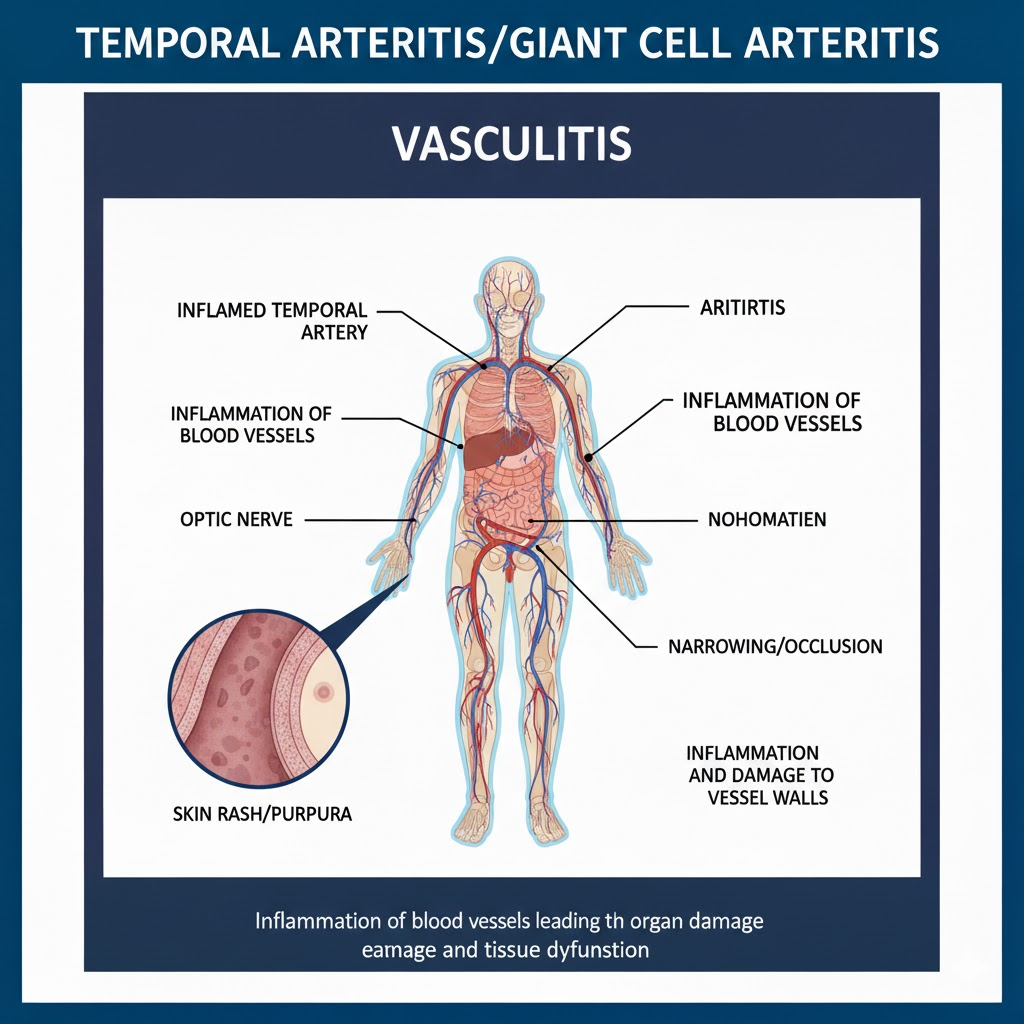
Vasculitis is inflammation of the blood vessels, which can affect arteries, veins, and capillaries of any size. This inflammation can restrict or block blood flow, causing tissue damage and affecting organs such as the skin, kidneys, lungs, or nervous system.
There are many types of vasculitis, each varying in severity and the vessels it affects — from the tiny capillaries in the skin to the largest arteries supplying vital organs. It can be acute or chronic, sudden or gradual.
The immune system often plays a role: it misidentifies the vessel walls as a threat and attacks them. This is not the body failing; it is the body sending a signal that its own defenses have become misdirected.
How It Feels
Vasculitis can feel like an invisible weight within the body:
- Fatigue and weakness: The energy that once flowed freely may feel trapped or diminished.
- Pain and tenderness: Joints, muscles, or skin may ache unpredictably.
- Skin changes: Red spots, purplish patches, or ulcers can appear where vessels are inflamed.
- Organ-specific symptoms: Shortness of breath, blood in urine, or nerve tingling can signal deeper involvement.
Emotionally, it can be unsettling. The variability and unpredictability of vasculitis often lead to anxiety, frustration, or a sense of isolation. Yet, amid these challenges, many find a heightened awareness of their own body’s rhythms, and a deeper compassion for themselves and others who navigate invisible battles.
Why It Happens
Vasculitis is usually autoimmune or immune-mediated. The body’s defense system, designed to protect, becomes confused and attacks the vessel walls.
Triggers can include infections, medications, or other autoimmune conditions, but sometimes the cause remains unknown. What is clear is that the inflammation is not punishment — it is a signal from the body, a plea for attention, care, and balance.
The Homeopathic Perspective: Restoring the Flow
From a homeopathic viewpoint, vasculitis reflects a disturbance in the body’s internal harmony, particularly in how the circulatory and immune systems communicate. Remedies aim to support the body’s natural healing and help it remember how to maintain balance.
Some remedies often considered include:
- Arnica Montana – for tenderness, bruising, and soreness where vessels are inflamed.
- Rhus Toxicodendron – for joint and vessel pain that improves with gentle movement.
- Belladonna – for sudden, intense inflammation with heat and redness.
- Apis Mellifica – for swelling, stinging, and burning sensations.
- Arsenicum Album – for restlessness, anxiety, and weakness accompanying chronic inflammation.
(Homeopathy complements medical care; serious cases require close medical supervision.)
Gentle Daily Care
- Rest and pace yourself: Avoid overexertion; listen to the body’s energy signals.
- Support circulation: Gentle movement like walking or stretching can encourage blood flow without strain.
- Nourish gently: Fresh vegetables, fruits, whole grains, and hydration support vessel and immune health.
- Protect vulnerable areas: Avoid pressure, injuries, or extremes of heat and cold.
- Mindful stress management: Meditation, breathing exercises, or quiet reflection can help calm overactive immune responses.
- Regular medical follow-up: Early detection of organ involvement and flare-ups is vital.
A Reflection
Vasculitis reminds us that the body communicates in ways we may not immediately recognize. Fatigue, pain, and inflammation are not signs of weakness, but messages asking for care, attention, and restoration.
Healing is not about rushing the body, but about listening to it, nurturing it, and walking gently with it through periods of flare and calm.
Even when blood vessels are inflamed, life still flows. By honoring the body’s signals, supporting its resilience, and embracing patience, balance can return — quietly, steadily, and profoundly.


Leave a Reply