
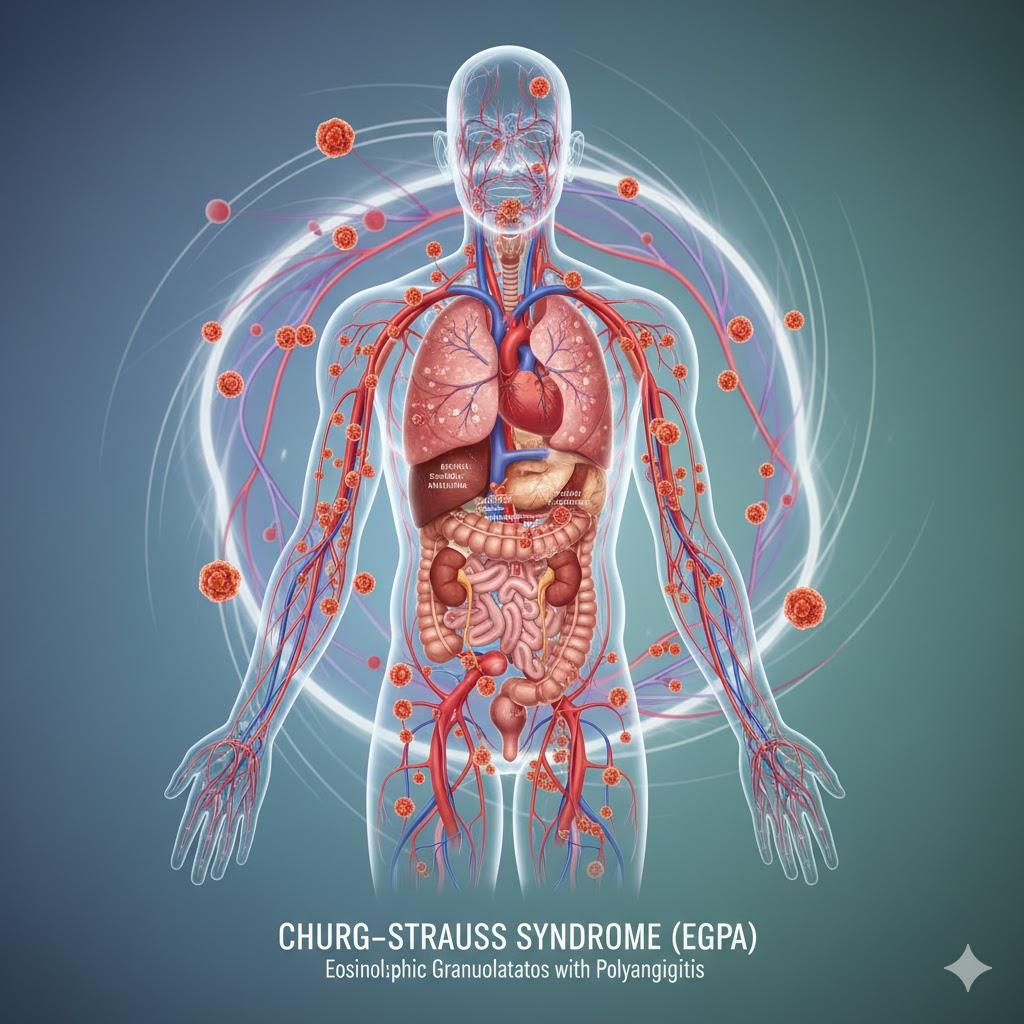
When the Body Breathes Uneasily: Understanding Churg–Strauss Syndrome (CSS)
We all know what it feels like when breathing becomes hard — a bit of wheezing during a cold, a tight chest on a dusty day. Usually, it passes.
But what if it didn’t? What if every breath carried the weight of exhaustion, and your body felt as if it were quietly fighting against itself?
For those living with Churg–Strauss Syndrome (CSS), that’s often how each day begins — not with pain alone, but with a deep, lingering tiredness and a body that feels inflamed from the inside.
If you or someone you know has struggled with stubborn asthma, unexplained weakness, or fatigue that doesn’t fade, understanding CSS might offer some clarity.
So… What Exactly Is Churg–Strauss Syndrome?
Churg–Strauss Syndrome is a rare autoimmune condition in which the body’s defense system, meant to protect against infection, turns its focus inward.
It causes inflammation of small blood vessels — a process called vasculitis.
The inflammation doesn’t stay in one place. It may begin in the lungs and sinuses, then quietly affect the nerves, skin, digestive tract, or even the heart.
In most cases, CSS develops in people who have a long history of asthma or allergies. Over time, the immune system starts to overreact, producing too many eosinophils — a type of white blood cell that, when out of balance, can cause damage to the body’s own tissues.
How It Feels
At first, it may look like simple asthma. There’s coughing, wheezing, and shortness of breath — nothing unusual.
But gradually, other symptoms begin to appear, and the picture changes.
People often describe:
- Shortness of breath or chest tightness that doesn’t improve with usual medicines
- Sinus pain or chronic nasal congestion
- Numbness, tingling, or burning sensations in hands or feet
- Unexplained fatigue and body aches
- Skin rashes or tender red spots
- Weight loss or occasional fever
These symptoms can come and go, shifting from one system to another, making it hard to connect the dots.
But together, they tell a simple story: the immune system has lost its rhythm.
Why It Happens
No one causes Churg–Strauss Syndrome.
It’s not from something eaten, done, or thought — it’s simply the body’s immune system misreading its environment.
Sometimes it begins after long-term allergic inflammation.
Sometimes it appears after an infection or medication triggers a reaction.
But in every case, it’s the same confusion — the body working too hard to protect itself.
The Hidden Burden
CSS doesn’t just affect the body — it touches the emotions deeply.
When breathing feels uncertain, so does everything else.
Simple moments — climbing stairs, laughing too hard, lying down to rest — can feel unpredictable.
There’s often frustration in having an illness that hides behind familiar symptoms like asthma or fatigue.
Yet beneath that frustration lies something quieter: the wish to feel normal again, to trust the body again.
And that wish itself is a sign of healing — the mind and body still reaching for balance.
Homeopathic Approach: Restoring Calm to an Overactive System
Homeopathy views CSS not as an enemy to fight, but as a message from a system that’s working too hard.
The goal isn’t to suppress symptoms, but to help the body remember balance — to guide the immune system gently back to its natural rhythm.
Each person’s experience of CSS is unique:
- Some feel restless and anxious during flares.
- Some grow deeply fatigued and withdrawn.
- Others notice emotional sensitivity or a sense of inner tension.
Homeopathy looks at all of this — the physical, emotional, and environmental — before selecting a remedy that matches the whole person.
Commonly considered remedies include:
- Arsenicum Album – for burning chest pains, wheezing, and anxiety that worsens at night.
- Phosphorus – for nerve sensitivity, breathlessness, and fatigue that improves with comfort and company.
- Natrum Sulphuricum – for breathing troubles worsened by damp weather.
- Sulphur – for recurring inflammation, warmth, and skin irritation.
- Kali Bichromicum – for thick sinus congestion and chest pressure.
Important: Homeopathic remedies are chosen individually. One size never fits all (Always work with a trained homeopath for personalized guidance.)
Daily Support for Healing
Small, consistent care can make a great difference:
- Rest whenever your body asks for it — don’t wait for exhaustion.
- Keep airways clear with warm steam or gentle inhalation.
- Eat lightly, avoiding foods that create inflammation or congestion.
- Spend time in fresh air but protect yourself from cold drafts.
- Practice calm breathing and mindfulness; they ease the mind and lungs together.
Healing with CSS is gradual. Progress often comes in quiet moments, not dramatic leaps.
Life After Awareness
Churg–Strauss Syndrome can make life unpredictable, but awareness changes everything.
When you understand that your body isn’t attacking you — it’s overreacting out of confusion — compassion replaces fear.
With the right guidance, many people find that their energy returns, their breathing steadies, and their confidence rebuilds slowly but surely.
Your body is not at war with you. It’s asking for peace — and with patient, gentle care, peace is possible.


Leave a Reply