
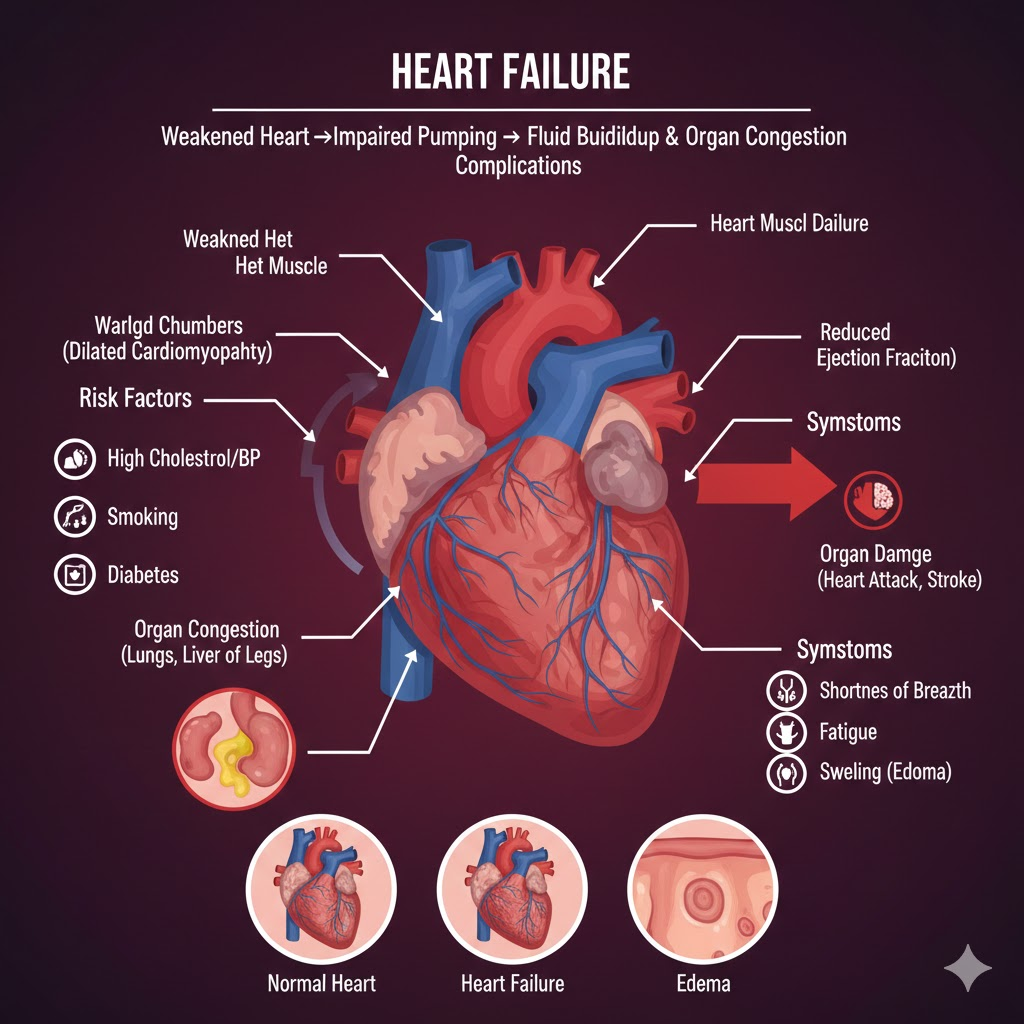
When the Heart Asks for Rest
There are times in life when the heart — this loyal drum that beats for us without pause — begins to tire. Not suddenly, not dramatically, but quietly. Breath becomes shorter… steps feel heavier… sleep no longer refreshes the same way… and a subtle weight settles across the chest.
Heart failure is not the heart “giving up.”
It is the heart asking for help.
A request whispered through fatigue, swelling, and breathlessness.
A plea for rest, balance, and healing.
Behind every case of heart failure is a story — perhaps years of overwork, old emotional wounds, chronic conditions, or a slow weakening that no one noticed at first. It is a condition that touches not only the body but the spirit, because the heart is not just an organ; it is the rhythm of our inner life.
Understanding the Condition — What Is Heart Failure?
Heart failure happens when the heart can no longer pump blood as effectively as the body needs. It does not stop… but it struggles. It works harder, strains more, and still cannot meet the body’s demands.
This happens because:
- The heart muscle becomes weakened
- Or too stiff to fill properly
- Or damaged from years of pressure, high blood pressure, blocked arteries, or previous heart attacks
As the heart slows, fluid begins to build — in the legs, lungs, and abdomen — creating swelling, breathlessness, and a persistent heaviness.
In simple words:
the heart is tired, and it needs gentle restoration.
How It Feels — The Human Experience
People with heart failure often describe:
- Breathlessness with the smallest effort
- Waking at night, gasping for air
- Swelling of the feet, ankles, or belly
- Fatigue that feels deep inside the bones
- A heavy, congested feeling in the chest
- Reduced appetite and early fullness
- A sense of slowing down — not just physically, but emotionally
- Anxiety, sadness, or fear about the body changing
It is not just symptoms…
it is the feeling of being carried by a heart that is doing its very best, even while exhausted.
Many people describe the emotional side most clearly — a quiet worry, a sense of vulnerability, or the realization that they must now move through life with more softness and intention.
A Homeopathic View — Seeing the Heart’s Story, Not Just the Disease
In homeopathy, heart failure is seen as more than a mechanical problem.
It is the result of:
- Long-standing emotional stress
- Deep fatigue or overwork
- A constitution weakened slowly over years
- Unprocessed grief sitting in the chest
- Circulatory imbalance
- Past infections, toxins, or injuries
The goal is not only to strengthen the heart muscle, but to soothe the emotional knots and energetic imbalances underneath.
Commonly Used Remedies (Always Chosen Individually)
Crataegus oxyacantha
A profound heart tonic — for weakness of the heart muscle, breathlessness, low vitality, and emotional fragility.
Arnica montana
For heart strain after effort, trauma, or damage to the heart muscle. Helps when the chest feels sore or bruised.
Digitalis purpurea
For slow, irregular heartbeat, faintness, and anxiety in the chest, especially when the person feels everything is “slipping away.”
Aconitum napellus
For sudden fear, anxiety, or restlessness in heart distress, especially at night.
Lycopus virginicus
For cardiac weakness with palpitations, thyroid imbalance, and difficulty breathing.
Cactus grandiflorus
For the sensation of a tight, constricting band around the heart — emotional oppression or physical constriction.
Naja tripudians
For heart weakness connected with grief, emotional hurt, or conditions arising from sadness that was held too long.
(Always use homeopathy with physician guidance, and never delay emergency care.)
Healing and Care — Supporting a Tired Heart with Tenderness
Living with heart failure is not only about medicines.
It is about learning a new kind of relationship with your own body — kinder, slower, more respectful.
1. Rest as Medicine
The heart thrives when the body is not pushed. Gentle pacing, scheduled breaks, and permission to pause bring relief and strength.
2. Nourishing the Body Lightly
Warm, wholesome meals. Less salt. More natural foods that support circulation and ease the heart’s workload.
3. Releasing Emotional Weight
The heart often carries old griefs. Journaling, talking, or spiritual practices can lift emotional heaviness and create space for healing.
4. Gentle Movement
Slow walking, soft stretching, breathing practices — enough to move the blood without overstraining the heart.
5. Regular Follow-up and Homeopathic Guidance
Adjusting remedies over time helps the heart regain balance and eases the emotional journey.
6. A Calmer Lifestyle
Less rushing, softer mornings, earlier nights, and moments of stillness throughout the day help the heart feel safe again.
A Closing Reflection
Heart failure is not the end of strength —
it is the beginning of a different kind of strength.
A strength that does not push…
but listens.
A strength that does not rush…
but flows gently, like the quiet beat of a healing heart.
Your heart has worked faithfully, day and night, for years.
If it is tired now, it deserves compassion — not fear.
Healing begins when you look inward and say:
“I will walk with you at your pace.
We will heal together.”


Leave a Reply