
The Weary Heart Muscle: Emotional and Physical Dimensions of Cardiomyopathy
There are moments in life when the heart — this quiet guardian working without pause — begins to feel the weight of years, emotions, or illness. Not in a dramatic collapse, but in subtle ways:
A breath that comes shorter than before.
A heaviness on waking.
A heartbeat that feels not quite steady.
A tiredness that lingers, even after rest.
Cardiomyopathy is one of those conditions that develops slowly, like a soft fading of the heart’s natural strength. It is not the heart’s fault, nor a sign of failure. It is the body whispering, “I need gentler rhythms now. Help me carry this load.”
Understanding the Condition — What Is Cardiomyopathy?
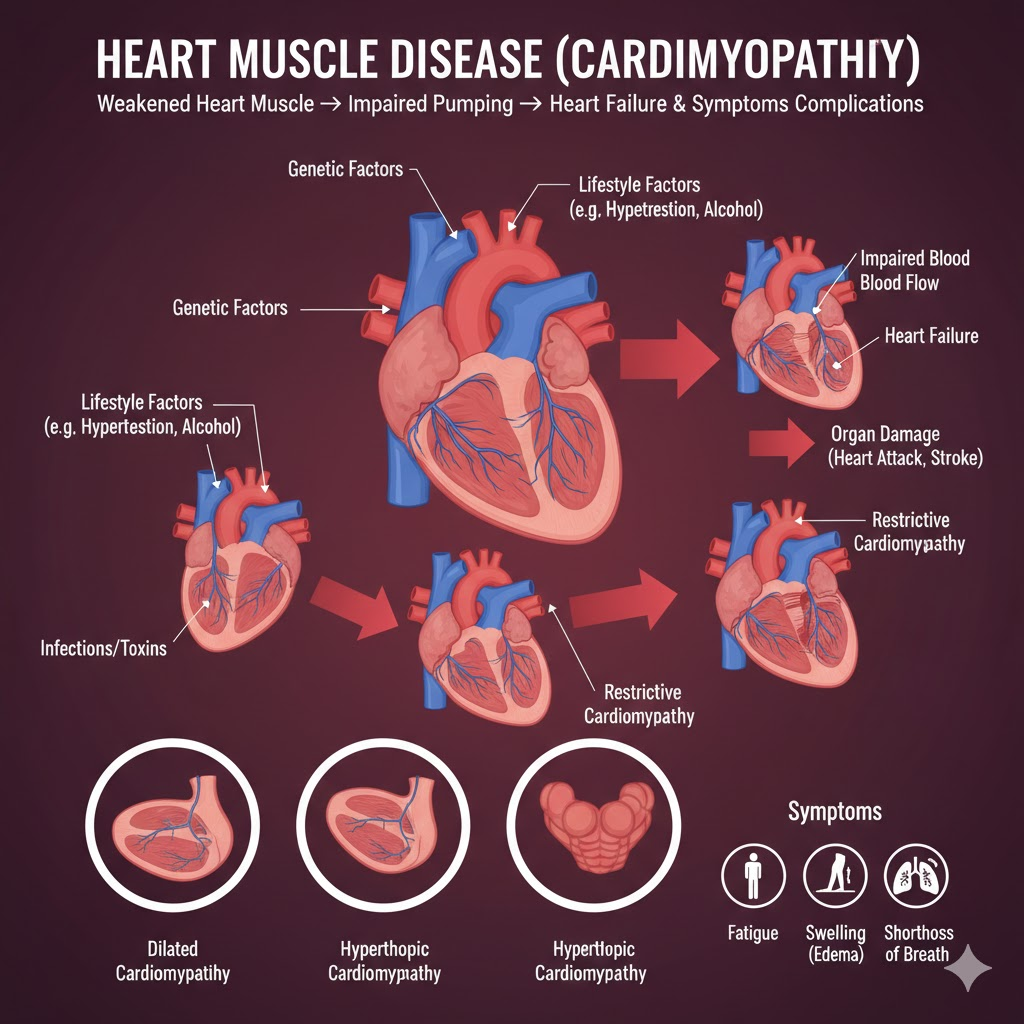
Cardiomyopathy is a disease of the heart muscle itself.
The heart becomes:
- Weakened
- Stiffened
- Overstretched
- Or enlarged
This makes it harder for the heart to pump blood effectively.
There are several forms:
- Dilated cardiomyopathy: the heart becomes large and thin, struggling to pump strongly.
- Hypertrophic cardiomyopathy: the muscle thickens, leaving less room for blood.
- Restrictive cardiomyopathy: the heart becomes stiff and cannot relax to fill properly.
For many, the condition arises quietly — from genetic tendencies, long-standing blood pressure, infections, toxins, emotional weight, or chronic stress that slowly reshapes the heart’s structure.
Cardiomyopathy is not an abrupt break.
It is the gradual story of a heart that has been carrying too much for too long.
How It Feels — The Human Experience
Living with cardiomyopathy often means living with:
Breathlessness
Simple activities — climbing stairs, walking, even talking — can leave a person searching for air.
Fatigue that feels ancient
A deep, bone-level tiredness, as though life’s weight has settled on the chest.
Palpitations
Moments when the heart flutters, races, or skips — reminding you of its vulnerability.
Swelling of legs or belly
From fluid that the tired heart cannot move efficiently.
Chest discomfort
Not always sharp, but a heaviness or pressure that comes and goes.
Emotional waves
Fear, irritability, sadness, frustration — all arising from living with a heart that no longer moves as effortlessly as it once did.
People often say:
“I feel like I’ve slowed down… like my body is asking me to move through life differently.”
And that is exactly what the heart is asking — not to stop, but to soften.
Why It Happens — The Deeper Story
Cardiomyopathy may arise from:
- Genetics or family tendencies
- Long-standing high blood pressure
- Viral infections affecting the heart
- Alcohol or toxins
- Thyroid or metabolic disorders
- Autoimmune conditions
- Emotional stress that lingers for years
- Or simply the slow wearing-down of life
But beneath the physical reasons, there is often an emotional story — the weight of responsibility, unexpressed grief, prolonged anxiety, or years of pouring energy outward without replenishing inward.
The heart, in many ways, mirrors the emotional landscape of one’s life.
A Homeopathic Understanding — Seeing the Person Behind the Condition
Homeopathy looks at cardiomyopathy through the heart’s emotional and energetic history, not only its structural changes. It asks:
When did your heart begin to tire?
What sorrows or stresses preceded it?
Where in your life have you been carrying too much, too quietly?
Remedies are chosen based on the individual’s inner experience:
Crataegus oxyacantha
A profound heart tonic — for weak heart muscle, breathlessness, emotional fragility, and slow recovery.
Arnica montana
When the heart feels “bruised” after strain, exertion, or injury — physical or emotional.
Digitalis purpurea
For slow, irregular heartbeats, anxiety about the heart, faintness, and weakness.
Cactus grandiflorus
For the feeling of the heart being gripped, squeezed, or constricted — often linked with emotional pressure.
Naja tripudians
For heart weakness arising from grief, guilt, or deeply seated emotional hurt.
Aconitum napellus
For sudden palpitations or chest fear after emotional shock or fright.
Laurocerasus
For extreme weakness of the heart muscle with bluish lips, breathlessness, and deep fatigue.
(These must be chosen with professional guidance.)
Homeopathy aims not only to strengthen the heart —
but to help release the emotional weight that weakened it.
Gentle Daily Care — Supporting a Weary Heart
Healing the heart requires tenderness, patience, and deep listening.
Move with gentleness
Slow walking, light stretching, and paced activities help the heart remain active without strain.
Eat with compassion
Warm meals, less salt, nourishing foods, and smaller portions ease the heart’s workload.
Rest without guilt
Fatigue is not weakness — it is wisdom.
Rest becomes part of healing.
Emotional tending
Writing, speaking, or gently sitting with your emotions helps soften the tension the heart carries.
Breathing practices
Slow, mindful breaths expand the chest, reduce anxiety, and give the heart room to relax.
Avoid overwhelm
Quiet mornings, slower evenings, and stepping away from emotional noise help the heart regain its rhythm.
A Closing Reflection
Cardiomyopathy is the story of a heart that has worked faithfully for years — often carrying burdens quietly, loyally, and without complaint. When it grows tired, it does not ask for fear.
It asks for kindness.
It asks for slowness.
It asks for a gentler relationship with life.
Healing begins the moment one acknowledges:
“My heart is tired, but it is still strong in spirit.”
And with tender care, emotional nourishment, and a slower pace…
the heart can rediscover its resilience —
its ability to beat with steadiness, warmth, and quiet wisdom once again.


Leave a Reply