
When Sweetness Turns to Struggle: A Homeopathic View of Juvenile Diabetes (Type 1 Diabetes)
Childhood is meant to be full of energy — the rush of play, laughter spilling between meals, the glow of endless curiosity.
But for some children, a quiet shift happens inside their small, brave bodies. The sweetness their cells once welcomed becomes something their bodies can no longer use properly.
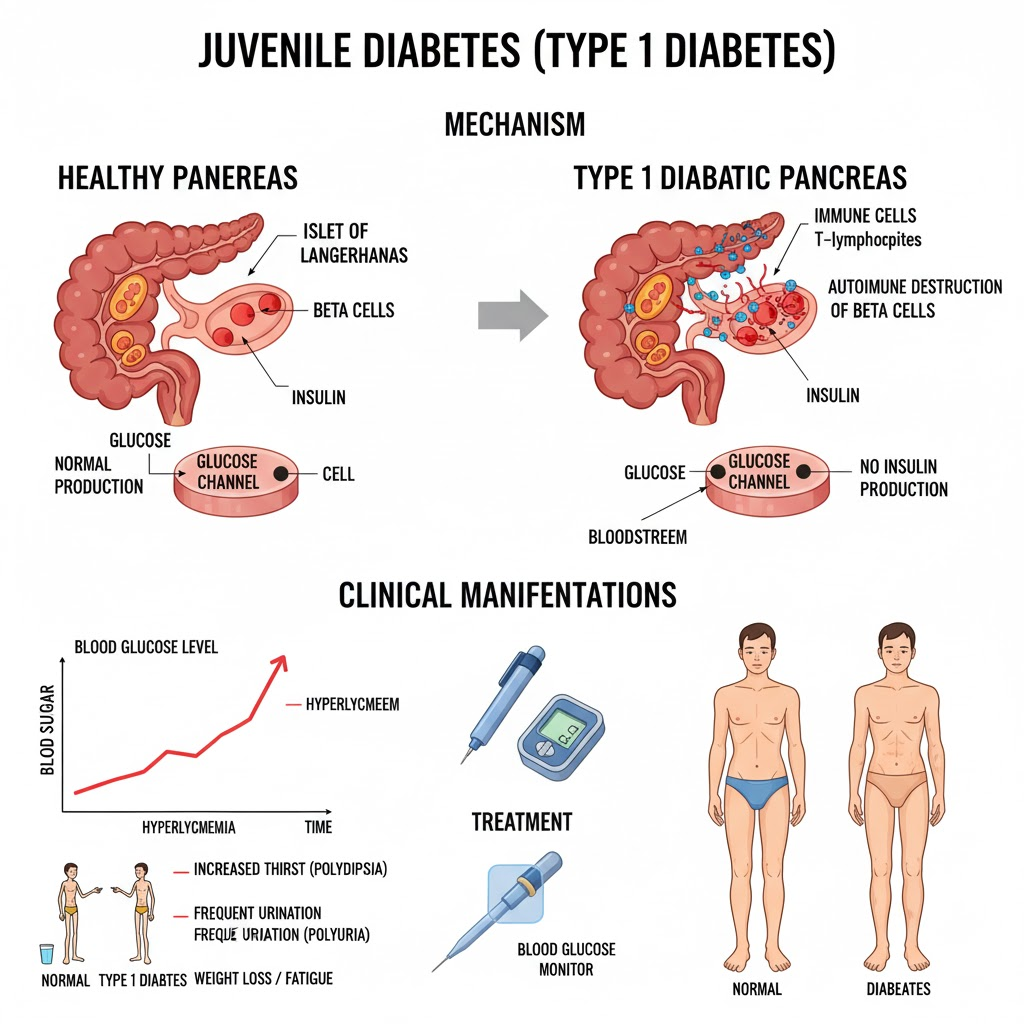
This is Juvenile Diabetes, or Type 1 Diabetes — a condition where the body forgets how to make insulin, the gentle key that opens each cell to life’s nourishment.
To a parent, it can feel like the world suddenly demands too much of a little one — needles, routines, constant watchfulness.
And to a child, it can feel confusing: “Why me?” “Will this always be?”
Yet within this challenge lies a deep opportunity — to listen to the body with tenderness, to understand its quiet plea for balance, and to restore harmony through the gentle art of homeopathy.
When the Inner Flow Falters
In a healthy body, the pancreas quietly releases insulin — a hormone that helps sugar move from the blood into the cells, where it becomes energy.
In Juvenile Diabetes, the immune system turns inward, attacking the very cells that produce insulin.
The result is a body flooded with sugar but starved of energy — a strange contradiction of abundance and need.
Children may feel:
- Always thirsty, always needing to urinate
- Hungry yet losing weight
- Tired, weak, or dizzy
- Irritable or restless
- Sometimes, deeply sad without knowing why
But beneath the biology, homeopathy sees something deeper — a story of imbalance not only in the body, but in the flow of life itself.
The Homeopathic Perspective: Listening Beyond the Sugar
Homeopathy does not view Juvenile Diabetes as a punishment or an accident — it sees it as a pattern, a signal, a language.
The child’s system, overwhelmed by stress (physical, emotional, or inherited), begins to lose its inner rhythm.
Instead of harmony, the body starts fighting its own vital parts.
The goal of homeopathy is to re-teach the body this forgotten balance — to remind it that healing is possible, not by force, but by gentle resonance.
Each remedy is chosen not for “diabetes” itself, but for the whole child — how they feel, how they react, what they fear, and how they carry life’s weight within their young heart.
Remedies Often Considered
No two children experience diabetes the same way. One may become anxious and sensitive; another, tired and withdrawn.
A homeopath listens deeply before selecting a remedy that mirrors that inner state.
Some remedies often considered include:
- Phosphoric Acid – for children who seem worn out after grief, shock, or stress, with apathy and thirst for cold drinks.
- Syzygium Jambolanum – often used to help balance sugar metabolism, especially when there is constant thirst and urination.
- Natrum Muriaticum – for quiet, self-contained children who suppress emotions, often with a deep sense of responsibility or sadness.
- Lycopodium – for children who appear confident but feel insecure inside, with digestive imbalance and fatigue.
- Calcarea Phosphorica – for thin, growing children with weakness, craving sweets, and feeling chilly and tired.
(Always work with a trained homeopath for personalized guidance.)
Nurturing the Body and Spirit
Beyond remedies, the rhythm of daily life plays a great role in healing.
A child with Type 1 Diabetes needs structure, but not rigidity — understanding, but not pity.
Their growing spirit thrives in gentleness and steadiness.
- Balanced nourishment: fresh vegetables, whole grains, and natural foods that nourish slowly and evenly.
- Emotional calm: children sense worry easily — calm, reassuring energy from parents helps regulate their own.
- Restful sleep and sunlight: both help the body renew its inner strength.
- Gentle movement: play, walking, and light exercise keep energy flowing freely.
Healing is not about perfection — it’s about relationship: between the child and their body, the family and their routines, the heart and the world.
The Emotional Landscape
Many sensitive children with Juvenile Diabetes carry unspoken emotions — a sense of being “different,” or an inner pressure to be brave.
Homeopathy acknowledges this tenderness.
It doesn’t only treat blood sugar — it listens to the child’s soul, to the fatigue behind the smile, to the quiet sadness that comes from having to grow up too soon.
When the correct remedy reaches this emotional layer, something soft begins to shift. The child feels lighter, more connected, less burdened by the body’s needs. The inner fire burns steadier.
A Closing Reflection
Juvenile Diabetes is a long journey, but not a hopeless one.
Homeopathy offers a language of compassion — not to replace what modern medicine provides, but to bring warmth where fear has entered, calm where worry has lived, and trust where control once ruled.
With love, patience, and gentle support, children learn that their bodies are not enemies — only teachers, showing them how to live more mindfully and tenderly.
Healing begins in the small moments — a night of peaceful sleep, a smile during play, a calm morning without fear.
And slowly, balance returns — not just to the blood, but to the heart.
The sweetness of life, once lost, finds its way back — in new, deeper forms of joy, strength, and understanding.


Leave a Reply