
When the Body Forgets How to Receive
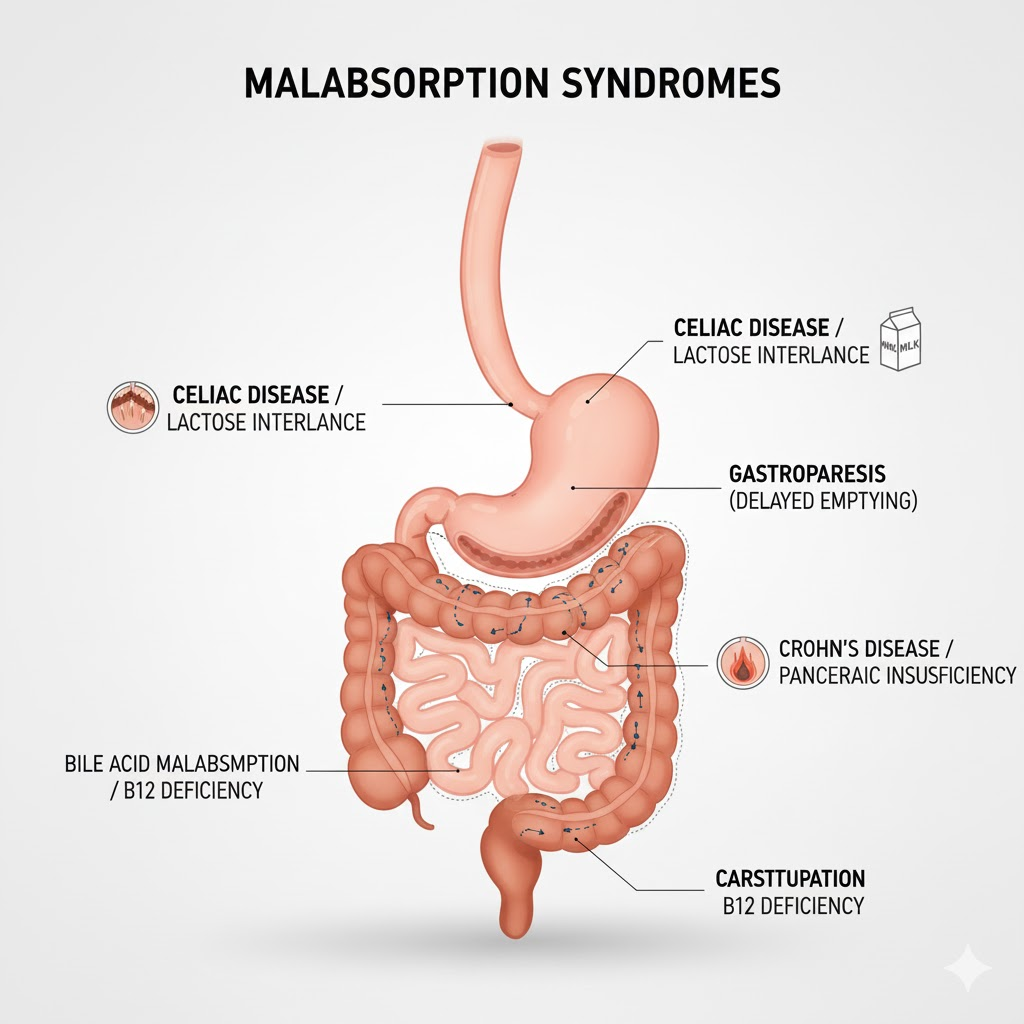
Malabsorption syndromes occur when the body cannot properly absorb nutrients from food, even when eating enough. The food may be present, digestion may begin, yet nourishment does not fully reach the tissues. Over time, the body becomes tired, depleted, and confused — fed, but not truly nourished.
From a homeopathic perspective, malabsorption is not just a digestive failure. It reflects a deeper state where the body has lost its ability to receive.
Understanding malabsorption gently
Absorption happens quietly in the intestines, where food is transformed into life.
This process can be disturbed by:
- Chronic inflammation of the gut
- Enzyme deficiencies
- Pancreatic or bile insufficiency
- Intestinal infections or parasites
- Celiac disease or food sensitivities
- Long-term stress or nervous exhaustion
- Prolonged use of medications
Malabsorption may develop slowly, often unnoticed at first, until weakness becomes evident.
How malabsorption is experienced
People often describe:
- Chronic fatigue or weakness
- Weight loss despite eating
- Pale skin, hair thinning, brittle nails
- Anemia or frequent deficiencies
- Bloating, gas, or loose stools
- Feeling cold or depleted
- Poor immunity and slow recovery
- Emotional flatness or discouragement
There is often a quiet grief — the body tries, but cannot hold on to nourishment.
The homeopathic way of seeing malabsorption
Homeopathy views malabsorption as involving:
- Weak digestive fire
- Impaired intestinal vitality
- Nervous system exhaustion
- Long-term depletion
- A constitution that gives out rather than reacts
Treatment focuses on strengthening assimilation, not forcing digestion — helping the body relearn how to take in and use what it is given.
Homeopathic remedies often considered
(Remedies must be individualized by a qualified homeopath)
- China officinalis
For profound weakness, bloating, and exhaustion after eating; nutrients feel lost rather than absorbed. - Calcarea carbonica
For slow metabolism, poor absorption, fatigue, and constitutional weakness, often with coldness. - Silicea
For failure to assimilate nutrients, poor immunity, and slow recovery despite adequate intake. - Natrum muriaticum
For malabsorption linked to long-standing emotional suppression or grief. - Phosphorus
For sensitive individuals with digestive weakness, burning sensations, and rapid depletion. - Lycopodium clavatum
For bloating, maldigestion, and poor absorption after small meals.
The remedy is selected by understanding how the person loses nourishment, not only what is missing.
Daily care that supports assimilation
- Eat simple, well-cooked, warm foods
- Reduce raw, cold, and heavy meals
- Eat slowly and mindfully
- Avoid emotional eating or eating under stress
- Support gut rest between meals
- Gentle movement to stimulate circulation
- Prioritize rest — absorption needs calm
A human closing
Malabsorption is one of the body’s quietest forms of suffering.
It is not loud pain, but ongoing depletion — a life lived on half nourishment.
Healing begins when digestion is no longer rushed or forced, and when the body feels safe enough to receive again.
Homeopathy supports this process gently — restoring vitality, strengthening assimilation, and helping the body remember how to be nourished.


Leave a Reply