
Listening to the Sensitive Language of the Gut
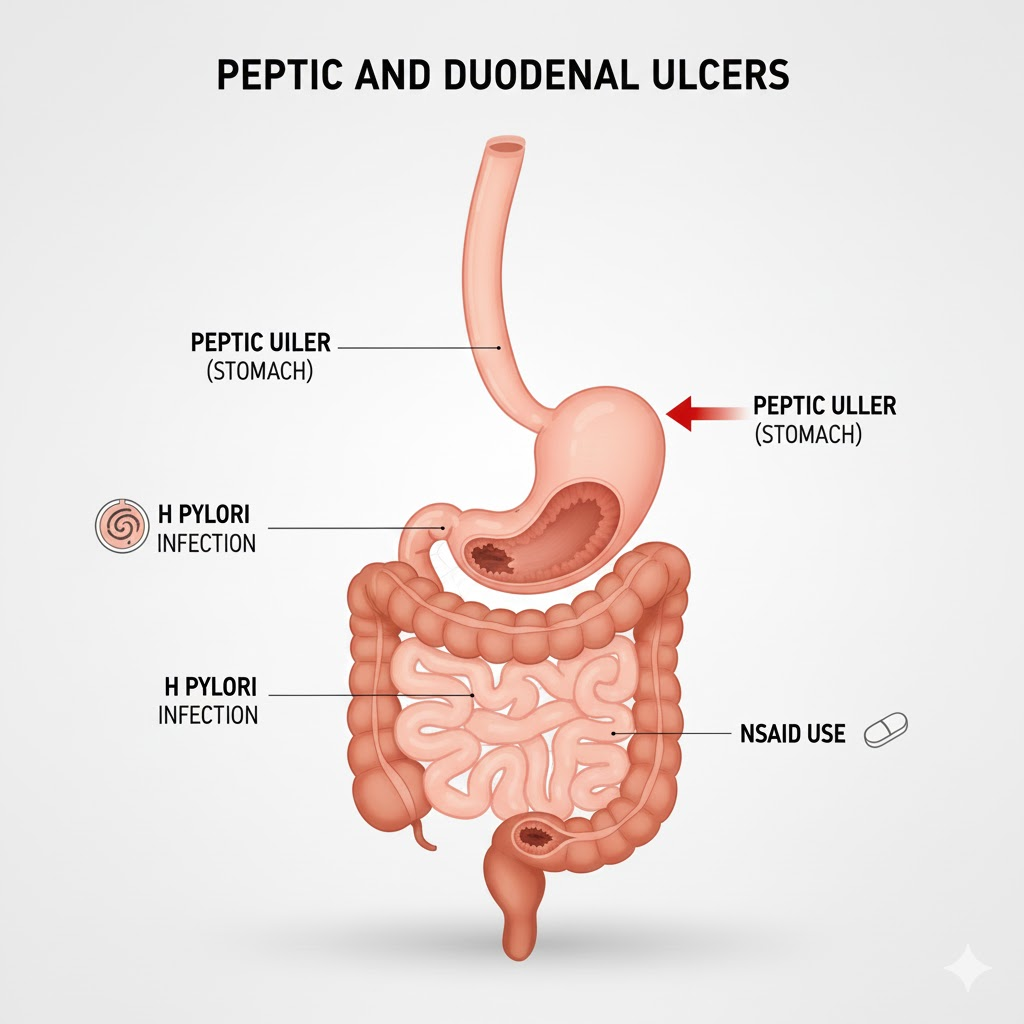
Peptic and duodenal ulcers are sores that form in the lining of the stomach or the first part of the small intestine (duodenum). They are not just medical problems — they are the body’s quiet way of signaling that it has been under stress, exposed to irritation, or carrying burdens it cannot fully process.
From a homeopathic perspective, ulcers are as much about how life and emotions are being digested as they are about acid or food. They reflect sensitivity, tension, and the need for gentleness in body and mind.
Understanding ulcers gently
The stomach and duodenum are meant to digest food with rhythm and ease. Ulcers may develop when:
- Stomach acid and digestive juices overwhelm the protective lining
- Emotional stress, worry, or suppressed anger persists
- Irregular eating habits, late nights, or stimulants (coffee, alcohol) irritate the stomach
- Infection such as H. pylori is present
- Medications or long-term inflammation weaken the tissue
Even small, silent ulcers can affect appetite, comfort, and confidence in eating.
How ulcers feel
People often describe:
- Burning or gnawing pain in the upper abdomen
- Hunger-like pain between meals
- Nausea, sometimes with sour or bitter taste
- Fullness or discomfort after meals
- Weakness, fatigue, or lack of vitality
- Emotional tension that seems to “tighten the stomach”
The pain may come and go, but it leaves a subtle memory of discomfort and caution in daily life.
The homeopathic way of seeing ulcers
Homeopathy views ulcers as a reflection of:
- Excess internal tension
- Digestive vulnerability
- Constitutional sensitivity to acid or stress
- Emotional strain that is held physically
- A body that has been pushed too far
Treatment focuses on supporting healing, restoring protective lining, easing tension, and strengthening digestion, rather than suppressing acid alone.
Homeopathic remedies often considered
(Educational reference only — remedies must be individualized by a qualified homeopath)
- Nux vomica
For ulcers linked to stress, overwork, stimulants, irritability, or irregular meals. Burning, gnawing pain is common. - Arsenicum album
For burning, anxious, restless individuals; pain may improve with warmth and small sips of water. - Carbo vegetabilis
For bloating, heaviness, and weakness after meals; sensation of fullness with poor digestion. - Calcarea carbonica
For slow-healing ulcers, fatigue, coldness, and digestive vulnerability. - Phosphorus
For sensitive individuals with burning pain, emotional sensitivity, and weakness after eating. - Iris versicolor
For severe burning, sour vomiting, or intense duodenal discomfort.
Daily care that supports healing
- Eat small, regular, warm meals
- Avoid spicy, fried, acidic, and processed foods
- Chew slowly and eat mindfully
- Avoid late-night meals and stimulants (coffee, alcohol)
- Reduce stress through gentle breathing, rest, or meditation
- Support emotional expression — worry and anger worsen symptoms
- Maintain hydration and gentle activity
A human closing
Peptic and duodenal ulcers often arise when the body is asked to endure too much, too often. They remind us to slow down, care for digestion, and release tension, both physical and emotional.
Homeopathy offers a gentle, constitutional approach — supporting tissue repair, easing discomfort, and restoring confidence in the body’s ability to process food and life itself.


Leave a Reply