
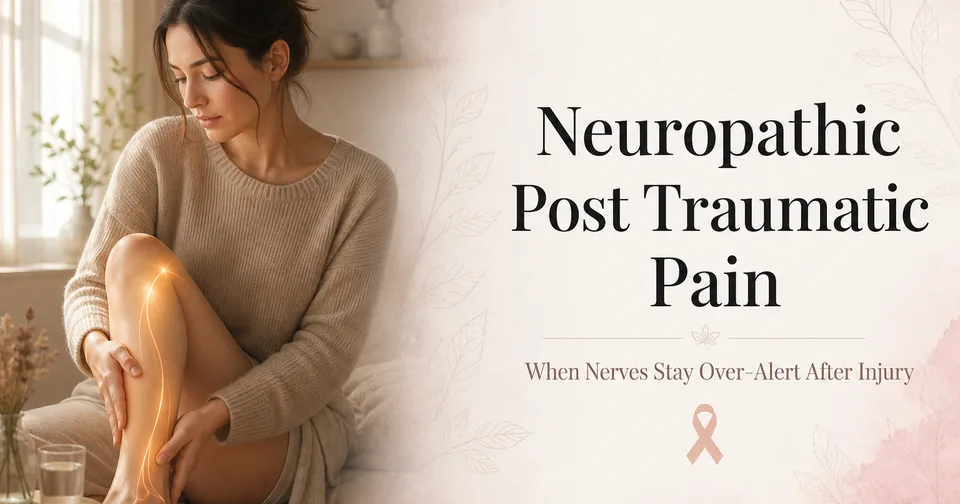
WHEN NERVES KEEP THE ALARM ON
Neuropathic post-traumatic pain is not the simple ache of a bruise—it is burning, electric, freezing, or pins-and-needles pain that follows nerve injury or irritation after trauma. Light touch may offend; temperature may confuse; night may amplify spontaneous flashes. The original wound may have closed while the signalling system remains noisy.
This pattern needs medical recognition. Homeopathy may be complementary individualized support and is not presented as a cure for neuropathy.
Understanding the Condition
Neuropathic pain after trauma can follow stretch, compression, laceration, surgery, or fracture near nerves. Progressive weakness, expanding numbness, or sphincter changes need urgent assessment. Diagnosis is clinical and sometimes supported by nerve studies.
Medical management may include medications suited to nerve pain, physiotherapy, and addressing compressive causes. Sleep and mood effects are part of the condition, not side issues.
In Canada, timely medical evaluation remains essential when red-flag signs appear: severe or rapidly worsening pain, numbness or weakness, loss of bowel or bladder control, chest pain or breathing difficulty, signs of infection, unexplained swelling that spreads, deformity, inability to bear weight, or any sudden neurological change. Homeopathy may be considered only as complementary, individualized supportive care alongside diagnosis, emergency assessment, imaging, physiotherapy, or other treatments recommended by a qualified physician. It is not a substitute for standard medical care and is not described here as a cure.
People living with neuropathic post-traumatic pain often notice patterns such as:
- Burning or electric pain in a nerve distribution…
- Allodynia—pain from light touch or clothing…
- Spontaneous night-time zaps…
- Patches of numbness beside hypersensitivity…
Holding both the tissue story and the person’s whole context helps care feel more precise and more humane.
How It Feels — The Human Experience
People with neuropathic post-traumatic pain struggle to find language others understand. “It feels like ants and electricity” may sound poetic until it is lived. Sheets become enemies. Work requiring fine touch may end. Disbelief from others—“but the scar looks fine”—cuts deeply.
Common human experiences include:
- Exhaustion from nocturnal neuralgia…
- Fear that the nerve will never quiet…
- Irritability from constant sensory threat…
- Grief for touch as comfort…
- Hope when a treatment strategy reduces intensity even modestly…
Loved ones can help by listening without minimizing, offering practical support with daily tasks, and respecting the injured person’s pace. Recovery is not only about tissues knitting; it is also about restoring trust in movement.
The Homeopathic Understanding — Supporting the Vital Force
Homeopathy approaches neuropathic pictures through precise sensation language and modalities, seeking resonance with the vital force while neurological care continues.
In supportive care for neuropathic post-traumatic pain, a homeopath may explore:
- Burning, shooting, crawling, or icy qualities
- Better or worse from cold applications
- Effect of wrapping or uncovering
- Emotional despair or fear accompanying strange sensations
- Sleep fragmentation patterns
Two people with the same injury label may receive different remedies because their lived picture differs. The intention is gentle support of the vital force’s ordering intelligence—never force, never one-size-fits-all prescribing, and never a claim to cure conditions that require ongoing medical management.
Commonly Considered Remedies
The following remedies are sometimes considered in homeopathic practice when the symptom picture matches. This list is educational and not a prescription:
- Hypericum perforatum — classically considered for shooting nerve pains after trauma.
- Arsenicum album — sometimes discussed for burning pains with restlessness and anxiety—individualized.
- Phosphorus — explored in some burning neuralgic pictures under professional matching.
- Magnesium phosphoricum — considered when neuralgic pains ease with warmth in matching cases.
- Aconitum napellus — occasionally used in acute fearful onset pictures—not a standalone neuropathy treatment.
(All remedies must be individualized by a qualified homeopath. Self-prescribing for chronic or serious concerns is not advised. Continue any medically necessary care unless your physician advises otherwise. Homeopathy in Canada is complementary supportive care and is not presented here as a cure.)
Gentle Daily Care
Daily care protects irritable nerves, supports sleep, and partners with medical neuropathic strategies.
- Seek urgent care for progressive weakness or cauda equina signs…
- Avoid sustained compression of the affected nerve path…
- Use desensitization only as taught by therapists…
- Prioritize sleep hygiene and discuss night pain with your physician…
- Pace activities; neural flares often punish boom days…
Any home program should follow clinician guidance, especially after fracture, surgery, nerve injury, burns, or complex regional patterns.
Recovery after injury is rarely a straight line. Good days and harder days often alternate as swelling shifts, sleep quality changes, and daily demands rise or fall. Noticing patterns without panic helps people adjust pacing before a small flare becomes a setback. Keeping a simple note of aggravating tasks, helpful positions, and sleep hours can make conversations with clinicians and homeopaths more precise.
A Closing Reflection
Neuropathic post-traumatic pain is the nervous system stuck in alarm. Medical care offers tools; pacing and sleep matter; complementary homeopathy may support the sensory story. Quiet is often gradual—measured in fewer zaps, kinder nights, and reclaiming ordinary touch.


Leave a Reply