
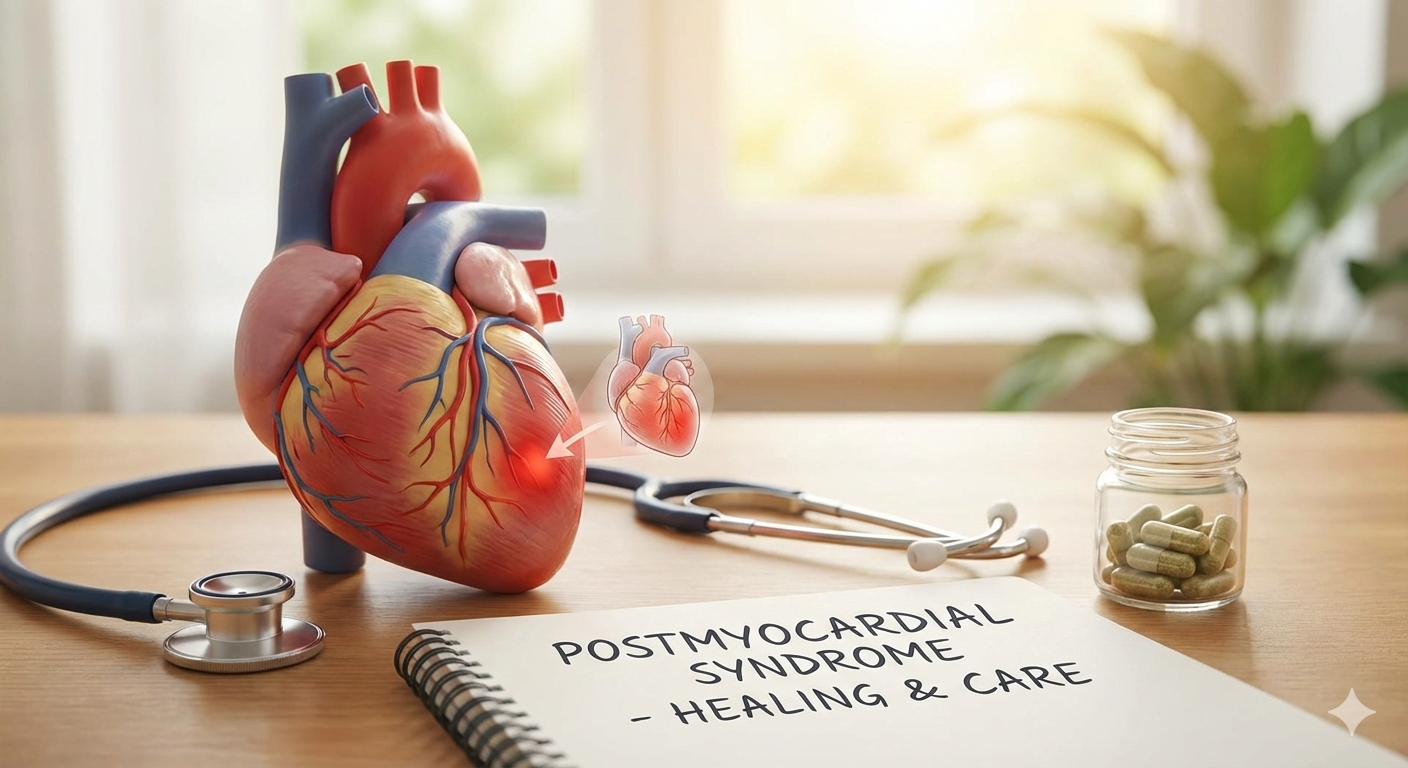
When the Heart Needs Gentle Care: Understanding Postmyocardial Infarction Syndrome
The heart is more than a muscle — it is a rhythm, a center of energy, and a quiet witness to every experience.
Sometimes, the heart suffers an injury, such as a myocardial infarction (heart attack) or myocarditis, and life changes in subtle and profound ways.
Recovery is not only physical — it is emotional, mental, and spiritual.
You may notice fatigue that seems deeper than ordinary tiredness, shortness of breath during gentle activity, palpitations, or occasional chest discomfort.
Emotions can feel heightened: anxiety, fear, or vulnerability may accompany the body’s signals.
The body is speaking softly, asking for rest, care, and a gentle rhythm of healing.
What Is Postmyocardial Condition?
“Postmyocardial” refers to the period after the heart has experienced an injury, such as:
- Myocardial infarction (heart attack) – when blood flow to part of the heart muscle is blocked
- Myocarditis – inflammation of the heart muscle
- Other myocardial injuries – due to surgery, infection, or stress
During recovery, the heart muscle may be weaker, the rhythm may be irregular, and circulation may be reduced.
It is not contagious. It is not caused by personal failure.
It is the body asking for careful attention, patience, and gentle restoration.
How It Feels
Postmyocardial recovery can feel like walking with a fragile rhythm:
- Fatigue and low stamina, even after simple tasks
- Shortness of breath or palpitations
- Occasional chest discomfort or tightness
- Emotional strain: anxiety, fear, or sensitivity to stress
Yet within this fragility lies an opportunity to listen, nurture, and honor the heart’s needs.
Why It Happens
The heart experiences injury when:
- Blood flow is blocked, damaging heart muscle (infarction)
- The immune system or infection causes inflammation (myocarditis)
- Surgery, trauma, or stress affects cardiac function
Recovery requires both physical support and emotional care.
This is not punishment; it is a call to slow down, nurture, and allow the heart to repair itself.
The Homeopathic Understanding: Supporting Heart Rhythm and Vitality
In homeopathy, postmyocardial recovery is seen as supporting the heart’s natural rhythm and vitality:
Some remedies often considered include:
- Crataegus (Hawthorn) – supports heart function, circulation, and gentle strengthening
- Digitalis – for palpitations and weak heart rhythm
- Arnica Montana – for post-injury recovery and inflammation
- Phosphorus – for fatigue, weakness, and low vitality after cardiac events
- Aurum Metallicum – for emotional anxiety and low energy related to heart weakness
These remedies aim to help the body restore its natural balance and support the heart gently. (Always consult a qualified homeopath for individualized guidance.)
Gentle Daily Care
- Rest and pace activity – allow the heart to recover without overexertion
- Nourish with heart-friendly foods – whole grains, leafy greens, lean proteins, and healthy fats
- Gentle movement – walking or light physiotherapy to improve circulation without strain
- Emotional support – mindfulness, meditation, journaling, and supportive relationships to calm anxiety
- Collaborate with your care team – cardiologists and holistic practitioners can guide safe recovery
Healing the heart is not a race; it is a careful, patient, and gentle journey.
Life Beyond the Event
Living post-myocardial injury invites deep awareness:
- Listening closely to the heart’s signals
- Appreciating small gains in stamina, rhythm, and well-being
- Cultivating patience, self-compassion, and trust in the body’s capacity to heal
The heart continues to beat, repair, and protect.
Every careful step, every moment of rest and gentle movement, is proof of its resilience.
You are not merely surviving a cardiac event — you are learning to live with presence, compassion, and renewed respect for the heart’s rhythm.


Leave a Reply