
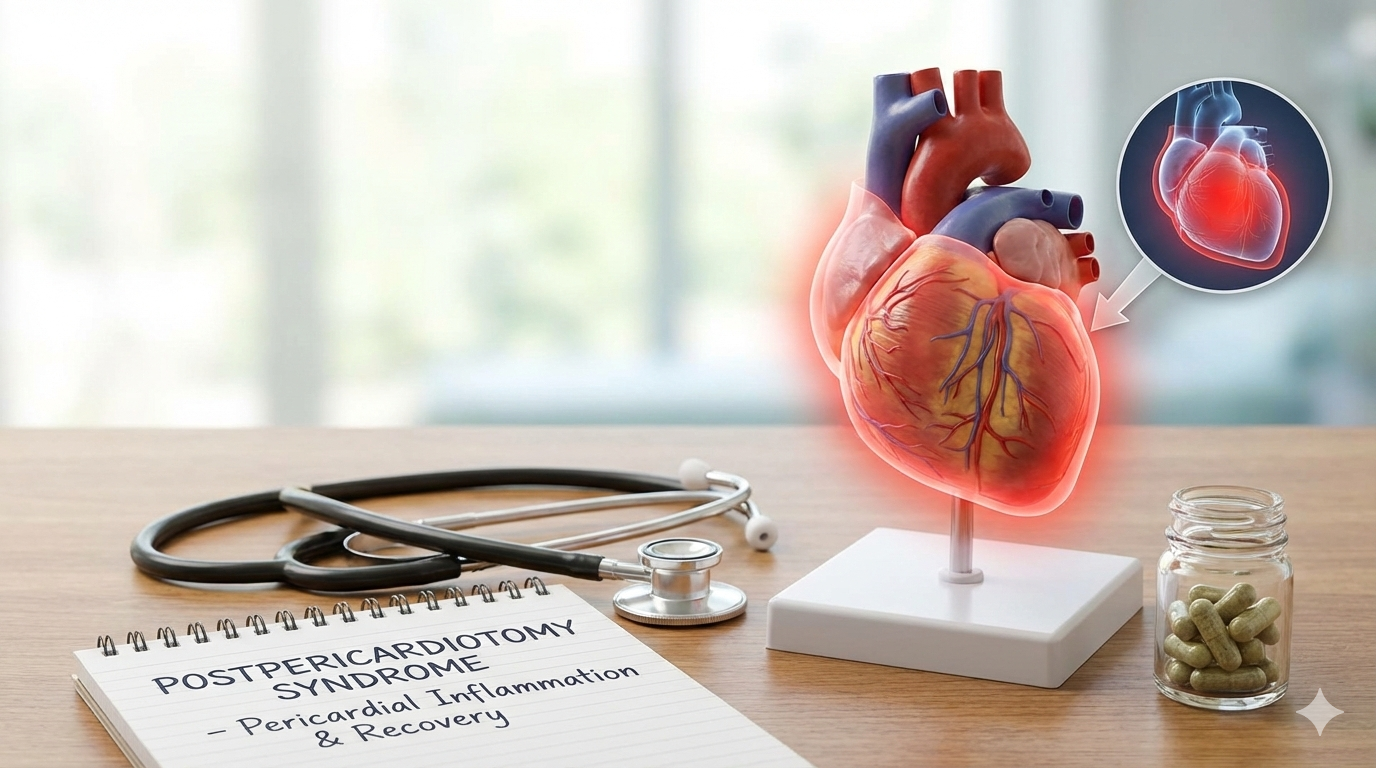
When the Heart Speaks After Surgery: Understanding Postpericardiotomy Syndrome
The heart is resilient, yet delicate. Sometimes, even after life-saving surgery, it whispers reminders that it needs care, rest, and attention.
Postpericardiotomy Syndrome (PPS) is one such condition — an inflammatory response that may occur after heart surgery, affecting the pericardium, the protective sac around the heart.
You may notice:
- Chest pain or pressure, often sharp or aching
- Fever, fatigue, or malaise
- Shortness of breath or palpitations
- Swelling in legs or around the lungs (fluid buildup in some cases)
At first, these symptoms may be alarming, especially after the relief of surgery. But they are signals from the body, asking for gentle support, monitoring, and healing.
What Is Postpericardiotomy Syndrome?
PPS is an inflammatory condition that arises after cardiac surgery, sometimes days to weeks later.
It involves inflammation of the pericardium and occasionally the pleura (lining around the lungs).
It is not contagious. It is not caused by negligence or weakness.
It is the body’s natural immune response, which sometimes becomes heightened after surgery, signaling that recovery requires attention and care.
How It Feels
Living with PPS can feel like the heart is tender and vulnerable:
- Chest discomfort or tightness, often worsened by movement or deep breathing
- Fatigue and low energy, even after rest
- Shortness of breath or a feeling of heaviness in the chest
- Emotional strain: anxiety, fear, and uncertainty during recovery
Within this vulnerability, many people discover patience, mindfulness, and a gentle attentiveness to the body’s rhythms.
Why It Happens
PPS occurs when the immune system reacts after heart surgery:
- The pericardium becomes inflamed, sometimes along with the pleura
- The reaction may be mild or more pronounced, depending on individual healing responses
- Symptoms can appear within days or weeks post-surgery
It is not failure; it is a sign that the body is adjusting and asking for gentle care.
The Homeopathic Understanding: Supporting Heart and Immune Harmony
In homeopathy, PPS is viewed as a temporary imbalance in the body’s vital response: the immune system is overactive, signaling the need for balance and gentle healing.
Some remedies often considered include:
- Arnica Montana – for inflammation, soreness, and post-surgical recovery
- Apis Mellifica – for swelling, fluid retention, and sharp chest discomfort
- Bryonia Alba – for pain worsened by movement, deep breathing, or touch
- Phosphorus – for fatigue, weakness, and low vitality during recovery
- Aconitum Napellus – for anxiety or restlessness in the early post-operative period
These remedies aim to support the body’s natural repair and rhythm. (Always consult a qualified homeopath for individualized guidance.)
Gentle Daily Care
- Rest and pace activity – allow the body to recover fully without strain
- Support heart and fluid balance – gentle hydration, light movement, and monitoring for swelling
- Nourish gently – anti-inflammatory, nutrient-rich foods to support healing
- Emotional care – mindfulness, journaling, and supportive relationships ease anxiety
- Medical collaboration – regular follow-ups with cardiologists are crucial for safe recovery
Healing is deliberate, slow, and tender. It requires listening closely to the heart’s signals and responding with compassion.
Life Beyond Surgery
Living after heart surgery, with or without PPS, invites deep awareness:
- Noticing small improvements in energy, chest comfort, and breathing
- Appreciating the body’s resilience and its capacity for repair
- Cultivating patience, presence, and self-compassion during recovery
The heart is healing, even when tender or inflamed.
Every moment of rest, care, and gentle activity is proof of its remarkable strength.
You are not merely recovering from surgery — you are learning to live with deep compassion, mindful attention, and trust in your body’s natural rhythm.


Leave a Reply