
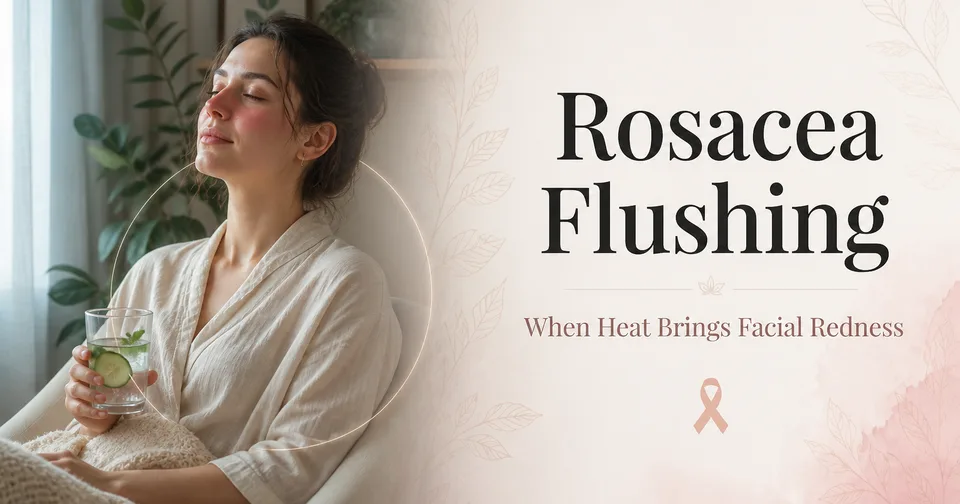
WHEN HEAT RISES WITHOUT WARNING
Rosacea flushing is the sudden rise of facial heat and color — cheeks and nose blooming after spice, wine, a hot room, a workout, or a wave of emotion. The flush may last minutes or linger as persistent redness with visible vessels. People learn to fear triggers that once felt like ordinary pleasures.
Unlike a shy blush that fades politely, rosacea flushing can feel intense, throbbing, and socially exposing. It often travels with barrier sensitivity: products sting; wind burns; embarrassment itself becomes a trigger.
Cooling strategies, trigger mapping, and medical rosacea care form a practical core; complementary homeopathy may support vascular reactivity and anticipation anxiety without claiming to stop every flush forever.
Understanding the Condition
Flushing in rosacea reflects neurovascular dysregulation of facial vessels. Erythematotelangiectatic rosacea centers on persistent redness and flush episodes. Differential includes menopause, carcinoid, medications, and other flush syndromes when atypical.
Medical therapies and laser options for vessels are discussed case by case. Trigger diaries guide lifestyle without total deprivation.
Homeopathy, as practiced in complementary care settings in Canada, is not a replacement for diagnosis, emergency care, or prescribed dermatologic treatment. It may be considered as individualized supportive care that listens to the whole person alongside conventional guidance when needed.
In rosacea flushing, people often notice patterns such as:
- Sudden cheek heat after triggers
- Lingering redness between episodes
- Stinging skincare intolerance
- Social anxiety about visible flush
- Improvement with cooling and consistent medical topicals
Understanding rosacea flushing means calming vessels and the stories we tell about blushing.
People living with rosacea flushing often benefit from a both-and approach: respect for medical diagnosis and treatment when needed, and space for individualized complementary support that takes sleep, stress, climate, and emotional load seriously. In Canada, this collaborative framing helps keep care realistic, ethical, and person-centered. Climate, occupation, and cultural skin ideals also shape how loudly rosacea flushing is felt — a construction worker’s flare differs from a student’s, even when the label matches.
How It Feels — The Human Experience
A flush can feel like emotion displayed without consent.
Common human experiences include:
- Dread before spicy meals or presentations
- Anger at jokes about blushing
- Relief with a personal trigger list
- Grief for abandoned favorite foods or drinks
- Confidence rebuilding with cooling toolkits
Allies stop teasing flush and accept modified restaurant orders without drama.
Over months, many people notice that rosacea flushing teaches unexpected skills: reading early warning signs, asking clearer questions in clinics, and protecting energy on difficult skin days. Those skills are part of recovery literacy, not proof that someone should “just cope forever” without help.
The Homeopathic Understanding — Supporting the Vital Force
Homeopathy approaches flushing through heat modalities, triggers, and emotional anticipation.
In supportive care for rosacea flushing, a homeopath may explore:
- Speed and duration of flush
- Worse from heat, stimulants, or emotion
- Accompanying burning or throbbing
- Anticipatory anxiety
- Digestive reactivity to spices or alcohol
Remedies are individualized. The aim is gentle support — never guaranteed flush extinction.
Two people with the same label may receive different remedies because their modalities, thermal nature, and life story differ. That individuality is the method — not a delay tactic, and not a promise of cure. Follow-up visits matter: as sleep, season, and stress shift, the symptom picture of rosacea flushing may shift too, and prescribing should remain responsive rather than rigid.
Commonly Considered Remedies
The following remedies are sometimes considered in homeopathic practice when the symptom picture matches. This list is educational and not a prescription:
- Belladonna — when sudden hot, throbbing facial flush appears
- Lachesis — when heat-intolerant, left-sided, intense flushing features
- Ferrum Metallicum — when flushing with pallor alternation appears classically
- Sulphur — when burning heat worsens with warmth
- Carbo Vegetabilis — when sluggish burning facial heat presents
- Amyl Nitrosum — when intense flush and throbbing are considered in classical acute pictures (as guided)
(All remedies must be individualized by a qualified homeopath. Self-prescribing for chronic or serious concerns is not advised. Continue any medically necessary care unless your physician advises otherwise.)
Gentle Daily Care
Flush-wise daily habits:
- Map triggers without eliminating all joy at once
- Cool water rinses; avoid steam facial extremes
- Mineral sunscreen; seek shade after exercise cool-downs
- Minimal, fragrance-free skincare
- Follow prescribed rosacea therapies
- Discuss atypical systemic flush with a physician
Cool preparation reduces how often flush runs the day.
Keep a simple weekly note of triggers, sleep, and what eased symptoms — not as self-blame, but as useful data for your physician and homeopath. Small patterns often become visible only when written down.
A Closing Reflection
Rosacea flushing is heat rising through facial vessels and lived emotion. Beneath the bloom, vital force and medical care can soften reactivity. Supportive homeopathic care listens for triggers and temperament.
Healing, in this complementary sense, is invited through recognition, cooling wisdom, and skilled listening.


Leave a Reply