
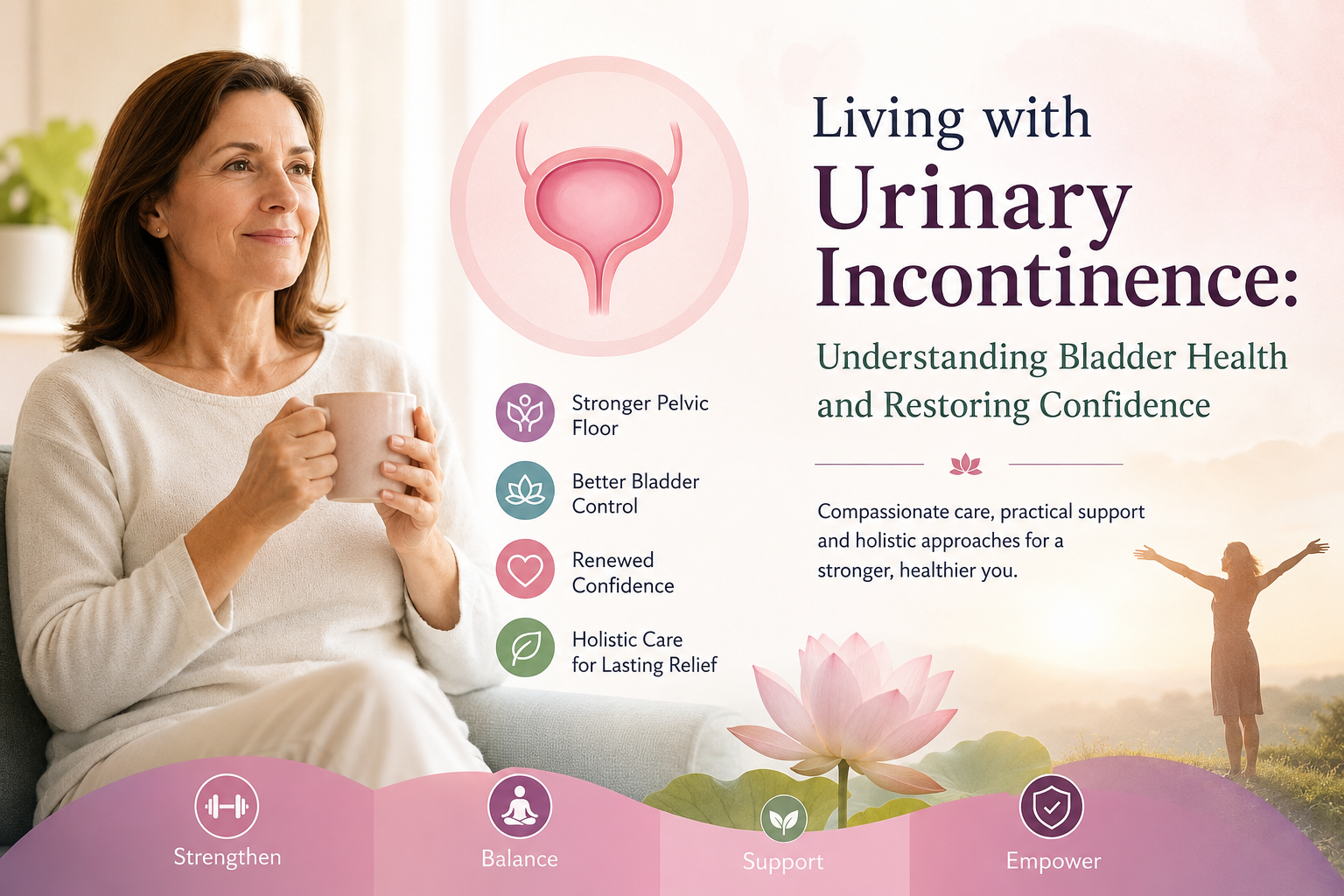
Living with Urinary Incontinence: Understanding Bladder Health and Restoring Confidence
Some changes in the body begin quietly, almost without notice, until they start to influence daily comfort and confidence.
Urinary incontinence often develops in this gradual way — a small leak when coughing or laughing, a sudden urge that is difficult to control, or a feeling that the bladder is not behaving as it once did.
For many women, this experience can feel frustrating or emotionally uncomfortable. It may lead to self-consciousness or concern about daily activities.
However, urinary incontinence is a common and treatable condition, and it does not reflect weakness or loss of control as a person. It reflects a change in how the bladder and pelvic floor function together.
With the right understanding and care, symptoms can often be improved significantly.
Understanding Urinary Incontinence
Urinary incontinence refers to the involuntary leakage of urine due to reduced control over bladder function.
The bladder, pelvic floor muscles, and nerves work together to store and release urine in a controlled way. When this system becomes weakened, overstretched, or overactive, leakage or urgency may occur.
Common contributing factors include:
- Pregnancy and childbirth
- Pelvic floor muscle weakness
- Hormonal changes (especially menopause)
- Aging-related tissue changes
- Chronic constipation or strain
- Obesity or increased abdominal pressure
- Neurological or bladder sensitivity issues
Urinary incontinence is not a single condition — it has different types and causes, and each requires a different approach to management.
Types of Urinary Incontinence
Understanding the type helps in choosing appropriate care:
Stress Incontinence
Leakage occurs during coughing, sneezing, laughing, or physical activity due to weakened pelvic floor support.
Urge Incontinence
A sudden, intense urge to urinate followed by involuntary leakage due to overactive bladder signals.
Mixed Incontinence
A combination of both stress and urge symptoms.
Overflow Incontinence (less common in women)
Incomplete bladder emptying leading to frequent dribbling.
How It May Feel
Urinary incontinence affects both physical comfort and emotional well-being.
You may experience:
- Leaks during daily activities or movement
- Sudden urgency with little warning
- Frequent trips to the bathroom
- Disruption of sleep due to nighttime urination
- Lower abdominal pressure or discomfort
Emotionally, it may bring:
- Embarrassment or self-consciousness
- Anxiety in social situations
- Frustration with reduced control
- Fear of accidents in public
- Reduced confidence in daily life
These reactions are completely valid. They reflect how deeply this condition can affect daily living.
Why It Happens
Urinary incontinence develops due to a combination of physical and functional changes, such as:
- Weakening of pelvic floor muscles
- Changes in bladder elasticity or nerve signaling
- Hormonal shifts, especially reduced estrogen
- Long-term physical strain or pressure
- Chronic stress affecting muscle tone and nervous regulation
It is important to understand that this is not caused by personal failure. It is a physiological change that can occur over time.
A Holistic Perspective (Including Homeopathic View)
From a holistic perspective, urinary incontinence is seen as a sign of reduced coordination between bladder function, pelvic support, and nervous system regulation.
The goal of supportive care is to strengthen function, improve tone, and restore balance in the system as a whole.
Homeopathy, when used as a complementary approach, focuses on the individual — including physical symptoms, emotional state, and overall constitution.
It is not a standalone cure and should not replace medical evaluation or pelvic floor rehabilitation when needed.
Some remedies that a qualified homeopath may consider include:
Causticum
May be considered when there is gradual loss of bladder control or dribbling, often associated with weakness.
Sepia
Commonly used when there is pelvic heaviness, stress incontinence, and emotional exhaustion.
Clematis
May be considered when there is urinary urgency or incomplete control with sensitivity.
Belladonna
Sometimes used for sudden, intense urgency with overactive symptoms.
Agaricus Muscarius
May be considered when nerve-related sensitivity or involuntary twitching contributes to symptoms.
Remedies are always individualized and should only be selected after a professional assessment.
Gentle Daily Support
Supportive lifestyle practices can improve bladder control and comfort:
- Practice pelvic floor (Kegel) exercises consistently and correctly
- Maintain a healthy weight to reduce pressure on the bladder
- Avoid excessive caffeine or bladder irritants if symptoms worsen
- Treat constipation to reduce pelvic strain
- Stay physically active with low-impact movement (walking, stretching)
- Develop regular bathroom habits (bladder training techniques)
- Use stress management techniques such as breathing or relaxation
Consistency is more important than intensity.
When to Seek Medical Advice
It is important to consult a healthcare professional if:
- Symptoms begin suddenly or worsen quickly
- There is pain, burning, or blood in urine
- Leakage significantly affects daily life
- There is concern about infection or neurological causes
A proper diagnosis ensures safe and effective treatment options.
Living with Awareness and Confidence
Urinary incontinence is not a loss of dignity or control as a person.
It is a common medical condition that can often be managed and improved with appropriate care, exercises, and support.
With time, consistency, and the right guidance, many women experience significant improvement in symptoms and quality of life.
Healing in this context is not about perfection.
It is about restoring confidence, rebuilding strength, and supporting the body in regaining its natural function — quietly, steadily, and with patience.
Your body is not failing you.
It is responding to change — and with care, it can be supported back toward stability.






Leave a Reply