
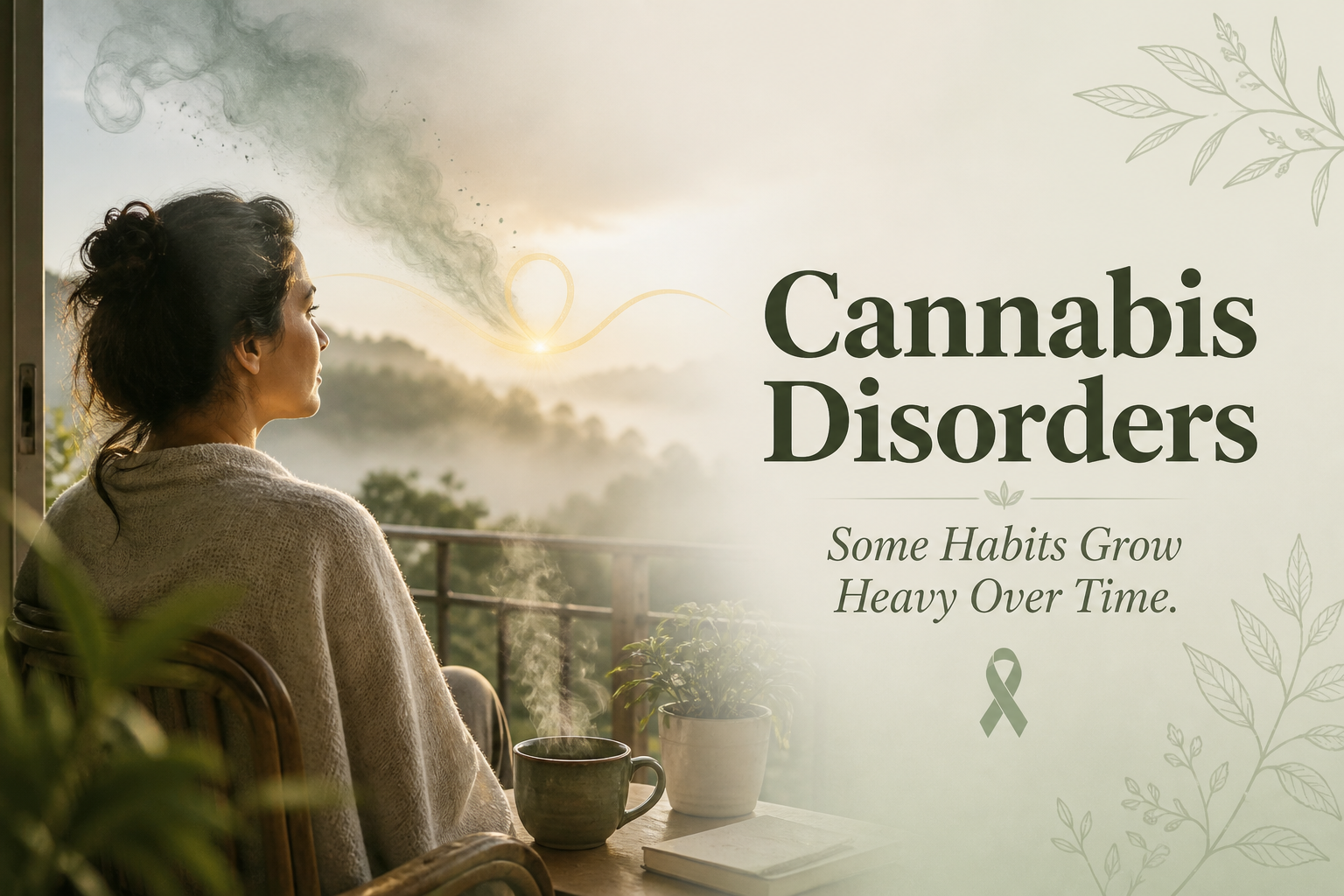
Some Habits Grow Heavy Over Time.
Some habits begin as curiosity or relief, yet over time, they can grow heavy.
Cannabis-related disorders are not merely about use; they are about a mind and body seeking comfort, calm, or escape from stress, anxiety, or inner tension.
This is not weakness.
It is not a lack of moral character.
It is a nervous system attempting to soothe itself in the ways it has learned — through a substance that temporarily quiets the mind but cannot heal the underlying imbalance.
The relief may feel real, but it is brief.
Beneath it, the body and heart still carry fatigue, restlessness, or emotional unrest.
Understanding the Experience
Cannabis-related disorders involve repeated use despite negative effects on life, relationships, work, or health.
The outward behavior — frequent use, withdrawal, or dependence — is visible.
The inner experience — anxiety, irritability, fatigue, or emotional dulling — often remains unseen.
Many feel guilt or shame, aware of the harm yet feeling unable to stop.
This is not a lack of willpower.
It is the expression of an inner system under pressure, seeking relief wherever possible.
How It Feels
Living with a cannabis-related disorder can be a quiet struggle.
There may be:
- A persistent urge to use, especially when stressed or anxious
- Temporary calm or relaxation, followed by fatigue or mental fog
- Emotional detachment or difficulty connecting
- Irritability or restlessness when not using
- Feelings of isolation or self-criticism
Relief comes briefly, but the underlying tension remains.
The cycle often leaves a person feeling stuck, frustrated, and disconnected from themselves and others.
Why It Happens
From a homeopathic perspective, cannabis-related disorders reflect a disruption in the vital force — the inner energy that maintains emotional, mental, and physical balance.
They may develop from:
- Chronic stress or emotional overwhelm
- Anxiety or restlessness that feels unbearable
- Suppressed grief or unresolved emotions
- Nervous system sensitivity or inherited traits
- Fatigue or depletion that makes coping more difficult
The substance becomes a temporary tool for relief, but the body and mind are signaling that they need deeper care.
The Homeopathic Understanding: Restoring Balance
Homeopathy approaches cannabis-related disorders with understanding and empathy.
The goal is not to punish or suppress use, but to support the vital force, strengthen resilience, and reduce the internal pressures that drive dependence.
A homeopath considers:
- Emotional triggers and patterns
- Physical and mental constitution
- Coping strategies and stress responses
- Patterns of craving and withdrawal
Remedies that may be considered include:
- Nux Vomica – for irritability, stress, and overwork fueling reliance
- Arsenicum Album – for anxiety, restlessness, and fear of losing control
- Lycopodium Clavatum – for insecurity, self-doubt, and emotional strain
- Ignatia – for grief, emotional shock, or suppressed feelings underlying use
- China (Cinchona) – for depletion, fatigue, and physical weakness caused by repeated use
Each remedy is chosen individually, addressing the person’s emotional and physical needs, not only the behavior.
Gentle Daily Support
Healing requires patience, gentleness, and routine.
Avoid shame or self-blame.
Nourishment, rest, and gentle physical activity strengthen the body and mind.
Structured routines and safe outlets for emotion reduce the need for cannabis as coping.
Understanding triggers, creating calm environments, and practicing self-compassion allow the nervous system to regain balance and the heart to feel secure.
Living Beyond Cannabis
Cannabis-related disorders do not define the person.
They reflect a nervous system seeking relief, not a lack of character.
With individualized homeopathic care and compassionate support, emotional and physical balance can return.
Cravings can soften.
Energy, clarity, and resilience can grow.
Connection with self and others can deepen.
Healing is not about force or judgment.
It is about restoring safety, calm, and harmony within.
Beneath the habit is a human being, capable of recovery, joy, and wholeness.
With care and patience, that life can be reclaimed fully.


Leave a Reply