
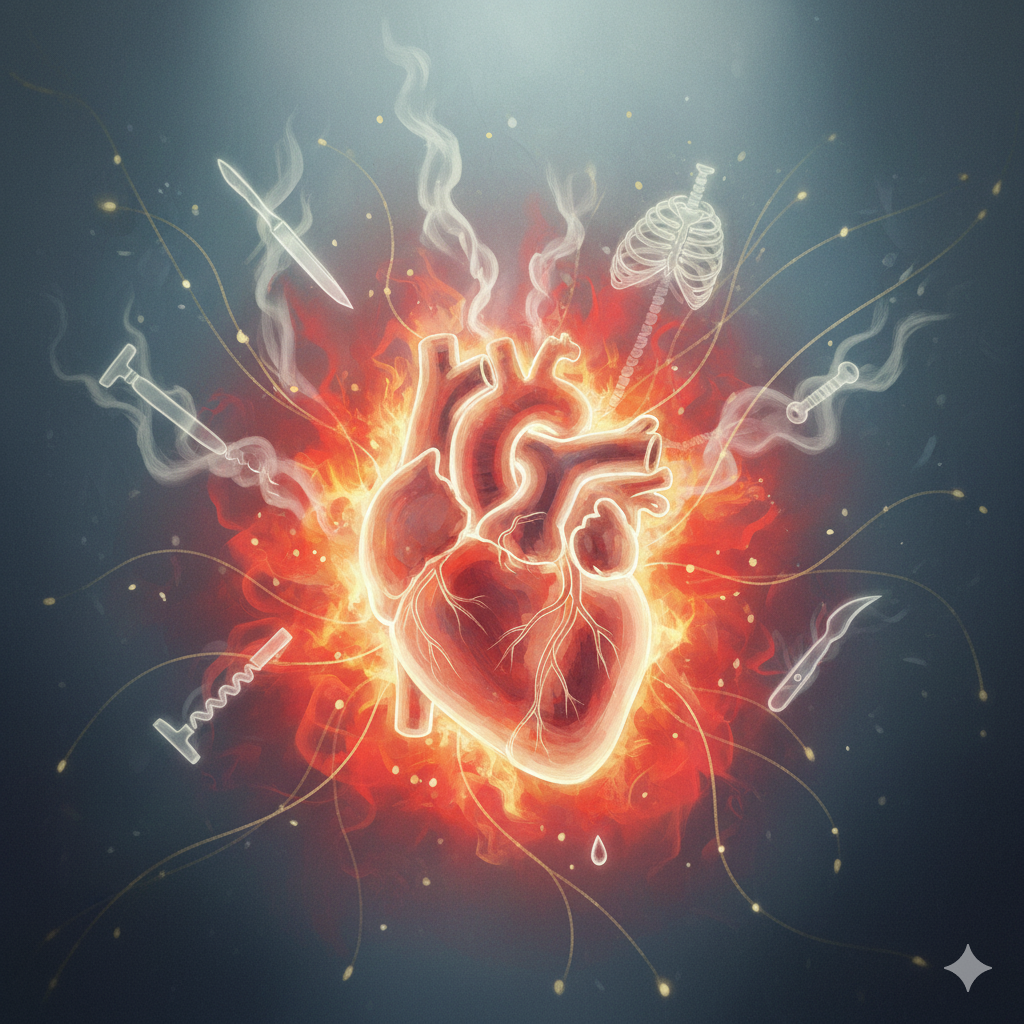
When the Heart Remembers: Understanding Dressler’s Syndrome
There are moments after deep healing when the body surprises us — not with strength, but with a quiet ache that wasn’t there before.
For some who have faced a heart attack, surgery, or injury to the heart, recovery seems to be moving forward — until suddenly, pain, fever, or fatigue returns.
This is the tender story of Dressler’s Syndrome — a condition that reminds us that even after mending, the heart sometimes needs time to finish grieving, to finish healing, to find peace again.
What Exactly Is Dressler’s Syndrome?
Dressler’s Syndrome, also called Post-Myocardial Infarction Syndrome, is a form of inflammation of the pericardium — the thin, protective lining that surrounds the heart.
It usually appears weeks after a heart attack, surgery, or chest injury — when the body’s immune system, still on alert, becomes overprotective.
In simpler terms, it’s as if the body is trying so hard to heal the heart that it begins to overreact, causing inflammation where there should be calm.
“Dressler’s” isn’t a new wound — it’s the echo of one.
A sign that the body, even in its healing, hasn’t yet learned to rest.
How It Feels
The symptoms often begin subtly — a low fever, a chest discomfort that feels familiar but different, a tiredness that doesn’t lift.
Sometimes, it’s a deep, sharp pain that worsens when lying down or breathing deeply — the kind of pain that makes you pause and listen.
People often describe:
- Chest pain — sharp or aching, felt behind the breastbone or on the left side
- Pain that worsens when lying flat or breathing deeply
- Relief when sitting up or leaning forward
- Low-grade fever or fatigue
- Shortness of breath
- General feeling of illness or weakness
For many, it’s not only the body that aches — the heart, in every sense, feels tender.
After surviving something as life-changing as a heart attack or surgery, this return of pain can bring fear — the worry that something is wrong again.
But often, it isn’t a sign of damage — it’s the immune system’s lingering embrace that’s simply too tight.
Why It Happens
After a heart injury, the immune system begins its repair work — cleaning, mending, restoring.
Sometimes, though, the body becomes too vigilant.
It starts to see its own heart tissue as foreign, sparking inflammation instead of healing.
This overreaction may be influenced by:
- Autoimmune response after heart damage
- Inflammation from surgery or trauma
- Emotional or physical stress that weakens immune balance
It’s not caused by infection, and it’s not contagious.
It’s simply the body’s confusion — love turned into protection, protection turned into inflammation.
Homeopathic Approach: Calming the Overprotective Heart
Homeopathy views Dressler’s Syndrome not only as a physical inflammation, but as the body’s emotional echo — a reaction to trauma that hasn’t fully settled.
Healing, in this view, means helping the body remember peace — to remind the immune system that the danger has passed, and the heart is safe again.
The goal is to soothe the inflammation, restore calm to the heart, and rebalance the immune response gently and naturally.
Commonly considered remedies include:
- Arsenicum Album – for burning chest pain, anxiety, and restlessness at night.
- Bryonia Alba – for sharp, stitching chest pain that worsens with movement or deep breath.
- Spigelia – for pain felt over the left side of the chest, radiating to the arm or back.
- Aconitum Napellus – for sudden chest pain after emotional shock or fear.
- Rhus Toxicodendron – for pain eased by gentle motion and warmth.
A trained homeopath selects remedies based on the person’s whole state — physical, emotional, and energetic — helping the system settle, not suppress.
Gentle Ways to Support Recovery
The body heals best when we give it permission to rest.
In the weeks and months after heart injury, small acts of care can make a great difference:
- Rest deeply. Allow yourself to heal at a human pace, not a hurried one.
- Stay warm and calm. Both body and heart respond well to gentle rhythms.
- Eat nourishing foods. Light, wholesome meals support the body’s quiet repair.
- Avoid overexertion. Let your strength return gradually.
- Keep medical guidance close. Regular follow-ups ensure safety and progress.
- Tend to your emotions. The heart holds memory — release what feels heavy through conversation, writing, or reflection.
Finding Peace After the Storm
Dressler’s Syndrome often arrives when the hardest part seems over — when the crisis has passed, and yet something inside is still trembling.
It’s a reminder that healing isn’t only physical; it’s also emotional, spiritual, and deeply human.
Sometimes, after great strain, the heart needs to be heard one more time.
Not through ECGs or lab results, but through silence, rest, and compassion.
Your heart has endured much — and it’s still beating, still mending, still learning to trust the rhythm of calm.
With time, care, and gentle support, both body and heart find their balance again.
Because healing isn’t just about recovery.
It’s about remembering that the heart, even when wounded, always knows the way home — if only we listen softly enough.


Leave a Reply