
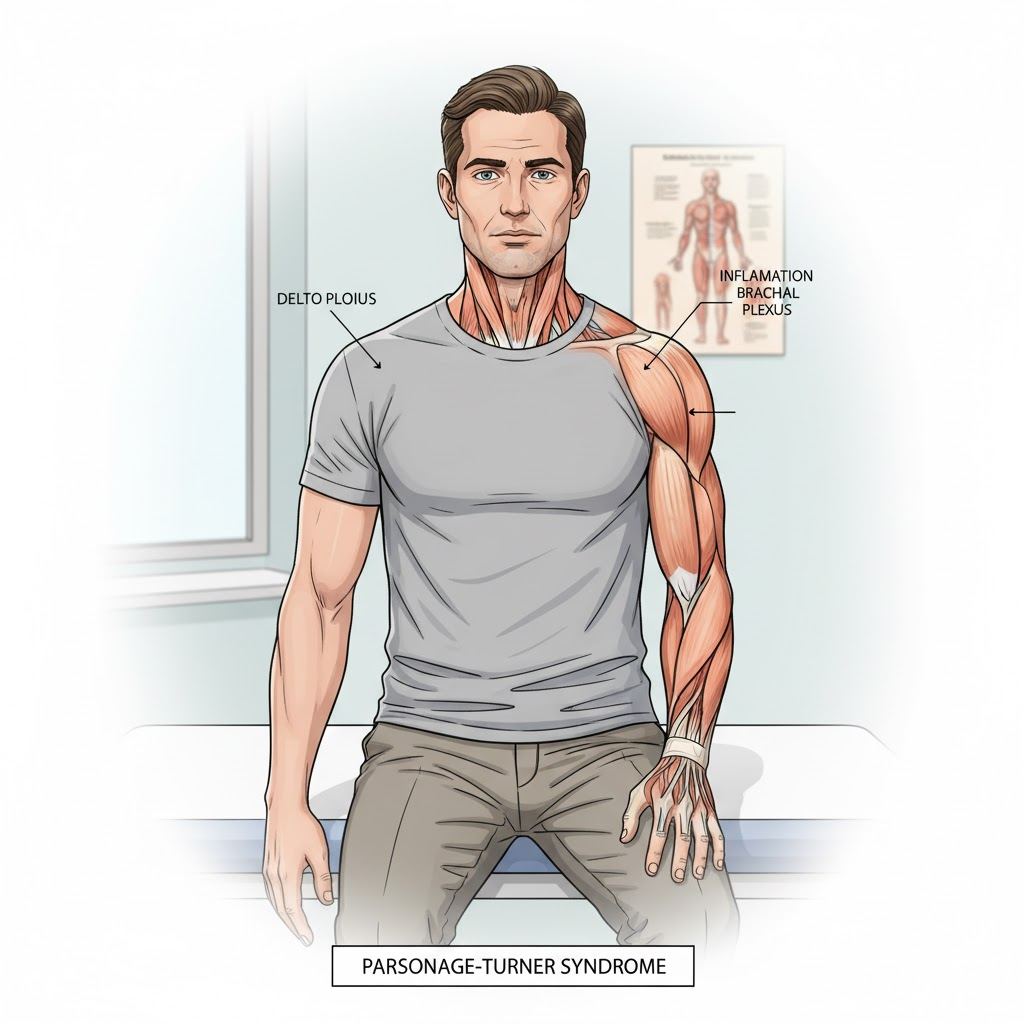
When the Shoulder Speaks in Pain: Understanding Parsonage-Turner Syndrome
Some illnesses announce themselves with loud alarms — sudden fevers, rashes, or dramatic swelling.
Others speak more quietly, through pain, weakness, and gradual loss of function.
Parsonage-Turner Syndrome (PTS), also called brachial neuritis or neuralgic amyotrophy, belongs to this latter, whispering kind.
It often begins suddenly: a sharp, intense pain in the shoulder or upper arm that appears without warning.
You may find it hard to sleep, lift your arm, or even carry everyday objects.
The pain can feel overwhelming at first, but gradually, weakness sets in — muscles that once moved freely now struggle.
Though rare, this condition touches deeply, affecting both body and spirit, and often bringing anxiety, frustration, or a sense of vulnerability.
What Is Parsonage-Turner Syndrome?
PTS is a condition in which the nerves supplying the shoulder and upper arm become inflamed, often suddenly.
This inflammation disrupts the communication between brain and muscle, causing pain, weakness, or even temporary paralysis.
The exact cause is not fully understood, though it may follow viral infections, vaccinations, or autoimmune triggers.
It is not contagious. It is not a result of weakness or overuse.
It is the body quietly signaling an imbalance — a nerve caught in inflammation, asking for care and attention.
How It Feels
Living with PTS can feel like the body is speaking in a language you don’t yet understand:
- Sudden, intense shoulder or arm pain — often at night, disrupting sleep.
- Weakness or loss of mobility in the affected arm, making daily tasks challenging.
- Tingling, numbness, or a burning sensation along the shoulder or upper arm.
- Emotional ripple: anxiety about recovery, frustration at limitations, and quiet concern about long-term strength.
Though the body feels betrayed by sudden loss, there is also opportunity for deep listening, patience, and resilience.
Why It Happens
PTS arises from inflammation of the nerves supplying the shoulder and upper arm.
- Often triggered by viral infections, immune responses, or post-vaccination reactions.
- Sometimes, no clear trigger is identified — the body simply misfires in its protective responses.
- Recovery is usually slow, but the nerves and muscles can heal over time with rest, support, and guided care.
This is not failure. It is a signal that the body requires rest, protection, and gentle rehabilitation.
The Homeopathic Understanding: Supporting Nerve Recovery
In homeopathy, PTS is approached as a disturbance in the nervous system’s vital balance.
The goal is to support the body’s innate repair processes, reduce discomfort, and restore strength gently.
Some remedies often considered include:
- Hypericum Perforatum – for nerve pain, tingling, and sharp, shooting sensations.
- Arnica Montana – for trauma, soreness, and inflammation of muscles and nerves.
- Rhus Toxicodendron – for stiffness, weakness, and difficulty in movement.
- Ruta Graveolens – for strain, nerve fatigue, and slow recovery in shoulder muscles.
These remedies work subtly, encouraging the body to reconnect, repair, and regain rhythm. (Always consult a qualified homeopath for individualized guidance.)
Gentle Daily Care
- Rest and protect the arm – avoid overuse; gentle support may help reduce pain.
- Gradual movement – guided physiotherapy can prevent stiffness and strengthen recovering muscles.
- Nutrition – foods rich in protein, vitamins B, C, D, and minerals support nerve and muscle repair.
- Emotional care – mindfulness, relaxation, and self-compassion help manage anxiety and frustration.
- Collaborative care – combine medical oversight with homeopathy and gentle rehabilitation for holistic recovery.
Healing is slow, but deliberate, patient, and nurturing.
Life Beyond the Diagnosis
Living with PTS invites patience and awareness:
- Learning to move gently, respecting the body’s limits.
- Appreciating small improvements — each regained movement, each reduction in pain, as a milestone.
- Cultivating resilience, self-compassion, and trust in the body’s capacity to heal.
Though the nerves falter temporarily, the body’s wisdom endures.
Each day of progress, however small, is a testament to the quiet power of recovery.
You are not merely enduring Parsonage-Turner Syndrome — you are learning to move with presence, patience, and deep human resilience.


Leave a Reply