
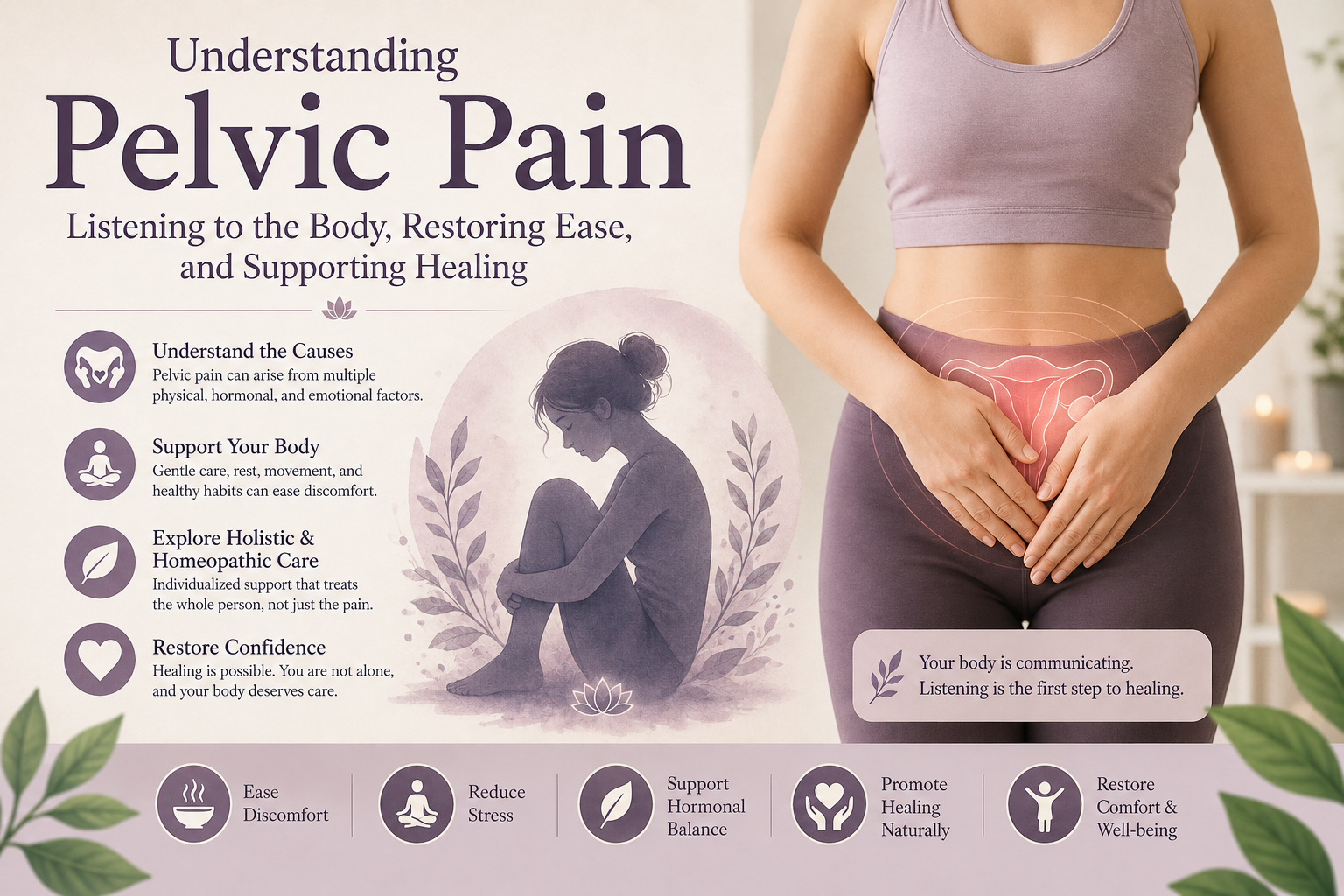
Understanding Pelvic Pain: Listening to the Body, Restoring Ease, and Supporting Healing
Pelvic pain is often subtle at first.
It may appear as a dull ache, intermittent cramping, pressure, or a heaviness that does not fully resolve. In some cases, it may come and go with the menstrual cycle, activity levels, or periods of stress. In others, it may persist quietly in the background, gradually affecting daily comfort and emotional well-being.
Because of its location and variability, pelvic pain can feel confusing and difficult to interpret. It is not always linked to a single cause, and it often reflects multiple interacting factors within the body.
Understanding its nature is the first step toward meaningful care and relief.
Understanding the Pelvic Region
The pelvis is a structurally and functionally complex area that contains:
- Reproductive organs
- Urinary structures
- Portions of the digestive system
- Muscles, ligaments, and connective tissue
- A dense network of nerves and blood supply
It also plays a central role in posture, movement, and core stability.
Because of this complexity, pelvic pain may arise from multiple systems rather than a single source.
How Pelvic Pain May Present
Pelvic pain can vary widely in character and intensity. It may include:
- Dull, aching discomfort
- Sharp or stabbing sensations
- Cramping or tightening
- Pressure or heaviness in the lower abdomen
- Pain during movement or physical activity
- Cyclical pain linked to menstruation or ovulation
- Persistent low-level discomfort
Symptoms may fluctuate depending on physical activity, hormonal cycles, or stress levels.
Emotional and Psychological Impact
Pelvic pain is not only a physical experience — it often affects emotional well-being as well.
Common emotional responses include:
- Frustration or helplessness
- Anxiety about underlying causes
- Fear of worsening symptoms
- Emotional fatigue from ongoing discomfort
- Reduced sense of body confidence
- Difficulty focusing due to persistent pain awareness
These responses are understandable. Chronic or recurring pain naturally affects both physical comfort and emotional stability.
Possible Contributing Factors
Pelvic pain may arise from a combination of physical and functional influences, such as:
- Muscular tension or pelvic floor dysfunction
- Hormonal fluctuations related to the menstrual cycle
- Inflammatory or infectious processes
- Digestive disturbances (such as bloating or constipation)
- Past injury or physical strain
- Stress-related nervous system activation
- Gynecological conditions such as endometriosis or fibroids (in some cases)
In many individuals, more than one factor contributes to the overall experience.
A Homeopathic Perspective
Homeopathy views pelvic pain as a functional expression of imbalance involving the body’s regulatory systems rather than a single isolated disorder.
The focus is on understanding the person as a whole — including physical symptoms, emotional patterns, energy levels, and long-term constitutional tendencies.
Homeopathic care aims to support the body’s adaptive capacity and may be used alongside appropriate medical evaluation and diagnostic investigation when needed.
Some remedies that a qualified homeopath may consider include:
Belladonna
May be considered when pain is sudden, intense, and throbbing in nature.
Colocynthis
Often associated with cramping pain that may improve with pressure or bending forward.
Cimicifuga
May be considered in pain linked with hormonal or menstrual cycle disturbances.
Sepia
Often associated with dragging, heavy pelvic sensations along with fatigue or emotional withdrawal.
Agnus Castus
May be considered when pelvic discomfort is associated with hormonal depletion or low vitality.
Remedy selection is always individualized and based on a complete constitutional assessment by a qualified practitioner.
Gentle Daily Support
Supportive care can help reduce discomfort and improve day-to-day function:
- Use heat therapy (such as warm compresses) for muscle relaxation
- Engage in gentle stretching or mobility exercises when tolerable
- Maintain regular bowel habits to reduce abdominal pressure
- Prioritize rest during flare-ups
- Practice relaxation techniques to reduce muscular tension
- Maintain hydration and balanced nutrition
- Avoid overexertion during symptomatic periods
The goal is not to force activity, but to support comfort and stability.
Living with Awareness and Care
Pelvic pain is not simply a symptom to endure — it is a signal from the body that deserves attention and thoughtful response.
With appropriate medical evaluation, supportive care, and gradual lifestyle adjustments, many individuals experience improvement in both pain intensity and functional well-being.
Healing in this context is not linear or immediate.
It involves understanding triggers, reducing contributing stressors, and supporting the body’s natural capacity to regulate tension and restore balance.
The body is not working against you.
It is communicating through sensation, asking for support, rest, and recalibration.
With patience, awareness, and consistent care, comfort can gradually return and confidence in the body can be rebuilt.


Leave a Reply