
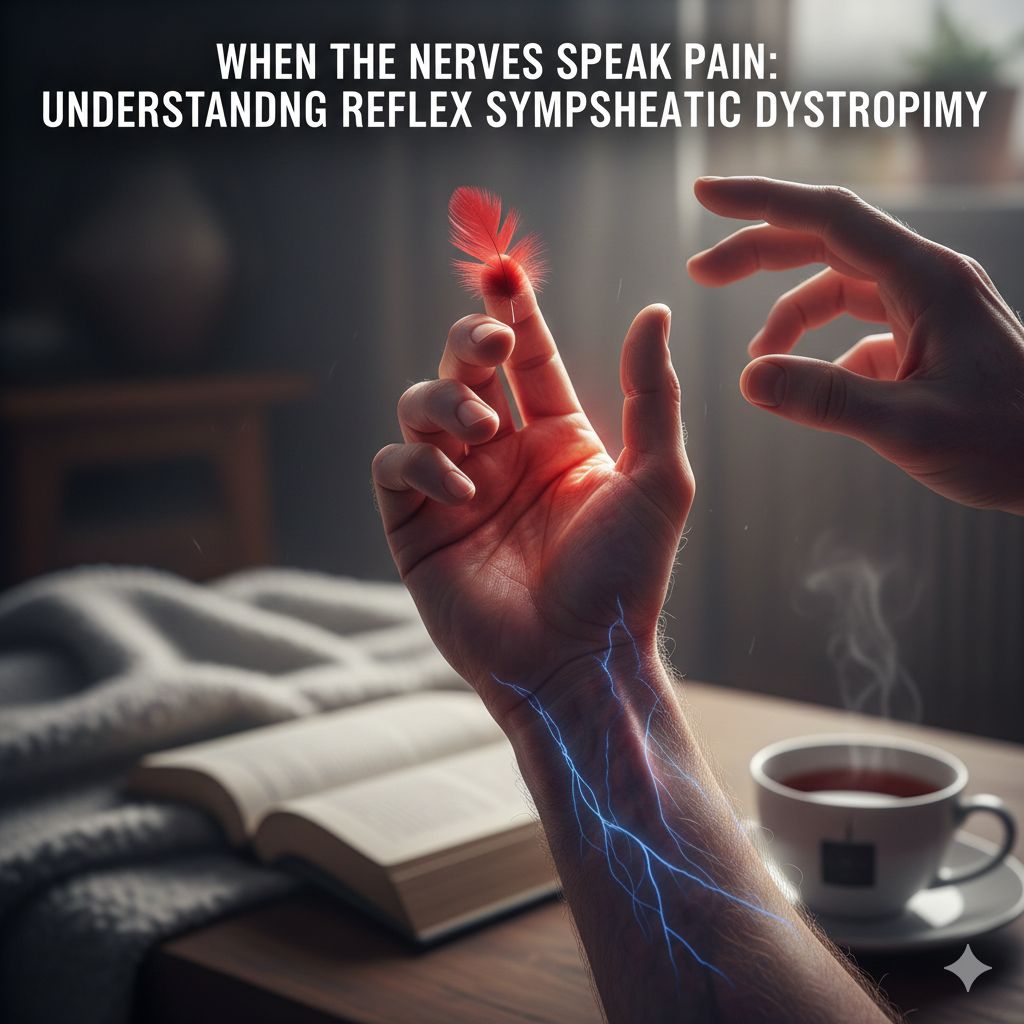
When the Nerves Speak Pain: Understanding Reflex Sympathetic Dystrophy
Sometimes, the body remembers trauma in ways the mind cannot see.
A minor injury — a sprain, a fracture, even surgery — heals on the surface, yet beneath, the nervous system remains vigilant, overprotective, and restless.
This is Reflex Sympathetic Dystrophy (RSD), also called Complex Regional Pain Syndrome (CRPS), where the body’s own protective system turns inward, creating pain that feels out of proportion to the original injury.
It often begins after something that seems small or routine: a cut, a burn, a sprained ankle.
But days, weeks, or even months later, pain intensifies.
The limb may become swollen, warm or cold, stiff, or hypersensitive — even a gentle touch can feel like fire.
This is not imagined. It is real, a signal from nerves that are over-activated, miscommunicating, and trapped in a cycle of defense.
Understanding the Condition
Reflex Sympathetic Dystrophy is a disorder of the peripheral nervous system, particularly the sympathetic nerves that regulate blood flow, temperature, and pain signaling in the limbs.
After an injury, these nerves sometimes fail to “reset” properly.
Instead of returning to normal function, they amplify pain signals, affect circulation, and trigger inflammation.
The symptoms can include:
- Persistent burning pain in a limb
- Swelling and stiffness
- Changes in skin color, temperature, or texture
- Sensitivity to touch or pressure
- Weakness or limited mobility
The intensity of the pain often exceeds what would be expected from the original injury.
It can feel isolating, as friends and family may not see the source of suffering — yet the nervous system remembers every signal as urgent, every movement as dangerous.
How It Feels
Living with RSD is like inhabiting a body that refuses to be quiet.
Every movement, every touch, every shift in temperature may send sharp, unrelenting pain.
At times, the limb may feel foreign — swollen, stiff, or overly sensitive — while the mind aches alongside it.
Sleep can be disturbed by throbbing or burning sensations, and even rest may not bring relief.
Emotionally, it can feel frustrating, frightening, and isolating.
The body seems to have betrayed you, yet it is only overprotecting, confused, and in need of guidance.
Slowly, through careful listening, pacing, and support, it is possible to regain a sense of control — and to teach the nerves to calm, to remember safety, and to trust again.
Why It Happens
RSD occurs when the sympathetic nervous system — responsible for “fight or flight” responses — remains overactive after injury.
Rather than returning to baseline, nerves fire excessively, signaling pain, swelling, and inflammation even in the absence of ongoing tissue damage.
This overreaction can cause a cascade: swelling leads to stiffness, which increases pain, which further excites the nerves, creating a cycle that can last months or years if left untreated.
The body is not failing. It is protecting.
It is simply miscommunicating — the signal is too loud, too persistent, and in need of careful guidance to reset.
The Homeopathic Understanding: Calming the Nervous Flame
In homeopathy, RSD is understood as an expression of imbalance in the nervous system — a fire that continues to burn after the threat has passed.
The aim is not to suppress pain, but to gently remind the nerves and the body of safety, balance, and rhythm.
Remedies often considered include:
Hypericum Perforatum – for nerve pain that is sharp, shooting, and hypersensitive, especially after trauma.
Arnica Montana – for pain following injury, bruising, or surgical procedures; supports gentle healing and tissue recovery.
Ruta Graveolens – for stiffness, soreness, or pain in tendons and ligaments after injury, often improving with gentle movement.
Belladonna – for sudden, intense burning or throbbing pain with heat and sensitivity.
Bryonia Alba – when pain worsens with motion and improves with rest; often accompanied by swelling and stiffness.
Each remedy is selected with care for the individual — their pain pattern, emotional state, and overall vitality.
(Always consult a qualified homeopath for personalized guidance.)
Gentle Daily Care
Pace yourself. Avoid pushing through pain; small, controlled movements are better than sudden strain.
Protect and support the limb. Splints, wraps, or gentle elevation can help manage swelling and reduce stress on nerves.
Use warmth or contrast therapy. Gentle warmth or alternating warm and cool compresses can calm nerve irritation and improve circulation.
Practice relaxation techniques. Meditation, deep breathing, or guided visualization can quiet overactive nervous signals.
Stay nourished and hydrated. Anti-inflammatory foods, hydration, and nutrient-rich meals support nerve repair and overall healing.
Seek gentle physical therapy. Graded exercises under professional supervision help restore function without overwhelming the nervous system.






Leave a Reply